Questions & Comments

We have a comment from Bill on:

How Do I Know If My Knife Is Sharp?

Bill writes: ” ‘Thanks so much, Bob! I am most grateful for your answer! I can tell a difference already. Best of luck with your new blog.”

Thank you for your kind comments, Bill.  I’m glad I could help!

We also have a comment from Dean on:

Choosing The Right Carving Knife

Dean writes: Well said Bob. I tell new carvers to avoid becoming a tool collector right way. Learn what type of carving interests you and acquire the best tools you can afford to pursue it.”

That’s so true, Dean.  One of the first things a carver should do before jumping right in is to decide what type of carving interests them the most.  Also, I never recommend buying tools in sets because more often than not you will get one or two tools in the set that you can really use and the rest you won’t ever use at all.  I always suggest buying the best tool (Knife) you can afford then build your collection little by little as you find the need for more tools.

Today we have a question from Roar Martinsen.  Roar asks:

“now it’s time for me to buy a finished knife i have long used a 3 $ knife bought on ebay.
I sharpened and adjusted the blade myself then I got a knife that was quite good, the blade on the knife is stright can you possibly tell a little about the pros and cons of straight and curved blade? I’ve seen it delivered concave and convexe blade maybe you have any advice to share?”

Thank you for your question, Roar.  There are three different types of blades…the straight blade, the convex blade and the concave blade.  Each one has its advantages and disadvantages, and are generally used for different purposes.  I will try to discuss and provide some information on each one as it pertains to wood carving below:

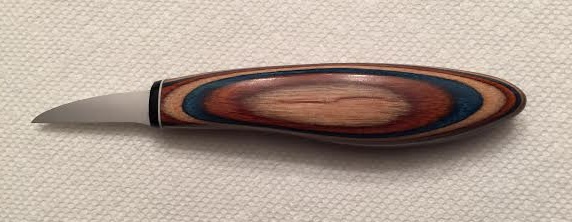
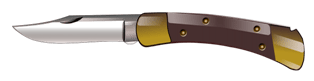
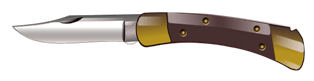
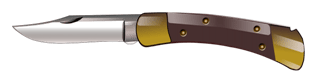
Typical Straight Blade

The most common blade type used for whittling and wood carving

Capable of making all necessary carving cuts

Pointed blade that gets into corners and tight areas well

Readily available by most knife makers

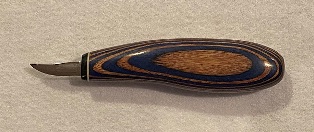
Typical Convex Blade

Commonly referred to as an upsweep blade

Makes easy slicing cuts

Capable of getting into areas a straight blade can’t often get into

Not as commonly available by most knife makers

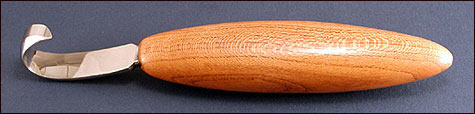
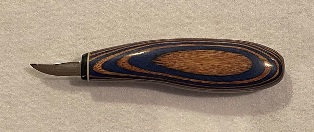
Typical Wood Carving Concave Blade

Used mostly in spoon carving

Knives with this type of blade are often referred to as scoop or hook knives

Some may not consider the spoon carving hook knife blade as a concave blade because it is curved vertically (upwards) rather than horizontally (flat)

Harder to find…mostly only made by specialty knife makers

Typical Utility Knife With Concave Blade

Horizontally curved concave blades are commonly used as a utility knife such as a linoleum or paring knife.

I will be discussing more on knives in future blogs.  Meanwhile:

Always keep a sharp edge and keep on carvin’!


Let the chips fly!  Tell your carving friends about Wood Chip Chatterand don’t forget to send in your questions

and comments so we can keep Wood Chip Chatter active and keep the conversations going!

One day an old man goes into a pharmacy.
He reaches into his pocket and takes out a small whiskey bottle and a teaspoon.
He pours from the bottle into the teaspoon and offers it to the pharmacist.
“Could you taste this for me, please?”
The pharmacist takes the teaspoon, puts it in his mouth, swills the liquid around and swallows it.
“Does that taste sweet to you?” asks the old man.
“No, not at all,” says the pharmacist.
“Oh that’s a relief,” says the old man.
“The doctor told me to come here and get my urine tested for sugar.”

Questions & Comments

Today we have a comment from garyscarving on:

 The Woodcarving Academy

 Gary writes:

“Thanks for the information Bob and the chatting platform to help us all learn & grow! I have only been carving for a couple of months and enjoying every minute of it. I had an opportunity to talk with Blake landsford on a international woodcarvers association zoom meeting (another 1 tonight at 3:00pm est) & he turned me onto the woodcarving academy. I looked into it and signed up for the annual subscription for $139. I could not be happier with that choice. There is a ton of fun carvings & information to learn from. The teachers on it like Dave Stetson opens your eyes to more then just carving on wood. He walks you thru the anatomy of human body, shows you how & why he carves & shapes his caricature carvings the way he does. If you are on the fence or want to take your carving skills to another level i would definitely suggest signing up for woodcarvers academy! It is helping my carvings & knowledge out a bunch.. thanks for your ears, whittle on and god bless”

Thanks for the comments, Gary!  Your input is very helpful to our other readers.  First of all, you’re welcome for the blog and chatting platform.  One of the main purposes for writing this blog was to try to engage wood carvers in meaningful conversations to help everyone grow in this wonderful hobby we all enjoy so much.  I also have to admit, I’m having a great time writing the blog and putting it all together.  I hope everyone appreciates it as much as you do.

Although we’ve never met in person I know Blake Lunsford and speak to him fairly often.  Blake is a terrific person.  He is an excellent wood carver and is always more than happy to share his knowledge with anyone he meets.  It’s a tremendous platform he (and Thom Bate) put together with the International Association of Woodcarvers.  So many of us have learned so much from the weekly Saturday Zoom meetings.

The Woodcarving Academy is another excellent institution that came about as a result of the Covid-19 pandemic of 2020.  As I mentioned in an earlier blog post it’s one of the best bargains you can get for just $139 per year.

We have another comment today from Dean on:

 Coming Shows & Events

 Dean writes:

“I’d like to see one take place in California lol.”

Good point, Dean!  I’m sure the people living in California would too.  I’m sure, though  there must be some wood carving shows in California.  I’ve just never seen or heard of any.

Let the chips fly!  Tell your carving friends about Wood Chip Chatter,

and don’t forget to send in your questions and comments so we can keep Wood Chip Chatter active and keep the conversations going!

Coming Shows And Events

~~2021~~

July 18-22…Honesdale, PA.  18th Northeast Woodcarvers Roundup at Cherry Ridge Campsite.  Admission free; cost for materials. Contact Robert Muller (570) 470-2736.  rmuller@nep.net.  Website: http://www.cherryridgecarvers.org

July 18-24…Crete, NE.  Mid-America Woodcarvers’ Doane Experience 2021 at Doane University, 1014 Boswell Ave.  Registration required.  Contact Rohn Collins (402) 553-6721; rohncollins@cox.net Website: thedoaneexperience.com

July 21-24…Fletcher, OH.  11th Buckeye Woodcarvers Roundup at Poor Farmers Campground.  Barb Foster (937) 214-0790. http://www.buckeyewoodcarversroundup.com

August 21…Westby, WI.  “Carve-Ins 4 and 5” at Bekkum Memorial Library, 206 N. Main St. John Sutton (608) 634-4396, lbarnfarms@gmail.com; or Bekkum Library (608) 634-4419

September 4-5…Wheeling, WV.  Oglbay Woodcarvers Guild hosts 42nd show at air conditioned Oglebay Park Pine Room (off I-70 on WV Rt 88). Free admission; free parking. Saturday 10-5; Sunday 10-4. Email: clark@unimaxsystems.com

September 10-11…Broken Arrow, OK.  Eastern Oklahoma Woodcarvers’ Woodcarving and Arts Festival. Bob Block (918) 742-3969; Bill Payne (918) 251-8734

September 11…Janesville, WI.  Rock River Valley Carvers host 15th annual show and sale in Craig Center at Rock County Fairgrounds, 1301 Craig Ave. 9am-4pm. Free admission (donations accepted). Email: B. Crandall: bwkicrandall@gmail.com. Or visit website: http://www.rockrivervalleycarvers.com

September 18-19…Stevens Point, WI.  20th annual show, competition and sale presented by Wisconsin River Woodcarvers at Holiday Inn, 1001 Amber Ave. Admission $5 (age 12 and under, free); Sat. 9-5; Sun. 9-4. Ron O’Kray (715) 570-2534, or Greg Wirtz (715) 323-2035. http://www.wisconsinriverwoodcarvers.org

September 24-25…Spanish Fork, UT.  Utah Valley Woodcarvers Show at 400 N Main. Friday 12-7; Saturday 9-5. Contact Gary Heaton (385) 329-5442; drgaryheaton@yahoo.com

September 24-26…Honesdale, PA.  17th Fall Carve at Cherry Ridge Campsite. Admission free; cost for materials. Robert Muller (570) 470-2736, rmuller@nep.net. http://www.cherryridgecarvers.org

September 25-26…Sevierville, TN.  Annual Smoky Mountain Woodcarvers Show at Sevier County Senior Citizens Center, 1220 W Main Street. Email: JR Hemmerlein at comgrinder50@yahoo.com

October 9-10…Fairless Hills, PA.  Penna. Delaware Valley Wood Carvers 46th Annual Mid-Atlantic “Artistry In Wood” Show & Competition at Bucks County Technical High School, 610 Wistar Rd. Sat. 10-4, Sun. 10-4. Donation $5. Contact Maxine Ernest: Email:  maxern1568@gmail.com  Website: http://www.delvalwoodcarvers.com

October 30-31…East Berlin, PA.  Conewago Carvers 29th Annual Woodcarving And Art Show & Sale at the East Berlin Community Center, 405 North Ave. Sat. 9-4. Sun. 9-4. Contact Doug Gabel (717) 676-7612; info@conewagocarvers.com

~~2022~~

January 15-16…Lincoln City, OR. 28th Coastal Carvers Artistry in Wood Show at Chinook Winds Casino. Kathy Jensen jensenka17@yahoo.com

February 26-28…Mesa, AZ.  Desert Woodcarving Show. Mark Mosher: outofthewoodsbymark@gmail.com

March 12-13…Millersville, PA.  Lancaster County Woodcarvers Show and Wildlife Art Festival at Millersville University. Bob Hershey (717) 951-5569; bzcarvn@ptd.net

I will update this list as new shows are added. Meanwhile…

Keep a sharp edge and keep on carvin’!

Choosing The Right Carving Knife

A proper carving knife is a key element to your enjoyment in wood carving.  The wrong choice of knife can cause you a lot of discomfort, frustration and perhaps be the reason you may even quit.  There are loads of quality wood carving knives on the market today, most of which are made by well known reputable knife makers.  These knives come in all different shapes and sizes, and the blade and handle styles vary greatly.  No one wants to get frustrated because of the wrong knife choice, and no one wants to end up with a pile of knives he or she doesn’t use.  So how does one go about finding the right carving knife?


Make an educated choice

The internet makes it easy to shop for the various knife brands and styles the different suppliers carry.  Pick out a few that you think you would like.  Consider blade size and shape, and handle design.  My personal recommendation for a blade is a 1 1/2″ roughout blade for general wood carving and whittling.  The handle design is critical and very personal because if the knife doesn’t feel good in your hand you won’t enjoy carving with it.  Look through the many different brands and the types of knives that are available.  Choose two or three knife makers who make the knives you like.  Then ask some trusted friends and get their thoughts on the knives you’ve chosen.  They may help you eliminate some and they may recommend others for you.  Of course price is always a factor. You have to stay within your budget but I highly recommend you buy the best knife you can afford.

Take a test drive

One of the best ways to choose the right carving knife is to try it out.  Just like you would test drive a car before you buy it, if you have the opportunity it’s a great idea to try out a knife before you buy it.  Now this is easier said than done when it comes to buying wood carving knives but for example, if you have a friend who has a knife you might like ask if he’ll let you try it out.  Or maybe you’re at a wood carving show and a vendor has a knife you are particularly interested in.  Just perhaps he might let you try it out at his table if you ask.

Types of knives

There are basically three different types of wood carving knives:

  1. Fixed blade knife: blade is fixed (epoxied) into the handle and is used for all wood          carving and whittling
  2. Pocket knife: folding blade(s) made to fit in the pocket and carry around, and is used for all wood carving and whittling
  3. Chip carving knife: blade is short and fixed (epoxied) into the handle as a fixed   blade knife and is used specifically for chip carving

Some recommended carving knife brands (in order of my preference)

1) Helvie 

2) OCCT

3) Drake

4)  Flexcut

Helvie

For my money Helvie knives are the best wood carving knives on the market.  They come carving sharp, hold an edge well, have a wide array of blade styles and come in loads of different handle styles.  The downside is that Helvies have become so popular they are next to impossible to get nowadays.

OCCT

OCCT Knives are definitely my second wood carving knife choice.  They also come carving sharp right out of the box and hold an edge well.  Plus they are carried by most wood carving suppliers and are a little more readily available than a Helvie.  Handle and blade styles are more limited, however.

Drake

Gil Drake is also one of the finest knife makers around and his tools speak for themselves.  His knives also come razor sharp right out of the package and hold an edge well too.  Blade and handle styles are limited here also.  Drake knives can be found on the Drake website and at some wood carving suppliers.  My understanding is that these knives are also becoming increasingly hard to get.

Flexcut

Flexcut knives are my least favorite knives.  They are made with quality steel, also come carving sharp and hold an edge well.  I own several Flexcut knives but never use them, though, because I find the handle and angle of the blade ergonomically uncomfortable.  The price is reasonable, however, and it makes a good choice for a beginners knife.  Just be aware of the handle shape.  I know many carvers who use Flexcuts and love them.  They cut well.  I just find them uncomfortable in my hand, but that’s just me.

More on carving knives in a future blog.  Meanwhile…

Keep a sharp edge and keep on carvin’!

The Woodcarving Academy

The other day I spoke a little bit about online wood carving classes.  Well today I’d like to tell you about a terrific alternative to taking online classes…and that is, watching videos through the Woodcarving Academy.

The Woodcarving Academy was established in 2020 as a result of the health concerns due to the Covid-19 pandemic.  Through the Woodcarving Academy wood carvers are allowed to attend workshops from the comfort of their own homes using any personal computer or hand held device.

The website offers dozens of videos created by some of the country’s top level instructors.  More videos are added regularly as they are created by the instructors.  With a paid subscription to the Woodcarving Academy you can view any videos you like for as many times as you like.

Subscription rates:  Monthly = $19.95   Quarterly = $49.95   Annual = $139.95

In my opinion, this is probably one of the best deals that’s come along since wood carving videos have been around.  The cost of an annual subscription is less than the cost of most single in-person wood carving classes!  Plus you’re learning from some of the best carvers in the country in the comfort of your own home!  I’m not a paid spokesperson!

Woodcarving Academy Instructors

Dave Stetson, Kevin Applegate, Floyd Rhadigan, Pat Moore, Ryan Olsen, Dale Green, Mark Akers, James Miller, Stu Martin, Jim RedHawk, Janet Cordell, Dylan Goodson, Fred & Elaine Stenman, Bob Hershey, Donna Menke, Carolyn Halbrook, Mark Gargac

Video topics

Caricature carving, realistic & western figures, bark carving, dolls, relief carving, realistic humans, wood burning, caricature animals, birds & wildlife, chip carving, wood spirits & wizards

Check out the Woodcarving Academy website at: http://www.woodcarvingacademy.com and remember…

Keep a sharp edge and keep on carvin’!


COMMENTS:

How Can I Tell If My Knife Is Sharp?

Today’s comment comes from Bill.  Bill writes:

“Thanks so much, Bob! I am most grateful for your answer! I can tell a difference already. Best of luck with your new blog.”

Thank you so much for you kind comment, Bill!  I’m glad I could help!

Let the chips fly!  Tell your carving friends about Wood Chip Chatterand don’t forget to send in your questions

and comments so we can keep Wood Chip Chatter active and keep the conversations going!
I Love My Up Sweep Knife!

We have comments today from Phyllis and Ned.

Phyllis writes:

“Thanks Bob. I learned a couple of things by your response to Bill. I was given an upsweep knife a few years ago and at first I didn’t like it, but one day I picked it up and now it’s one of my favorite knives. Take care my friend.”

I’m glad you’re finding your up sweep knife useful, Phyllis.  They are very handy knives to have in your arsenal and in fact, there are some carvers like Don Mertz who use them exclusively.  Thank you for sending in your comment!

Ned writes:

Good article!!”

I’m glad you liked it, Ned and hope you found it helpful.

Thank you to Phyllis and Ned, for your kind comments!

Let the chips fly!  Tell your carving friends about Wood Chip Chatter, and don’t forget to  send in your questions

and comments so we can keep Wood Chip Chatter active and keep the conversations going!

How Do I Know If My Knife Is Sharp?

Today’s question comes from Bill who writes: “Thanks, Bob, for starting this blog!!! My question: When I watch videos of some of the well known carvers doing what they do the best, it often looks as though they are cutting through butter rather than wood. I buy my basswood from the same place that I know some of them do and my knives are very sharp, but I’ve never been able to slice it like they do. Do they have a special technique, a different grade of bass wood or something else? Again, thank you!!”

Bill, that’s a very good question, and one that I think many carvers have on their mind.  When it comes to wood carving knives there is what seems to be sharp and what is truly carving sharp.  A carver’s knife may not be as sharp as he thinks it is.  Many carvers test the sharpness of their blades by shaving hair off the back of their hand.  This is not a good test as most any blade with a somewhat decent edge will shave the hair off the back of your hand.

Just because a knife can shave the hair off your arm doesn’t necessarily mean it can cut a piece of wood.  The true test to see if your knife blade is truly carving sharp is this:  Take a block of basswood and try to make a cut across the end grain.  Not with the grain, but across the grain.

A truly carving sharp blade should be able to make a smooth cut across the end grain, a cut which is perfectly smooth with no ripples, chips or drag marks.  If you see any of these your blade is not carving sharp and requires more stropping.  The cut should be as smooth as a baby’s…well you know how the saying goes.

It is possible your knife is already carving sharp.  However, there is another reason why it might not be cutting through the wood as well as it should, and that is the angle you are holding the blade to the wood.  Too steep of an angle and your knife will dig in and not cut properly.  Too shallow of an angle and your blade will “slip” across the wood and only take off small wood chips.  Try changing the way you hold the knife in your hand to change the angle of the blade as it approaches the wood.

Finally, and perhaps most importantly; the way you actually carve the wood will make a difference.  Most wood carvers push and pull their knives straight through the wood as they carve.  The blades on most wood carving knives are not meant to do this.

They are designed to be sliced through the wood as if you were slicing a loaf of bread.

A slicing cut makes all the difference in the world when wood carving.  Try it and see for yourself!  The next time you’re carving first make a cut by pushing or pulling the blade straight through the wood.  Then make a second cut but this time slice your blade through the wood as you make your cut.  I guarantee you will notice a big difference.

This is one reason why knives with up sweep blades work so well.

Helvie Up Sweep Knife

The up sweep blade has a natural slicing motion as it is pulled through the wood.

Note: These same principles hold true for gouges and V-tools as well as carving knives.

I hope you all find these few pointers helpful.  Meanwhile…

Keep a sharp edge and keep on carvin’!

PS: Please send in your questions and comments so we can keep Wood Chip Chatter active and keep the conversations going.

Am I Ready To Take A Class?

Today’s question comes from Dean.  Dean asks: “How can I tell if I have the right level of experience or skill before taking a class?  Do certain instructors focus on certain skill levels?”

Wood Carving Class Today!

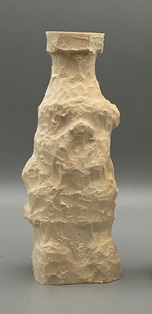
Just like you’re never too old to learn how to carve, you’re never too new or inexperienced to take a wood carving class.  Most instructors today teach from roughouts which is a block of wood carved out on a CNC machine to produce a carving in its very rough form.

Typical Roughout

  The basic shape is there but all the detail work is left for the carver to do.  If you take an in-person class the instructor is right there to guide you along and help you wherever you get stuck.

The latest concept in wood carving classes are online classes which are becoming more and more popular.  These are classes you take right at home on your computer live with the instructor where you have a front row seat to watch the instructor carve the entire carving as you carve along with him.  The necessary roughout is sent directly to your home prior to the beginning of the classClasses are generally 8 hours long and are broken up into 4 two hour sessions which usually run on a Saturday and Sunday over two consecutive weekends.

Online classes have some advantages over in-person classes.  1) You save time and travel expenses because you take them right at home.  2) The classes are taped and are made available for the students to review (as often as they like) for two weeks after the class has ended.  The downside there, however, is that although you can interact with the instructor over the computer during the class you don’t have the advantage of having the instructor providing you with hands on assistance like you would in an in-person class.

I think I may have digressed here though…..

So no, you are never too new or inexperienced to take a class.  In fact, I have never met a carver yet who said he/she was sorry for taking a class.  Regardless of your skill level you will always learn something from taking a wood carving class, and that in itself makes it worthwhile.

To answer the second part of Dean’s question…no, most of the carving instructors I know of do not differentiate between beginner and advanced students.  During class everyone just carves at their own pace.  There is no race or time limit to get finished.  In fact, many students don’t ever finish their project in class.  They take the project home to finish afterwards along with lots of new knowledge gained from having taken the class.

So whether you’re a beginner, intermediate or advanced carver taking a wood carving class is always a good idea.

Keep a sharp edge and keep on carvin’!

Thank You Everyone!

I hope everyone had a great weekend and a healthy and safe 4th of July holiday!  I want to say that I launched Wood Chip Chatter over the weekend (Saturday, July 3) and the response has been overwhelming.  A great big thank you to all of you who have subscribed to my blog over this inaugural weekend!

Just one of the reasons I started Wood Chip Chatter was to encourage active discussions  regarding all kinds of topics pertaining to wood carving and whittling.  Any topic at all…..

I want start off the new month of July with some interesting wood carving topics so I’m inviting you all to send in your comments and questions so we can get some “wood chip chatter” going!  Remember, there are no dumb questions.

I’m happy to offer any help I can or answer any questions you might have.  I’m here to help!  Just click on the Contact tab at the top of the Home page and enter your information.

Keep a sharp edge and keep on carvin’!