Five Myths About Woodcarving

Five Myths About Woodcarving

from “The Complete Woodcarver’s Handbook”

by Graham R. Bull

Myth 1You Need to Be Artistic

If ever there was a myth about doing woodcarving it is this one.  Being artistic may well be a natural part of some people’s makeup, but it is not a prerequisite to being able to do some “nice stuff.”  Having some artistic appreciation is more the requirement, and this can be learned.

In fact, when you couple some artistic appreciation with some simple carving, you will all of a sudden be perceived as artistic!  There often seems to be a perception that for art, one needs to be an artist before one can do it.  It is rather silly in reality, as one cannot generally be an artist without learning the craft first!

When the words “I can’t” are used, they often really mean  “I haven’t learned  to do that.”  Unfortunately we don’t express it that way; so we interpret it as a “cannot do” activity.

As you follow through this book, you will learn the necessary art to be able to be “artistic.”  Of the fundamental arts, some drawing skill needs to be learned as well as some visualization skill.

Myth 2- You Need to Be Really Good with Your Hands

It is true that to produce intricate works of woodcarving one needs to have well-developed motor skills.  Manual dexterity, like artistic ability, is more naturally present in some people’s makeup than in others.  How- ever, motor skills are also learned skills, so the person with a low natural ability can also become one with a well-developed ability

The learning of manual skill can be a fun experience, to the extent that one isn’t really aware that one is “learning” at all, or it can be hard labor with doubtful results.  The latter is generally a result of the wrong projects at the wrong time with the wrong guidance, and just to top it off, the inadequate teacher in whom you have placed your trust tells you your vocational prowess must not include doing anything with your hands.  Those of us who were “hopeless with our hands” at school were most likely victims of the “teacher’s copout ” if this is you, this book is definitely for you.

Myth 3- You Need to Be Strong to Do Woodcarving

You do need to have good natural hand strength to do large sculpture; however, you do not need to be strong to create fabulously detailed relief carving and smaller sculptures.  The choices of the pattern, the tools (especially the mallet), and the wood are  the deciding factors  for the required hand strength.  Someone with arthritis in the hands can do woodcarving if the choices are correct.  Of course it may depend on the degree of arthritis, and one’s medical advice.

In times gone by, in many English-speaking countries, relief woodcarving was the preferred pastime for household women with time on their hands. Some extraordinary carvings were achieved.  Woodcarving certainly was not the preserve of “strong men” except in the area of the journeyman tradesperson. There are greater choices of timber species and better tools and equipment than were ever available in the past; these all allow for more flexibility and greater opportunity.

Myth 4- You Need a Lot of Tools

A professional woodcarver may have two or three hundred woodcarving tools in the workshop.  For most of the time, this professional will use maybe a couple of dozen.  For the kind of work a hobbyist will do, these same couple of dozen are more than adequate. 

Myth 5You Need to Know All about Wood

The greater the knowledge about wood the better off you might be, not will be.  The key factors are where to go to get the greatest choices of wood and, when you come across a piece of wood, what  characteristics you need to look for to help decide its suitability for a particular design.  You do not need to know its common name, its botanical name, where it comes from, what it is used for commercially, or any thing else about it.   You only need to know what to look for in it.   As the chapters progress, we will examine more and more about wood and its characteristics.  We should always bear in mind that wood is a naturally formed organic mass of cells that conforms to certain characteristics within a species.  Every piece can be different, depending on many factors.  Its behavior under a chisel can vary from one side of the tree to the other,  and one end of the tree to the other.  A woodcarver needs to get to know wood from the point of view of working with it.  This can only come with experience, and that can only come from exposure to it over time.  Knowing all about wood is not a prerequisite to starting carving.   Learning about wood happens as a natural outcome of the process of doing carving.

Start with two or three tools only, and build as you go. Tool-buying can be addictive and a lot of fun, but modern tools can be expensive; so it is important to purchase only those you really need, and this means buying tools individually rather than in sets, which may include tools you will never use.  Buying on a needs basis first, getting to know what they are all about, and enjoying each new purchase as it comes.

Each tool has an amazing versatility of its very own; so exploit this characteristic, and you will soon see just how few you really need.

Reader’s Comments

I received a nice comment from my good friend, Jim Babcock of Columbus, Indiana, who also inquired about my upcoming book.  Jim writes:

“Bob:

Just received your latest Wood Chip Chatter; always look forward to it. Appreciate your balance of content on wood choices, tools, patterns, and scheduled events. Keep up the good work. As I remember, you are also working on a book project with the folks at Woodcarving Illustrated, correct ?

Jim Babcock Columbus, Indiana

Columbus, Indiana”

Thank you for your kind words of encouragement, Jim!  I greatly appreciate them.

That’s correct, Jim.  I do have a small book coming out shortly (hopefully soon).  All of the work is done and now I’m just waiting for the publisher to assign an editor to my project so we can finalize the details and get it published.

Spoiler Alert: The book will be about carving simple ornaments for the four seasons of the year (not just Christmas ornaments).

My friend, Gary Baker also sent in a kind comment:

“Another great issue Bob, thank you for doing this. Gary Baker”

Thank you, Gary, I appreciate the encouragement.

“CarverBobK,I think your Santa ornament looks just fine.  It is very close to the Santa cookies my exwife used to make.  They were delicious and did not last very long.  I think your Santa will last quite a bit longer.  Nice job.Ivan”

“Photo Shop” is the section of Wood Chip Chatter where carvers can send in photos of their wood carvings for display. It’s your chance to show off your work…sort of a show and tell. The photos will only be displayed and no comments or critiques will be made.  For critiques on your carvings send them in to the “Carver’s Corner.”  Send your photos to: carverbobk@woodchipchatter.com

My first entry to the “Photo Shop” comes from my friend, Anne Bevmistress who carved a dragon and made it into a bobble-head figure.  Anne wrote:

“Bobblehead Dragon carved in basswood.”

That’s an excellent dragon carving, Anne, and the fact that you made it into a bobble-head makes it even more amazing.  Perhaps you would like to tell us all how you made it.  I’m sure most of us would like to know how it’s done.

My friend, Paul Flatt of Norfolk Sufolk, England sent in a photo of some of the terrific caricature carvings he’s done recently:

Paul’s caricature carvings

Very well done on all of them, Paul!  I like the variety of characters, especially your clown which appears to be carved from my which appears to be from my Kelly the Clown article in the Summer 2023 Issue #103 of Woodcarving Illustrated.  Thank you so much for submitting your photo, Paul.  Photo contributions are always greatly appreciated.

My good friend, Geir Larsen of Norway, who is always busy carving sent in some photos of his recent carvings:

Geir’s Snow Ghosts

Excellent carvings as always, Geir!  I’m a big fan of your work.  Thanks for contributing your photos.  Much appreciated.

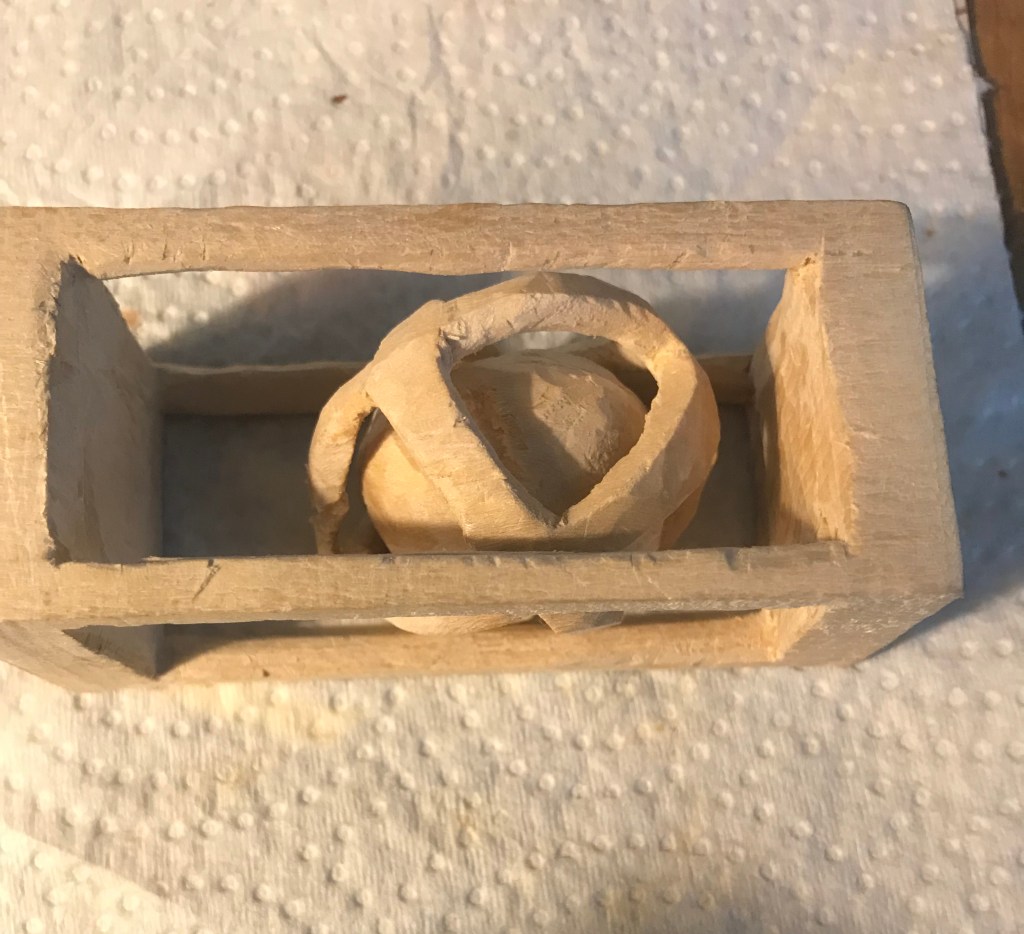
My friend, Ross Macdonald of Markdale, Ontario took on the challenge to try my Extreme Ball-in-Cage project from my article in the Fall 2023 Issue #104 of Woodcarving Illustrated.  Along with a photo of his carving he wrote:

“This is what I did
Not round enough
Each time I try to carve more off the ball I end up cutting through the cage
So I stopped at this point
I enjoyed the challenge
Thanks for the article in WCI
Ross Macdonald
Markdale Ontario
Markdale is 2 1/2 hour drive north of Toronto
I have carved caricatures and 2 totem poles, the last pole had my life story
I’m now 91
Cheers
Ross”

Ross’ Extreme Cage

Thank you for the photo, Ross, and congratulations for accepting the challenge to try my Extreme Ball-in-Cage project.  It’s a difficult project but I think you did a terrific job.  One of the secrets to success is to be sure to get the first ball as round as possible which just takes patience.  Now that you have the feel for it perhaps you might try another one.

I would love to see more of your work, especially your totem poles!

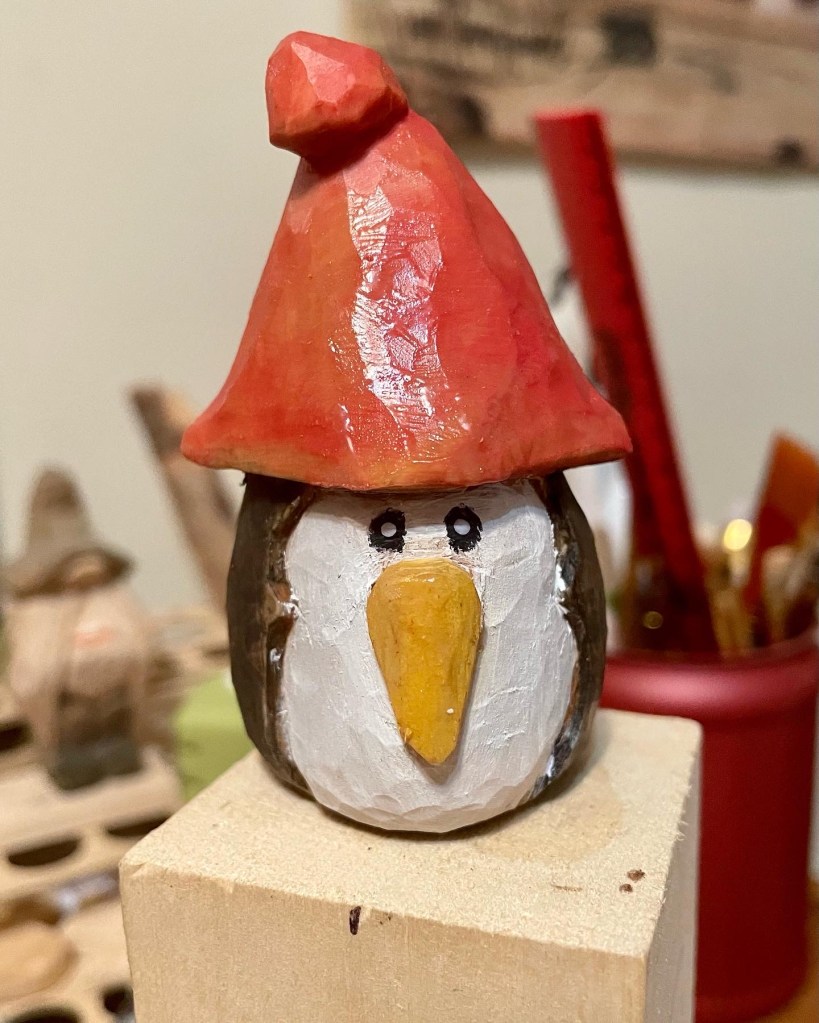
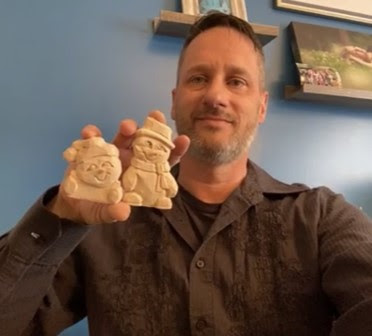
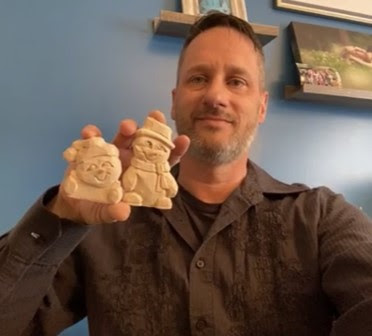
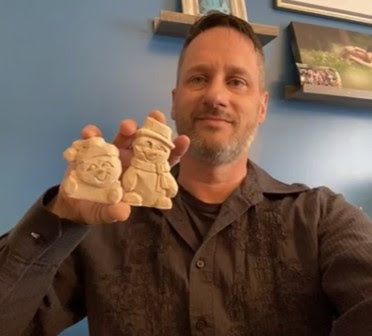
My friend, Shannon Coker has been busy with her holiday carving and sent in these photos of two of her latest carvings:

Thank you so much for the photos, Shannon!  They’re always greatly appreciated.  You did a terrific job on both but I especially like the snowman.

My good friend, Wayne Smith from Nova Scotia, Canada has been very busy and sent in a photo of what he’s been up to.  Wayne writes:

“I’m attaching a picture of a few of my latest ornaments. These are a result of me reading an article by Tom Hinds back in 2008. His 5 minute wizard tutorial got me interested and it has evolved into this… it’s been a lot of fun . Wayne”

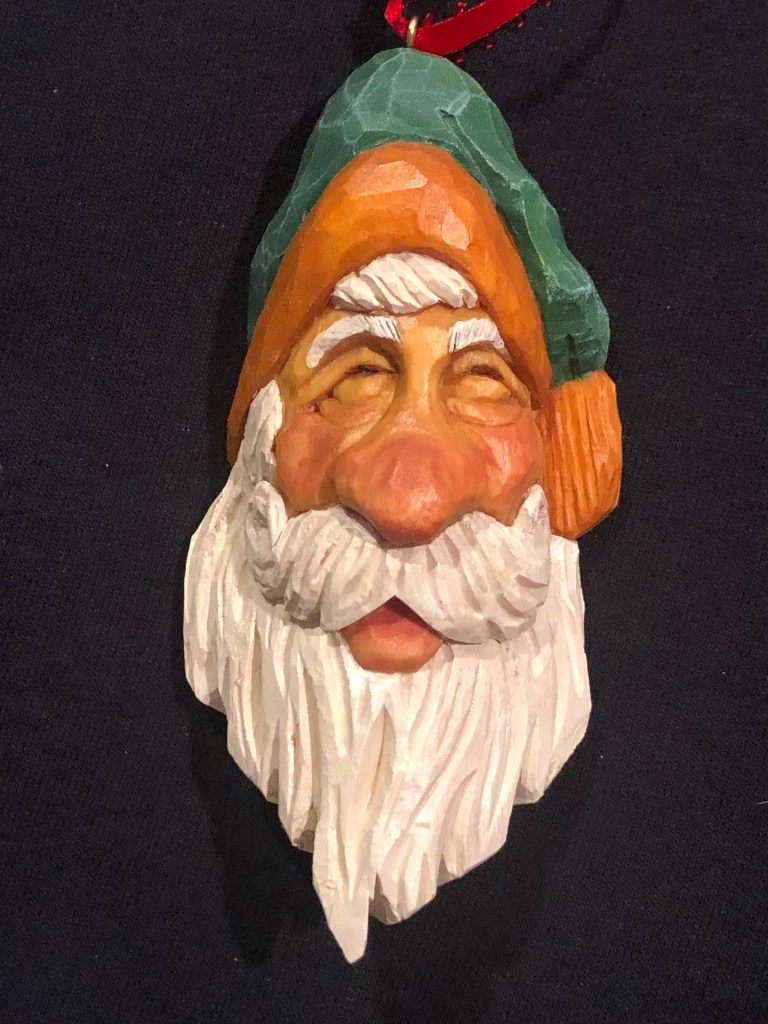
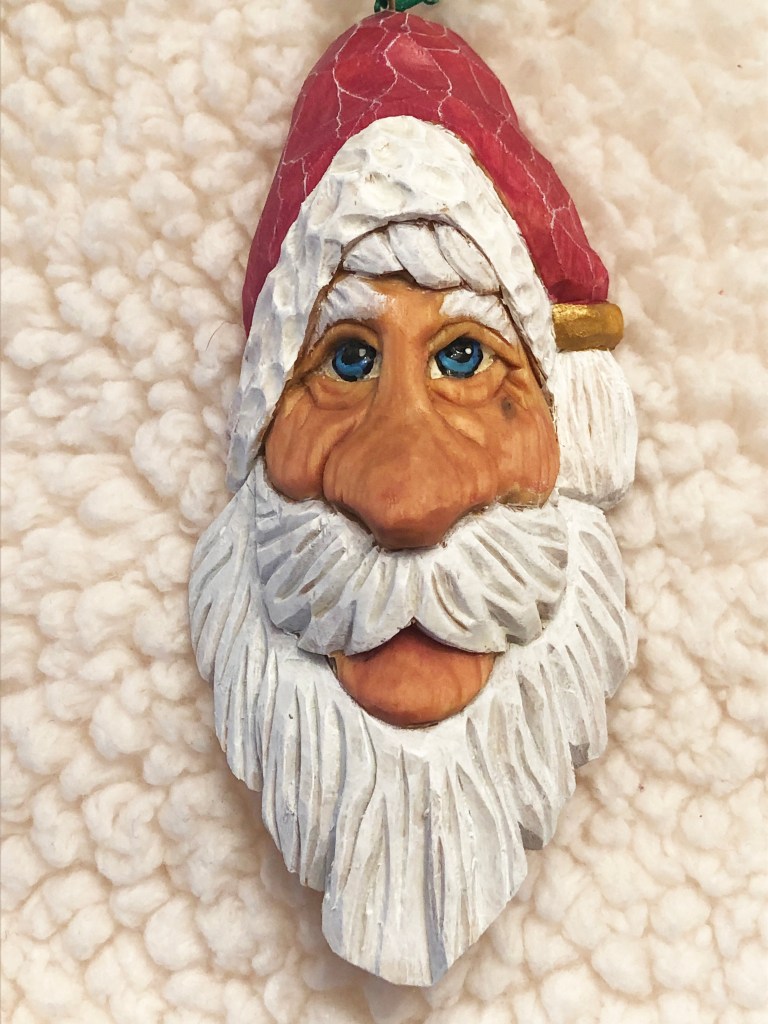
Wayne’s Santa Ornaments

Thanks for the photo, Wayne. Your ornaments look great as does all your work. I’m always happy to see photos of your work and feel free to send in photos anytime.

My good friend Jim Babcock from Columbus, Indiana also send in some photos of his latest projects.  Jim writes:

“Bob:

Santa carvings of any shape or size always seem popular.   I had a bit of basswood on hand

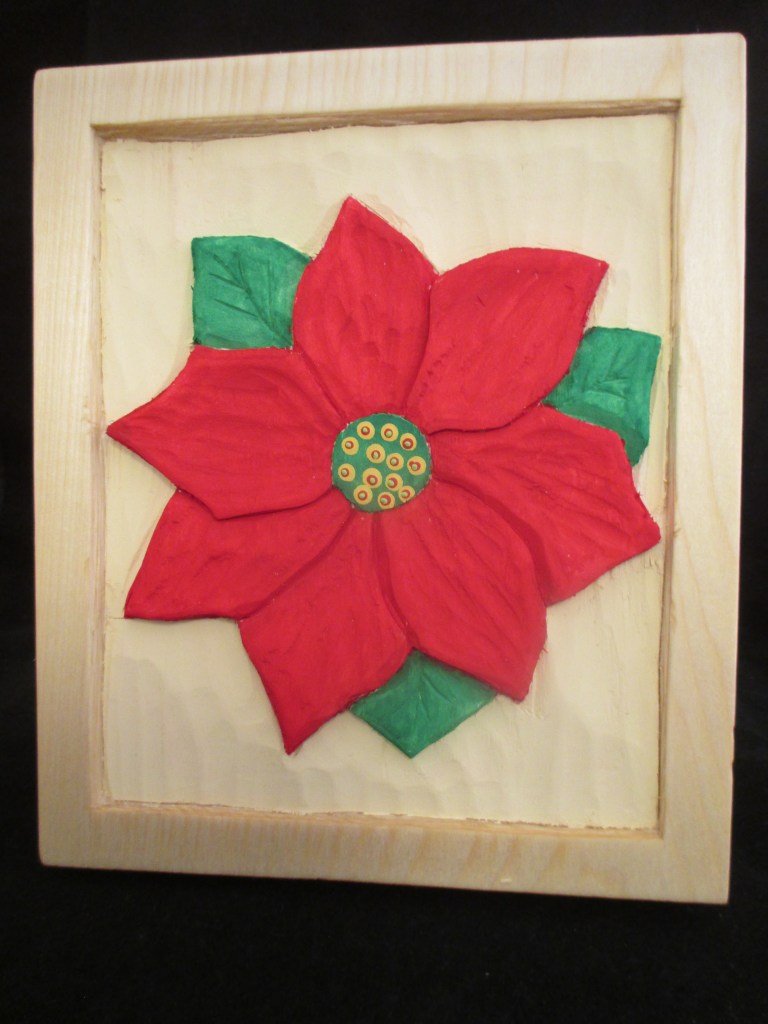
so thought I would carve a santa.   Also added a  poinsettia relief for this holiday season.

Best regards,

Jim Babcock

Columbus, Indiana”

Jim’s Poinsettia Relief Carving

Thanks for the photos, Jim!  I really love the poinsettia relief carving.  Great job!

Carver’s Corner

“Carver’s Corner” is the section where you can send in photos of your carvings to have me critique them and offer you my truthful opinions on what you did right and what you might improve on next time.  It’s an excellent opportunity to improve your carving skills!  Send your photos to: carverbobk@woodchipchatter.com

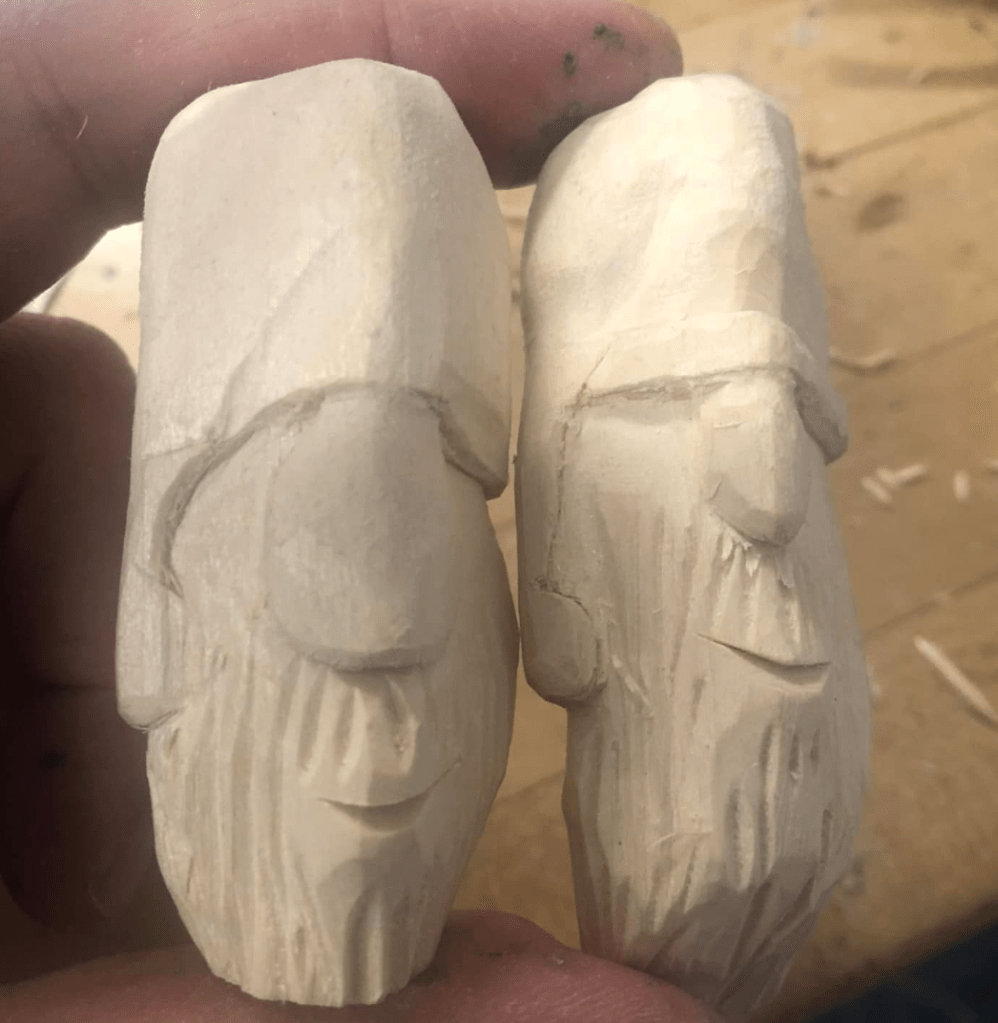
My good friend, Jim Weiner has been busy practicing carving hair and beards, and sent in a photo of his latest effort.  Jim writes:

“Hello Bob,

                   Thank you for the advice on hair, I have been practicing your recommendations and I think I have it now, what do you think?

Your Friend,

Jim Weiner”

Your practice seems to be paying off, Jim!  It looks like you really have the hang of it now.  You did an excellent job of creating random clumps of hair with well placed deep knife and gouge cuts.  All I can say is keep up the good work!

Inspiration is Everywhere

Wood carving inspiration can come from anywhere.  It’s literally everywhere around us.  There are people, places and things in our daily lives, but I find Google to be my greatest source of information when looking for inspirational ideas.  Try searching Google for clipart and images of the subjects you have in mind, and you will find dozens of ideas that will inspire you to create your own patterns.

Cartoons, newspapers and books are other terrific sources.  My favorite sources for inspiration, however, are catalogs.  You know, all those gift catalogs that we all call “junk mail.”  Don’t throw them out before thumbing through them.  They are loaded with all kinds of ideas for interesting carvings. 

Look around.  Be creative.  Inspiration is everywhere!

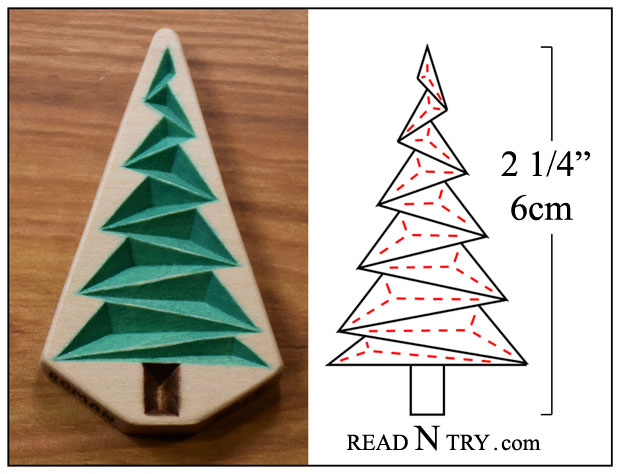
Here is an attractive tree ornament that anyone can carve:

Tree Chip Carving Pattern

Carving Light the Way Santa (5″)

Teacher: Dale Green

Dates: December2,3

Saturday & Sunday  9:30 am-11:30 Pacific / 10:30 am – 12:30 pm Mountain /
11:30 am- 1:30 pm Central / 12:30 pm – 2:30 pm Eastern

4 hours ( 2 sessions – 2 hours each day) 

Location: Online (Via Zoom)

Cost: $95, includes class, rough-out and shipping in the US 
(International students $115)

Pay for registration  with Dale here:  https://paypal.me/DaleGreenWoodcarving

Sign up With Dale

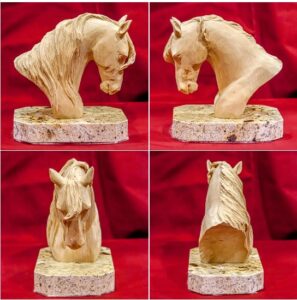
Horse Head


Teacher: Janet Cordell

Dates: January 5, 8, 12, 15, 19, 22, 2024 

Times: 2-4 p.m.  Pacific Time 3-5 p.m.  Mountain Time 4-6 p.m.  Central Time 5-7  p.m.  Eastern Time

12 hours ( 6 sessions – 2 hours each day) 

 Location: Online (Via Zoom)

Cost $175 cost includes one blank. 

For details and to sign up email Janet Cordell 

Contact Janet

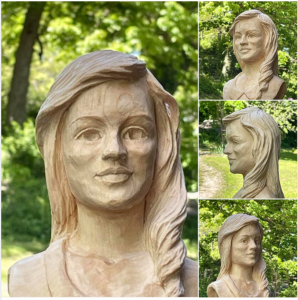
Woodcarve Cute ‘n quirky busts Pretty females with character

Teacher: Ryan Olsen

Dates: January 6,7,13,14 (PM Sessions)

Time: Sat, Sun – 1:30pm-3:30 Pacific /3:30pm-05:30pm Central / 4:30pm – 6:30pm Eastern

8 hours ( 4 sessions – 2 hours each day)

To sign up Contact Ryan Olsen ryanscaricatures@gmail.com

Contact Ryan Olsen

Woodcarving Elderly Couple

Teacher: Dave Stetson

Dates:  January  20, 21,27,28

Times:  Sat, Sun – 9:30am-11:30 Pacific /11:30am-01:30pm Central / 12:30pm – 2:30pm Eastern

8 hours (4 sessions – 2 hours each day)

 Location: Online (Via Zoom)

For details and to sign up email Dave Stetson

Contact Dave Stetson

Online Classes With Chris Hammack

Teacher: Chris Hammack 

Chris Hammack is offering a new series of online classes to help students learn and sharpen their woodcarving skills.  Individual and Group Classes are available through his web site chrishammackart.com/groupclass

Whittle Wednesdays

Teacher: Dwayne Gosnell  

Dates: Two – 2 hour classes each month on Wednesdays

Location: Online (Via Zoom)

To sign up contact Dwayne Gosnell via email dagwood_76@gmail.com

Woodcarving Academy

Established in 2020, the Woodcarving Academy offers dozens of videos and seminars created by some of the country’s top level instructors.  More videos are added regularly as they are created by the instructors.

With a paid subscription to the Woodcarving Academy you can view any videos you like for as many times as you like.

Subscription rates:  Monthly = $19.95   Quarterly = $49.95   Annual = $139.95

There is even a Free level which allows you to tour the website and watch the sample videos and content, and receive email updates as new content becomes available.

Check out the Woodcarving Academy and learn with the masters right in the comfort of your own home!  Go to: www.woodcarvingacademy.com or Email: support@woodcarvingacademy.com

The International Association of Woodcarvers has upcoming Zoom meetings on the following Saturdays at 3PM EST with special guest presenters.  Check them out…

Zoom:  310-460-3575

Presentation Schedule:

12/2 – Timmy Yusuf

12/9 – Blake Lunsford

12/16 – Ryan Olsen

12/23 – OFF

12/30 – OFF

INTERNATIONAL ASSOCIATION OF WOODCARVERS

COME JOIN US!!!

The Jersey Hills Wood Carvers (JHWC) club is a small but growing group of wood carvers sharing their time, knowledge and joy of woodcarving.  The JHWC generally meets from 7:00 PM EST to 9:00 PM EST on the 1st, 3rd and 5th Thursday of each month (when school is in session) at the Jefferson Township High School wood shop classroom.

Membership is “FREE” and open to anyone interested in woodcarving regardless of their ability.

JHWC’s Upcoming Meetings and Events

2023

December 7th and 21st

2024

January 4th and 18th

February 1st, 15th and 29th

March 7th and 21st

April 4th and 18th

May 2nd, 16th and 30th

June 6th and 20th

For more information contact:

Al Santucci  alsantucci4@gmail.com  President

Bill Brunner  billbrunnerdesign@gmail.com  newsletter/website editor

Or visit:

Website:  https://www.jerseyhillswoodcarver.com/

Facebook:  https://www.facebook.com/groups/736479646821641/

Complimentary Knife Sheath

Funny Bone

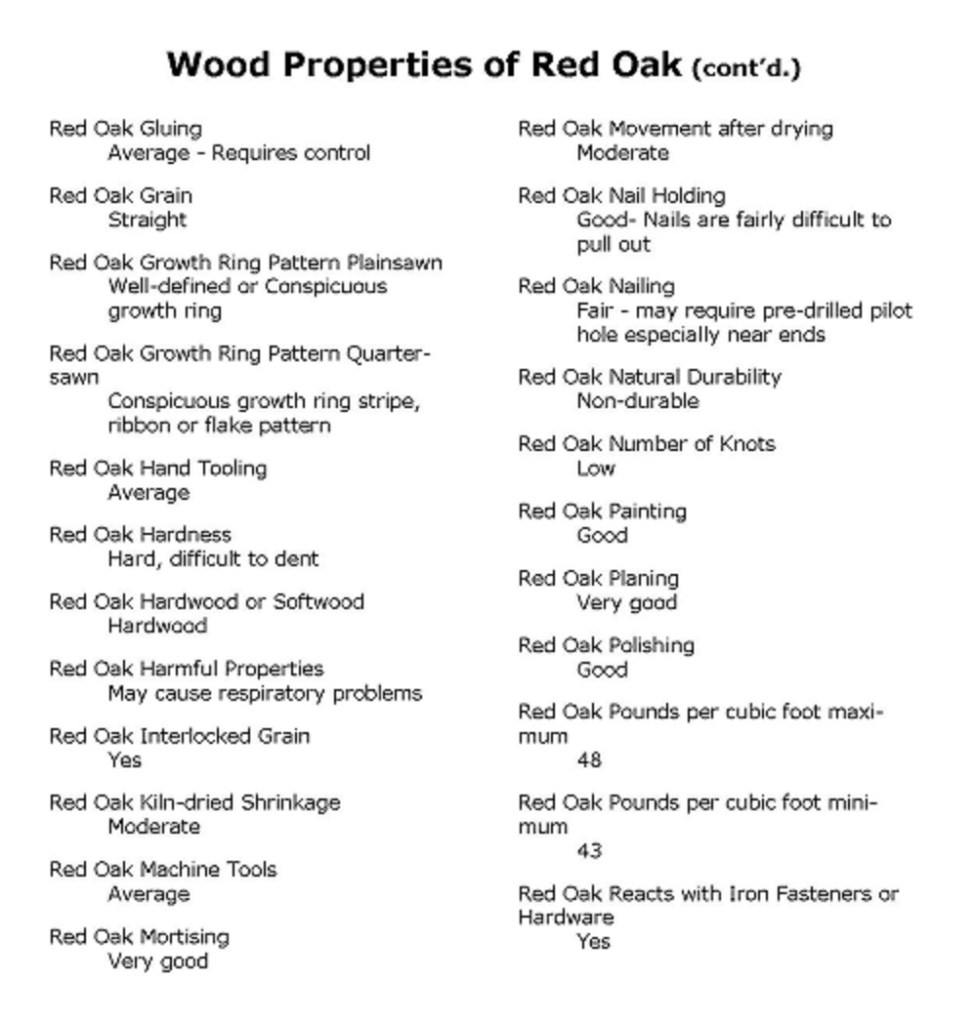
Wood Properties of Red Oak

Wood Properties of Red Oak

OAK, NORTHERN RED Quercus rubra (rubra – red)

Northern red oak is known also as CANADIAN RED OAK, GRAY OAK and RED OAK.

This tree grows across the mid-eastern part of southern Canada and the eastern section of the United States as far south as Alabama and Arkasas, and it is the state tree of New Jersey.  It reaches an average height of 65 ft., though a height of 145 ft. has been recorded.  It is probably the fastest growing of our native oaks.  As a young tree it may add 2″ to the diameter in a year and 12″ to the height.  It has a short trunk that divides into many heavy branches and is a broad, well shaped tree.  The bark varies from gray to brown in color, and the leaves, from 4 to 9″ long, are dark green in color.  The heartwood, of a light reddish brown color, is more coarse-grained than the white oak and is considered inferior to the white oak.

The wood is used for many purposes in furniture and flooring and takes a satisfactory finish, though all oaks, because of the open pores, should be filled before finishing or painting.

The red oak has become one of the most popular North American oaks used in Europe.  It was introduced into France and England during the early part of the eighteenth century and today there are many fine buildings of this oak in France, Belgium and Germany.

It is estimated that there are over eighty billion feet of oak in this country and over 50% of this is red oak.

Reader’s Comments

My first comment this month comes from my good friend, Doug Prior of West Jordan, Utah in response to last month’s Halloween edition of Wood Chip Chatter.  Doug Writes:

“Great entertainment with this month’s blog. I have never read or heard about the origins of “Halloween” so I really enjoyed that.

It was so funny you said just thinking about chip carving makes your head hurt. Mine too!

Take care Bob

Doug Prior West Jordan, UT”

Thanks for the kind comment, Doug! I think the stories of Halloween and the Jack O Lantern are entertaining and interesting. That’s why I post them every October. I hope my readers don’t mind.

Yeah, chip carving really makes my head spin!

My next comment is from an anonymous reader who wrote:

“Great letter this month!
Relating the origins of the spooky holidays adds to the mystique of the carvings you present from readers!
Keep up the good work.”

Thank you for your kind comment and words of encouragement.

Next, I received a nice comment from my friend, Glenn Calabrese of Fort Worth, Texas who wrote:

“Great edition! I read the whole thing and love the advice.
Thank you for this.

Glenn Calabrese, Fort Worth, Texas”

Thank you for your comment, Glenn! I’m glad you enjoyed it!

“Photo Shop” is the section of Wood Chip Chatter where carvers can send in photos of their wood carvings for display. It’s your chance to show off your work…sort of a show and tell. The photos will only be displayed and no comments or critiques will be made.  For critiques on your carvings send them in to the “Carver’s Corner.”  Send your photos to: carverbobk@woodchipchatter.com

This month we have two entries to the “Photo Shop” from my good friend, Jon Gledhill who first writes:

“Bob, Thanks for your kind comments about my chip carving. I’m sorry I missed noticing your request to share pumpkin carvings. I don’t have any wood pumpkins, but thought you might enjoy seeing this one I carved a few years ago, using my wood carving tools. Best wishes for a wonderful holiday season! Jon Gledhill”

That’s an outstanding job you did on that pumpkin, Jon!  I’ve been wanting to try carving that style of pumpkin for a few years but have never found the time to do it.  Thanks for sending it in, it’s terrific!

Jon later writes:

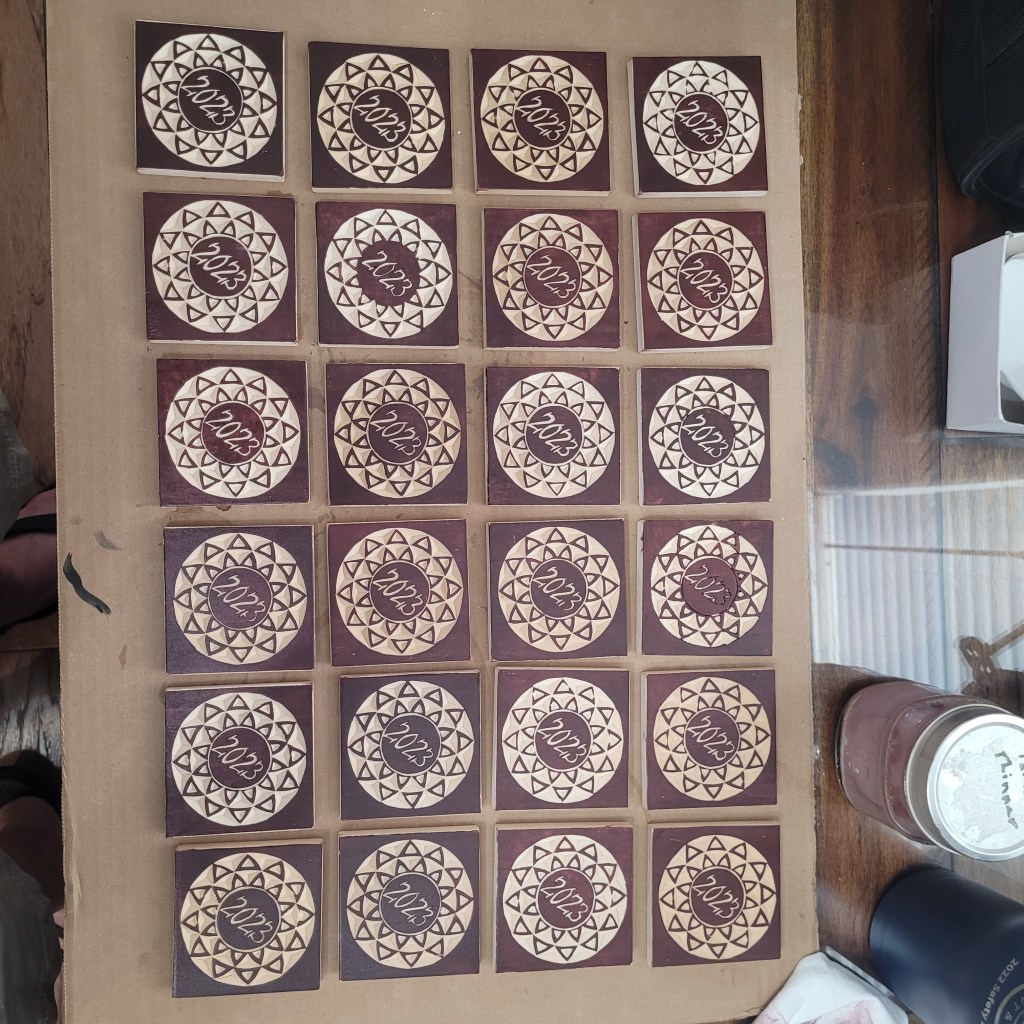
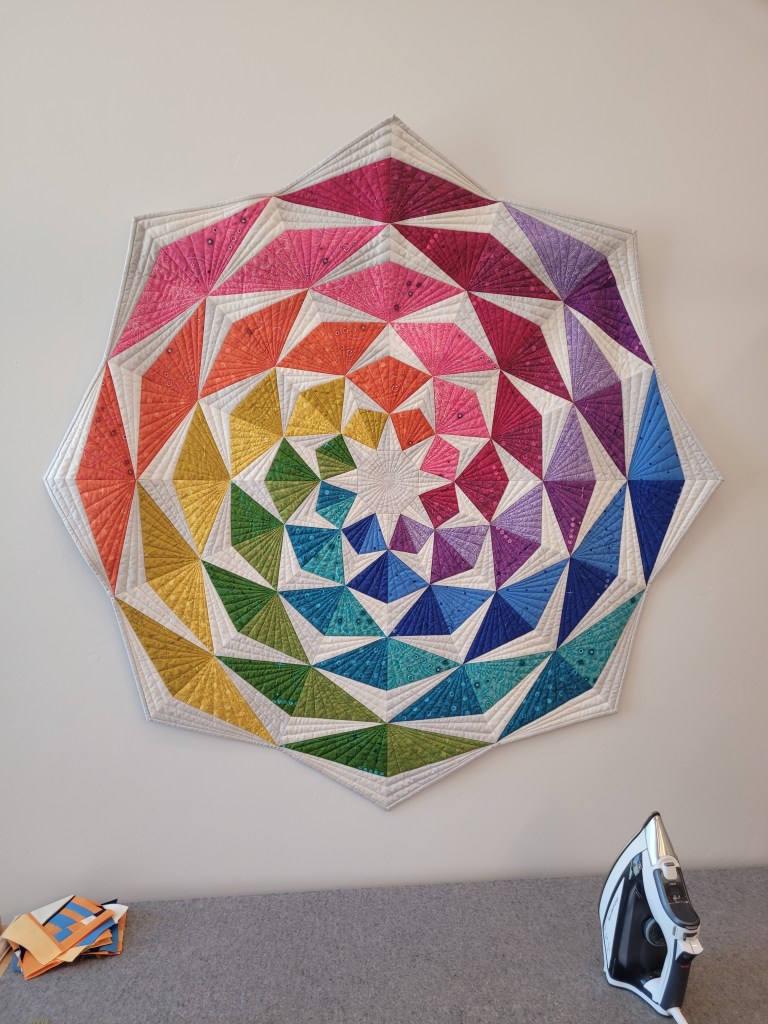
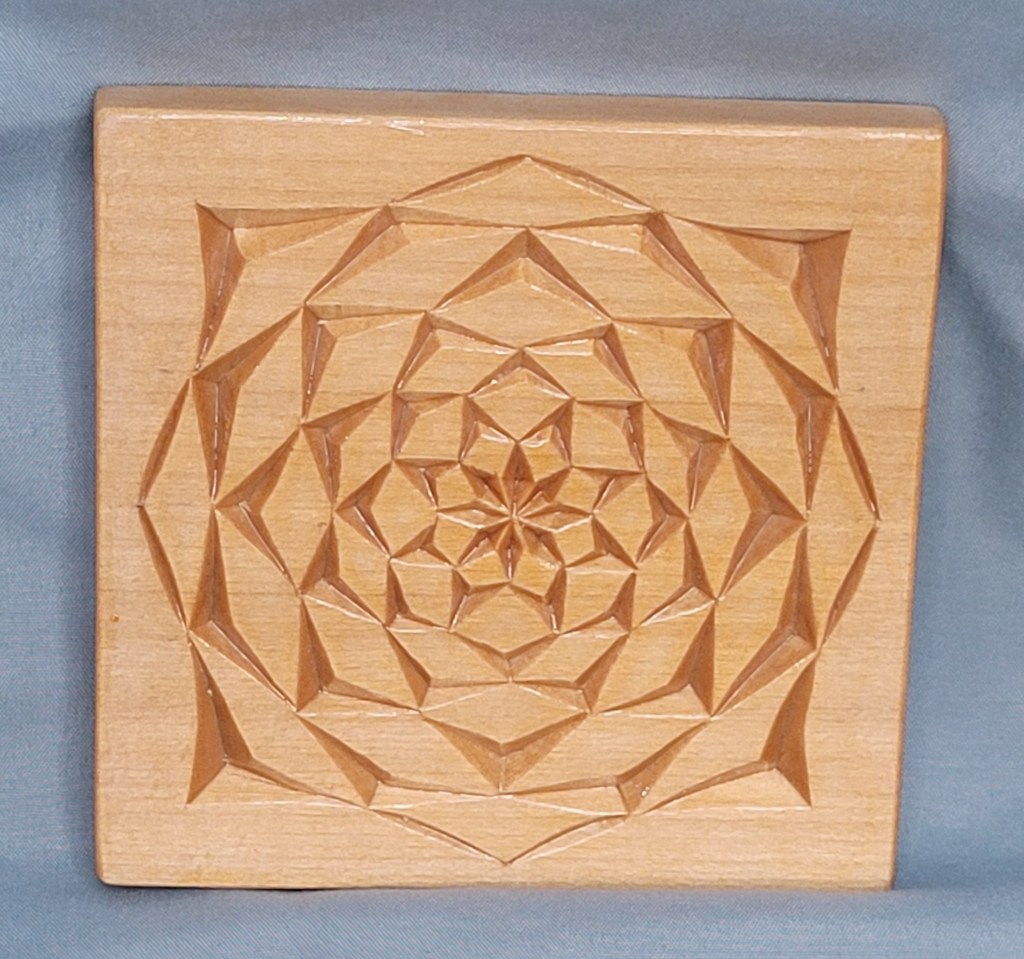
“Bob, thought you might like this. I saw this 4′ quilt at a customer’s house during my day job, and asked if I could take a picture of it.  She agreed,  and I later took her one of the 4” painted coasters I carved from the photo, to thank her for sharing it with me. 

The other photo is a positive image version of the design.

Have a great weekend!

Jon”

You matched the 4″ quilt pattern perfectly with your coaster, Jon and although I prefer the unpainted versions of chip carvings better, your painted coater makes it much easier to see the pattern.  The way you managed to reverse the pattern and carve the positive image is what really boggles my mind.  Excellent work, my friend!

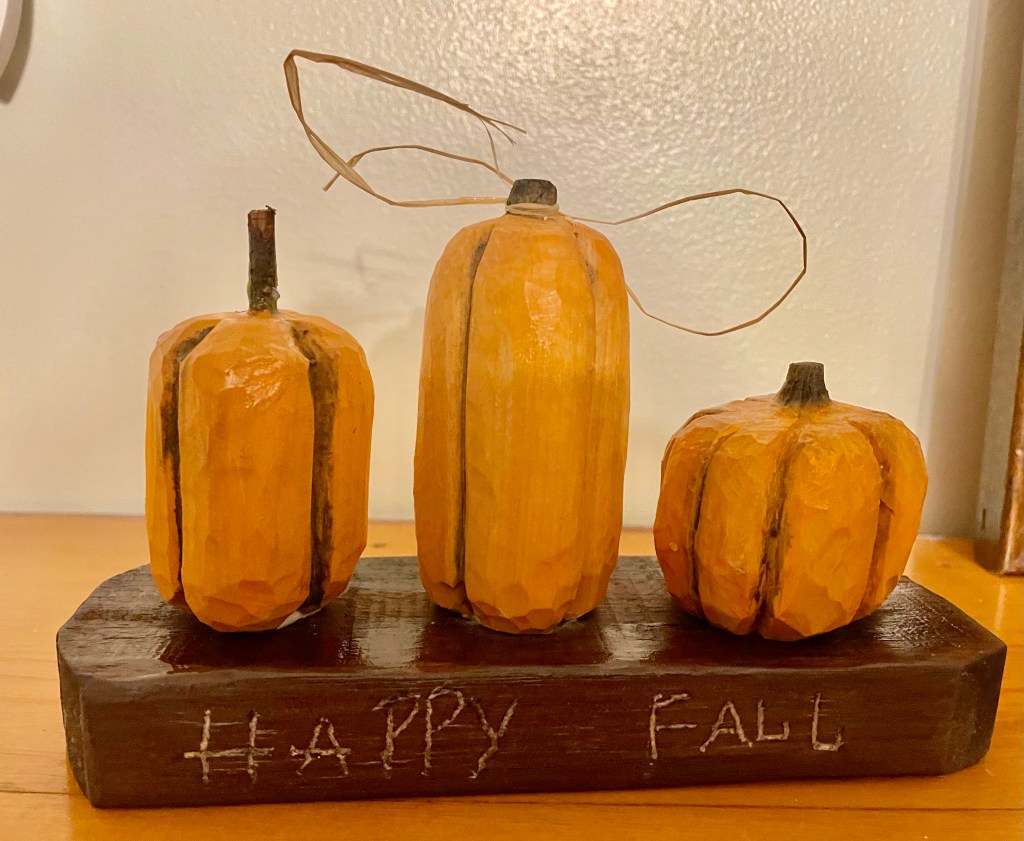
My friend Shannon Coker sent in a photo of the beautiful fall pumpkin set she carved for her mom.  Shannon writes:

“A gift for my mom. Doug Linker inspired 

Shannon”
“Don’t ever apologize it’s a sign of weakness”
John Wayne

Shannon’s Pumpkins

I love your pumpkins, Shannon, and especially like how you carved them all different shapes and sizes and mounted them on a base.  I’m sure your mom appreciated them.

Also, thank you for the John Wayne quote.  I will definitely remember it.

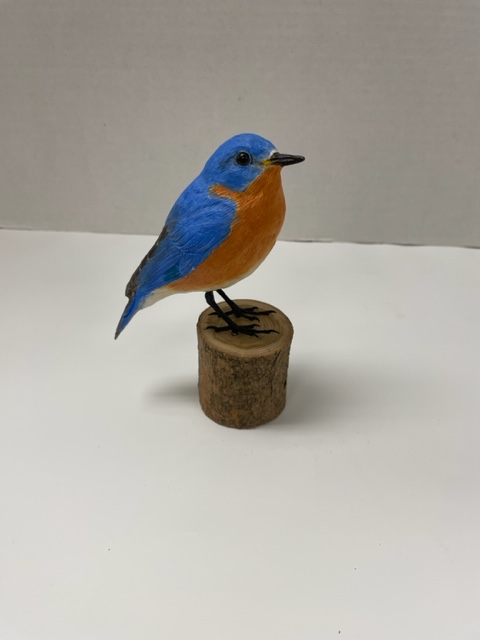
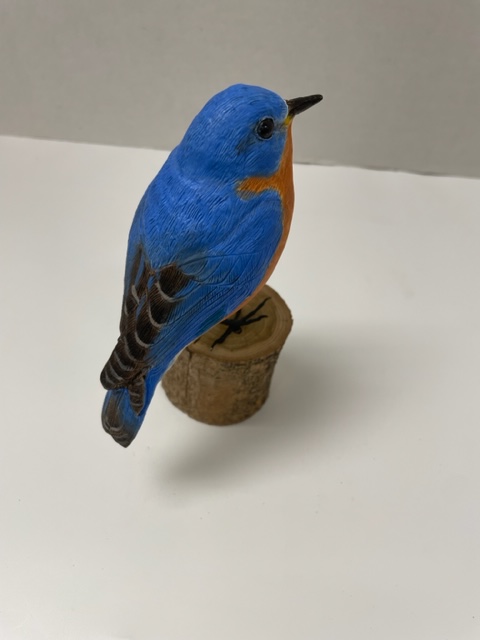
Next, we have some photos of a bluebird that was power carved by my good friend, Dick Bonewitz from Carmel, Indiana.  Dick writes:

“Here are photos of a bluebird I recently power carved from Tupelo wood.  I followed a study cast and painting instructions from Josh Guge, a champion carver.  Painted with Liquitex heavy body acrylic paints. I spent a day with Josh in his studio in Elgin Illinois when painting and I highly recommend him as an instructor.

Dick Bonewitz

Carmel In”

Magnificent job on your bluebird, Dick!  Everything about it seems to be spot-on right down to the fine feather details.  You have apparently learned well from your time spent with Josh Guge.

Carver’s Corner

“Carver’s Corner” is the section where you can send in photos of your carvings to have me critique them and offer you my truthful opinions on what you did right and what you might improve on next time.  It’s an excellent opportunity to improve your carving skills!  Send your photos to: carverbobk@woodchipchatter.com

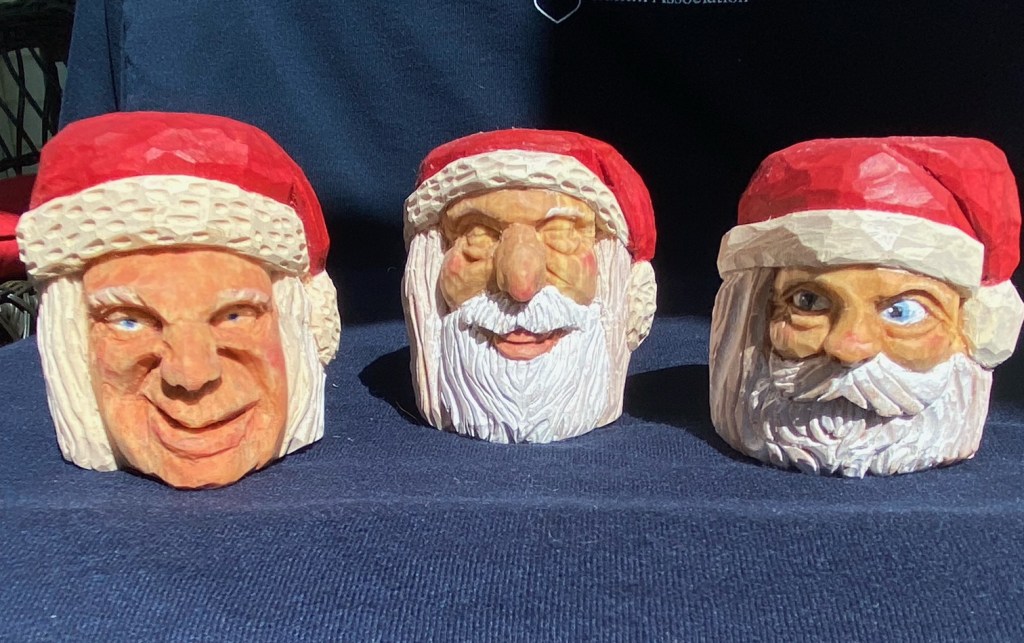
This month in the “Carver’s Corner” we have some photos of Santas carved by my friend and new subscriber, Andy Doiron from Maine.  Andy would like some advice on how to improve his carvings and writes:

“Hello, 

I came across your blog and page after hearing about it on Woodcarving Weekly with Uncle Jack on youtube.. I was hoping you would take a look at these 3 Santas that I recently carved. I have started following Van Kelly’s videos and he has helped with my facial features. I have been carving for about 2-3 years but it is more 8 months off, 4 months on type of things.. I know I should carve every day but with other hobbies and seasons other things take precedence. Everything is done with a knife except the whiskers and the eye groves. 

Any advice would be appreciated. 

Thanks 

Andy 

from Maine”

From looking at your photos I can see you’ve made a vast improvement in one year and you have the right idea but you’re consistently making the same mistakes and as a result all of your Santas look basically the same.

I guess I’ll start at the bottom and work my way up.  So starting with the beards, they are unfinished at the bottom.  Instead of leaving them cut off flat try either rounding the bottoms or bringing them to somewhat of a point.  Your hair texture is too straight and short.  Most hair does not grow straight.  When doing any kind of hair texture you want to make lazy “S” and “C” cuts, and try to make them a bit longer.  Instead of straight up and down make your cuts on an angle and vary the size and depth of the cuts.  Use different sized gouges to accomplish this.  You can even use your carving knife to deepen some of the cuts.

The next thing I notice is that your noses seem to be too long, straight and narrow.  Try making your noses shorter (which will alter the entire look of the face),  Also, the outer part of the nostrils should line up with the center of the eyes.  Try adding nostrils to your noses for added realism.  Use a small gouge to make a single cut to carve in each nostril.  It will make a big difference.

You seem to be on the right track with the eyes which are probably the most difficult part of the face to carve.

Hats come in all different shapes and sizes, and are often a matter of the carver’s choice.  The first thing you should do is carve the point off the center of the hat.  Santa’s hat does not come to a point in the front.  Take that point off and carve it back to flatten it out.  This will give the hat a more rounded appearance.  I personally like to make my hat trim on the wider side, just a matter of preference.  Add texture to your hat trim with gouge cuts throughout the area.  There are lots of ways to carve hat trim.  Study photos of other carvings for ideas.

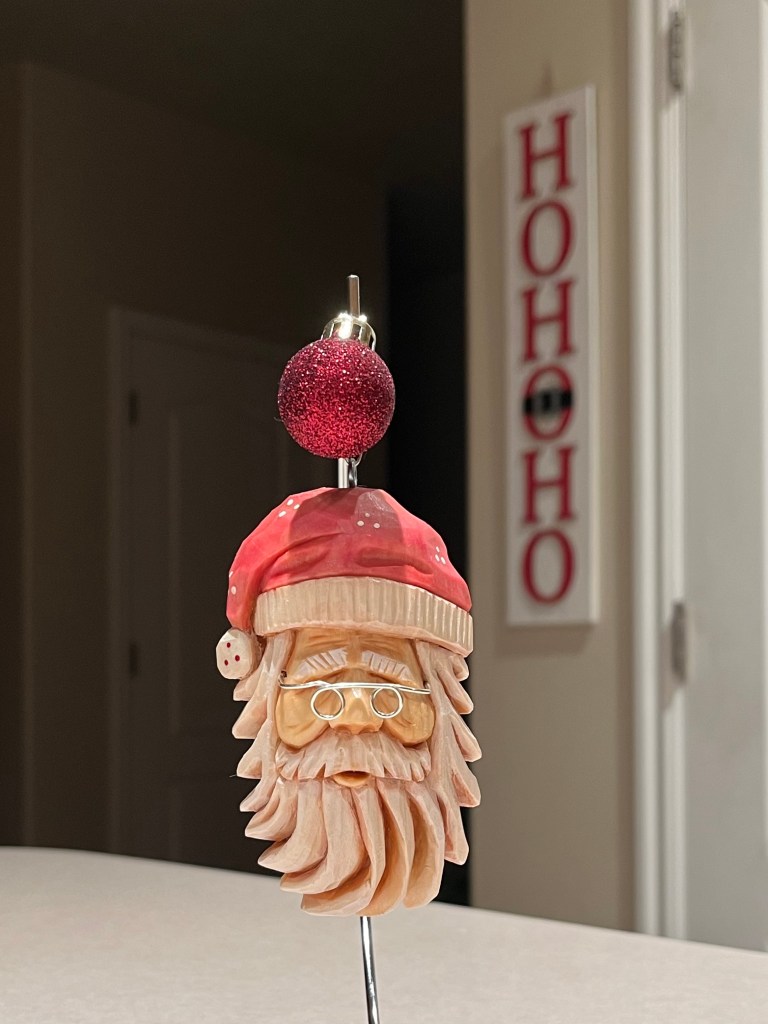
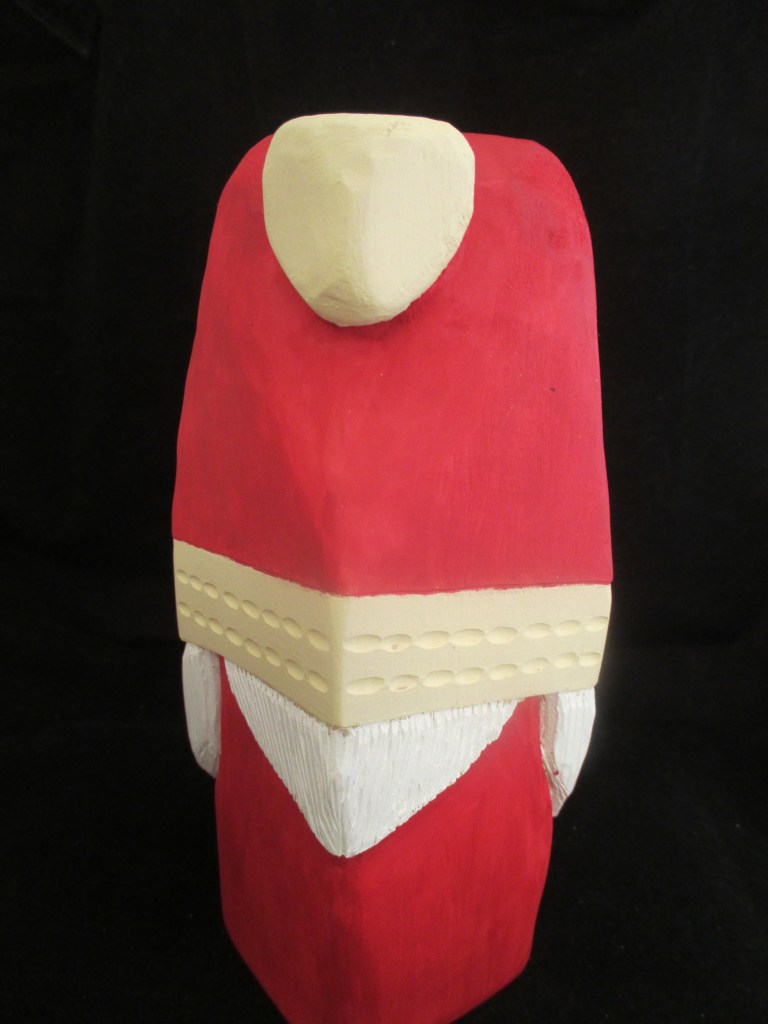
I have included a photo of one of my Santa ornaments to help demonstrate what I have explained above.  It’s by no means perfect bu hopefully it will give you some guidance.

Bob’s Santa Ornament

I’ve given you a lot to digest but if you follow this critique you will surely see your carvings improving in short order.  Keep up the good work and please send in another photo after you’ve had time to practice.

Here is a simple owl pattern that can be carved as a stand-alone figure or carved as a tree ornament:


Teacher: Dale Green

Dates: December2,3

Saturday & Sunday  9:30 am-11:30 Pacific / 10:30 am – 12:30 pm Mountain /
11:30 am- 1:30 pm Central / 12:30 pm – 2:30 pm Eastern

4 hours ( 2 sessions – 2 hours each day) 

Location: Online (Via Zoom)

Cost: $95, includes class, rough-out and shipping in the US 
(International students $115)

Pay for registration  with Dale here:  https://paypal.me/DaleGreenWoodcarving

Sign up With Dale

 Teacher: Janet Cordell

Dates: January 5, 8, 12, 15, 19, 22, 2024 

Times: 2-4 p.m.  Pacific Time 3-5 p.m.  Mountain Time 4-6 p.m.  Central Time 5-7  p.m.  Eastern Time

12 hours ( 6 sessions – 2 hours each day) 

 Location: Online (Via Zoom)

Cost $175 cost includes one blank. 

For details and to sign up email Janet Cordell 

 Contact Janet

Online Classes With Chris Hammack

Teacher: Chris Hammack 

Chris Hammack is offering a new series of online classes to help students learn and sharpen their woodcarving skills.  Individual and Group Classes are available through his web site chrishammackart.com/groupclass

Whittle Wednesdays

Teacher: Dwayne Gosnell  

Dates: Two – 2 hour classes each month on Wednesdays

Location: Online (Via Zoom) To sign up contact Dwayne Gosnell via email dagwood_76@gmail.com

Woodcarving Academy

Established in 2020, the Woodcarving Academy offers dozens of videos and seminars created by some of the country’s top level instructors.  More videos are added regularly as they are created by the instructors.

With a paid subscription to the Woodcarving Academy you can view any videos you like for as many times as you like.

Subscription rates:  Monthly = $19.95   Quarterly = $49.95   Annual = $139.95

There is even a Free level which allows you to tour the website and watch the sample videos and content, and receive email updates as new content becomes available.

Check out the Woodcarving Academy and learn with the masters right in the comfort of your own home!  Go to: www.woodcarvingacademy.com or Email: support@woodcarvingacademy.com

The Pennsylvania Delaware Valley Woodcarvers will be hosting a two day seminar/class with CCA member Kevin Applegate at the Montgomeryville Community Center in Montgomeryville, PA on November 4-5.  Cost is $100 for members and $125 for non members.  For information contact: Maxine Ernest at 267-316-8969 or Wade Huggins at 215-531-0238

The International Association of Woodcarvers has upcoming Zoom meetings on the following Saturdays at 3PM EST with special guest presenters.  Check them out…

Zoom:  310-460-3575

Presentation Schedule:

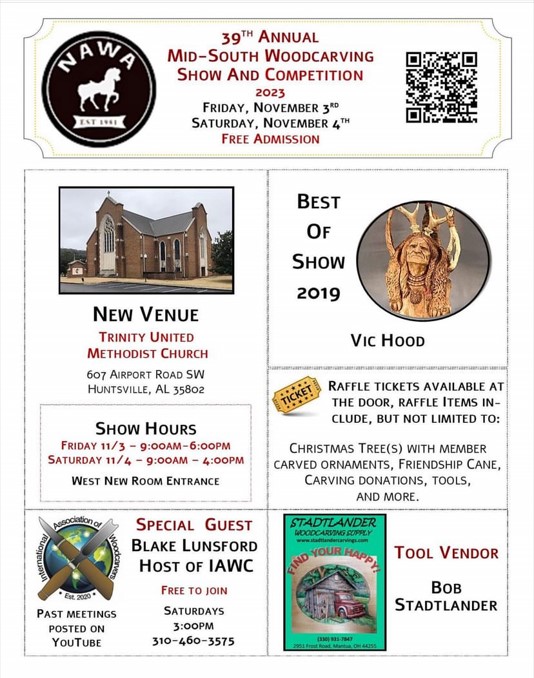
11/4 – Live from the Mid-South Alabama Show

11/11 – OFF

11/18 – Dave Stetson

11/25 – Thanksgiving

12/2 – Timmy Yusuf

INTERNATIONAL ASSOCIATION OF WOODCARVERS

COME JOIN US!!!

The Jersey Hills Wood Carvers (JHWC) club is a small but growing group of wood carvers sharing their time, knowledge and joy of woodcarving.  The JHWC generally meets from 7:00 PM EST to 9:00 PM EST on the 1st, 3rd and 5th Thursday of each month (when school is in session) at the Jefferson Township High School wood shop classroom.

Membership is “FREE” and open to anyone interested in woodcarving regardless of their ability.

JHWC’s Upcoming Meetings and Events

2023

November 16th and 30th

December 7th and 21st

2024

January 4th and 18th

February 1st, 15th and 29th

March 7th and 21st

April 4th and 18th

May 2nd, 16th and 30th

June 6th and 20th

For more information contact:

Al Santucci  alsantucci4@gmail.com  President

Bill Brunner  billbrunnerdesign@gmail.com  newsletter/website editor

Or visit:

Website:  https://www.jerseyhillswoodcarver.com/

Facebook:  https://www.facebook.com/groups/736479646821641/

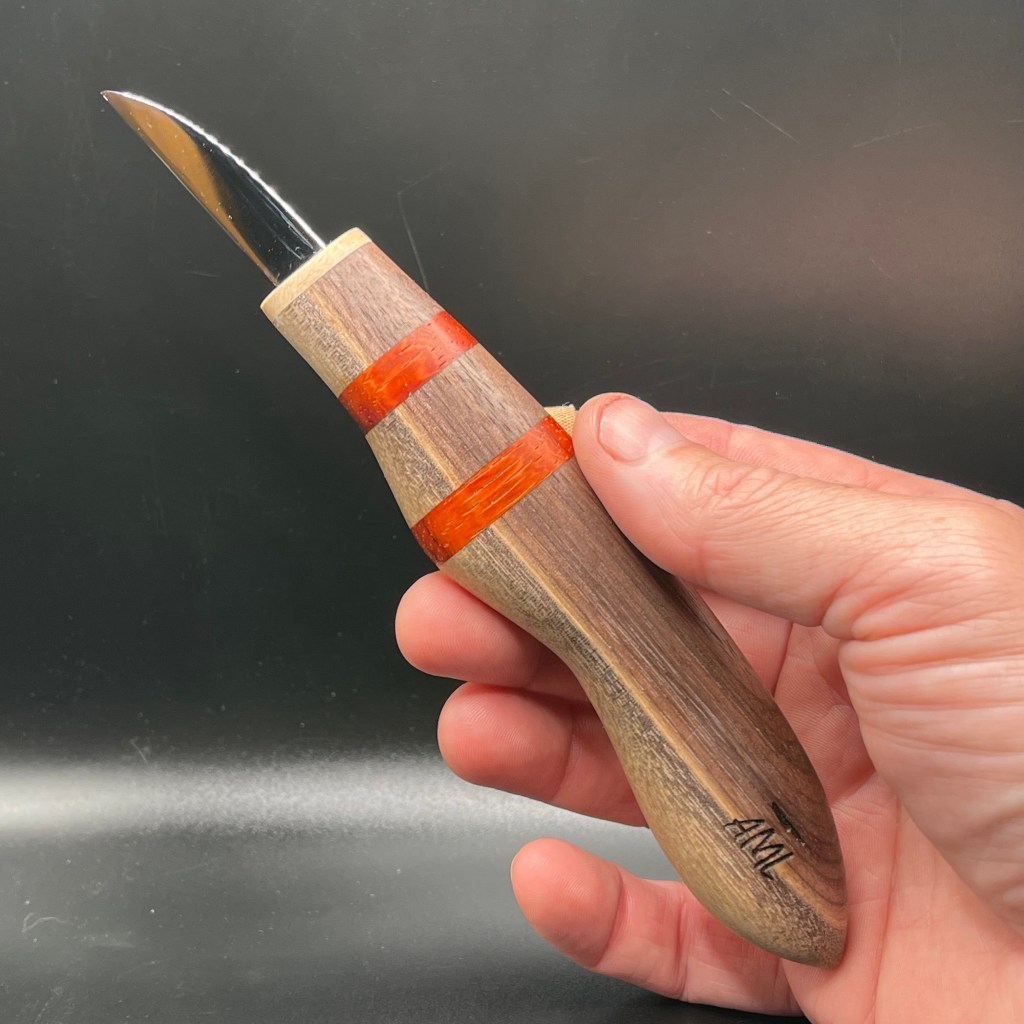
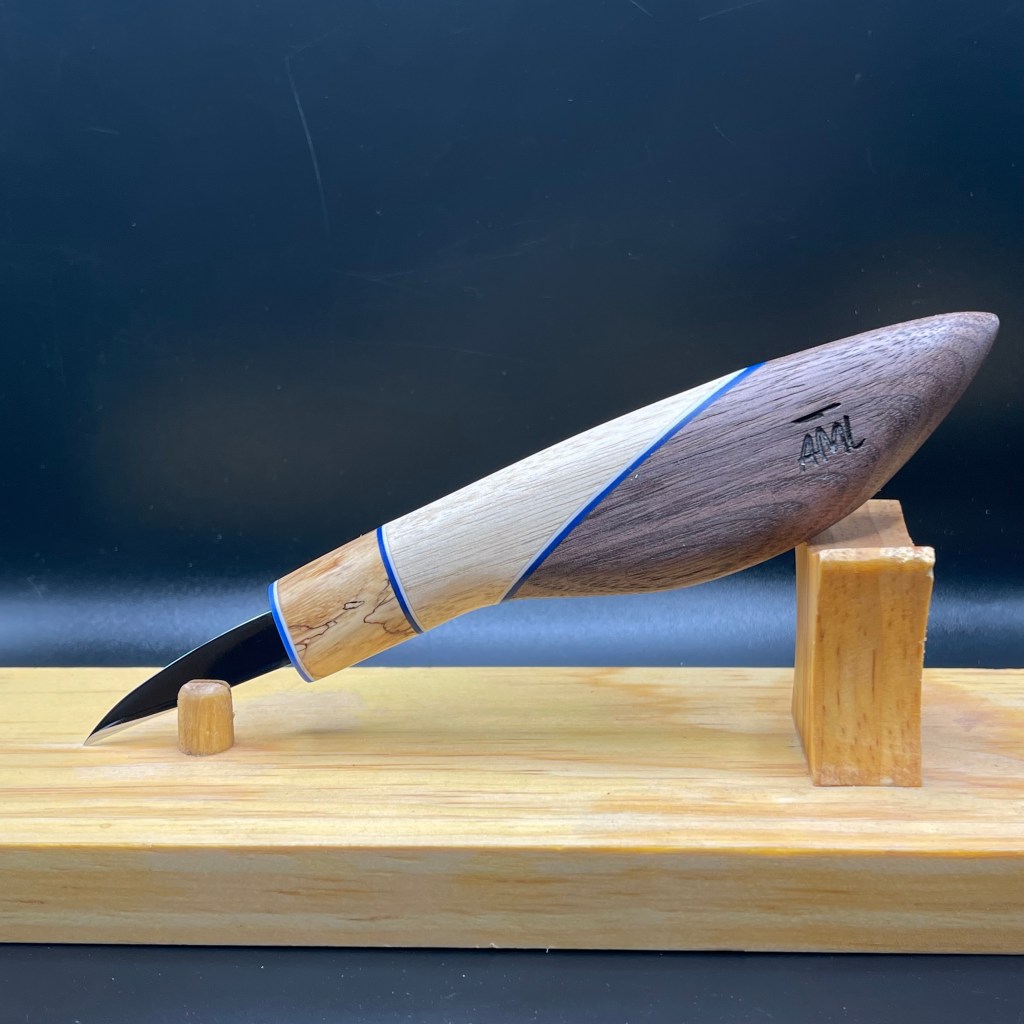
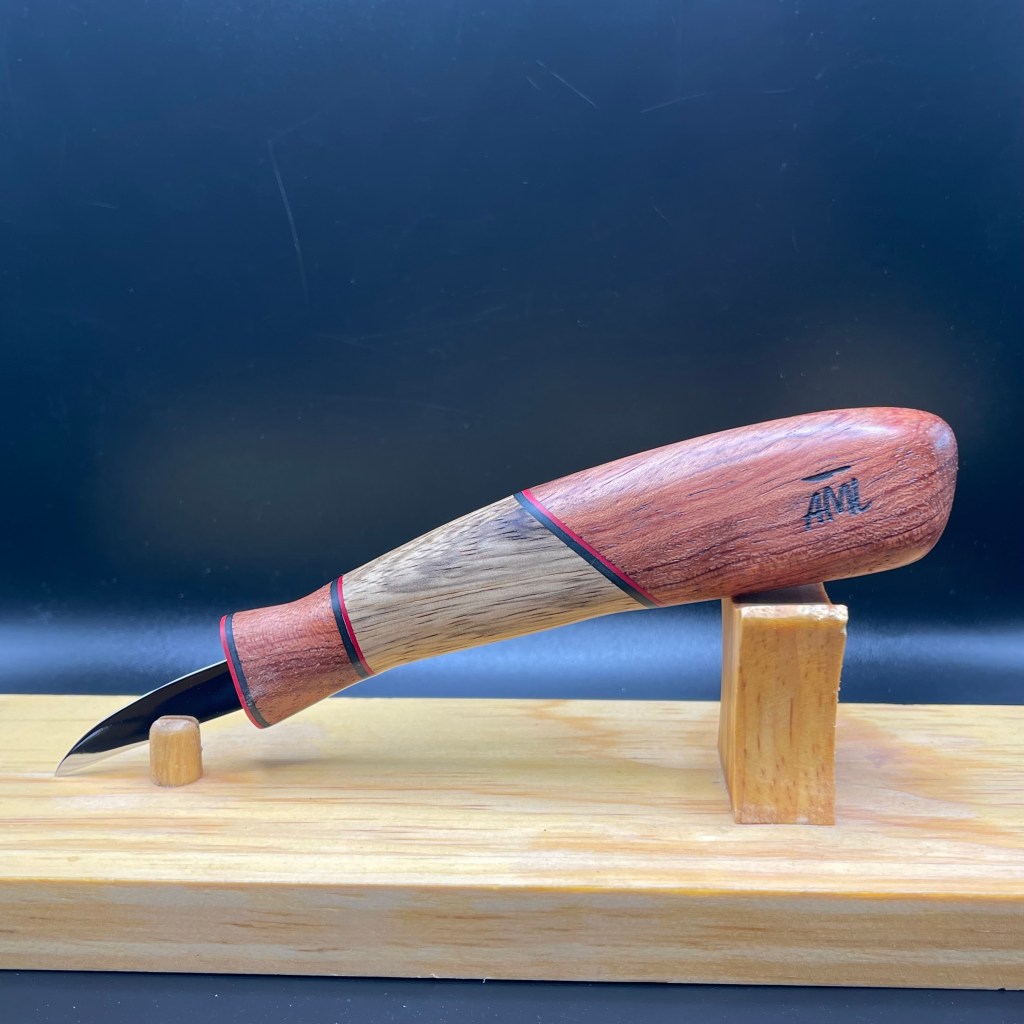
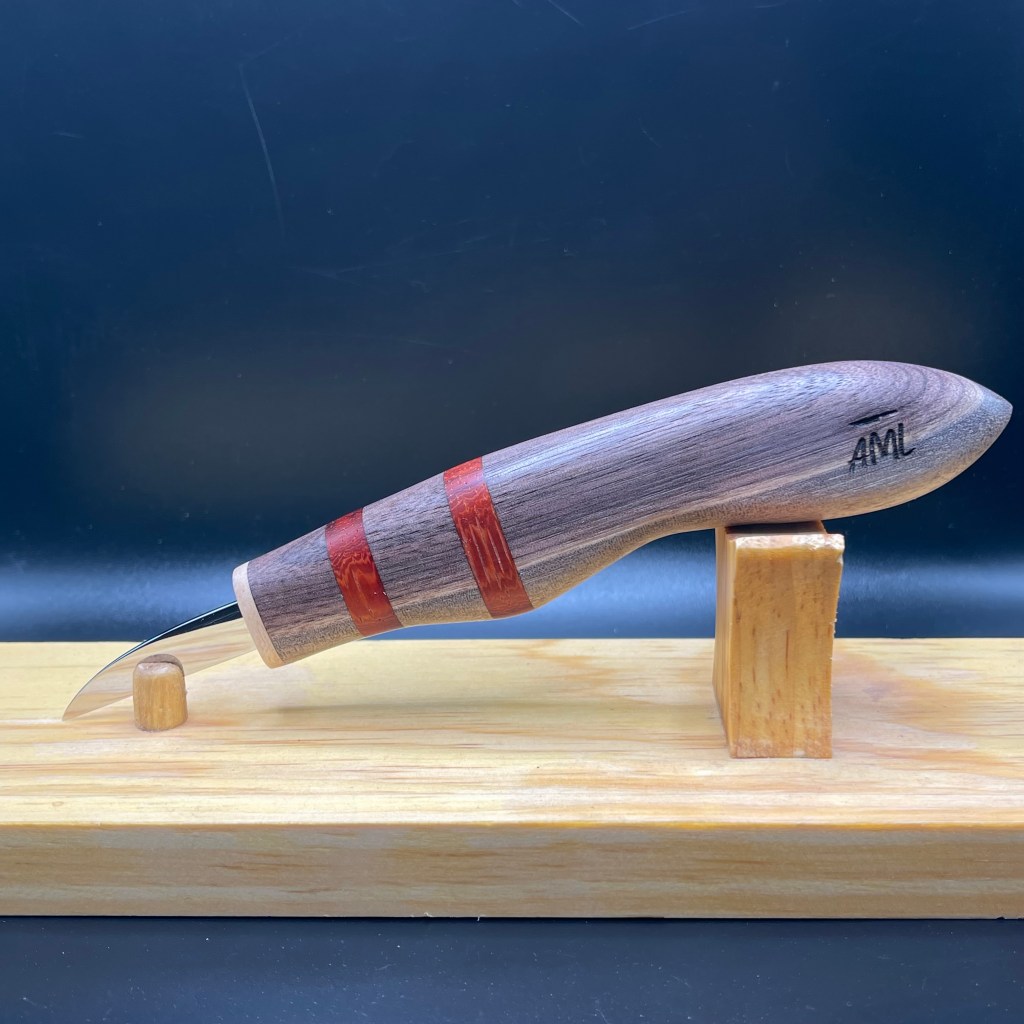
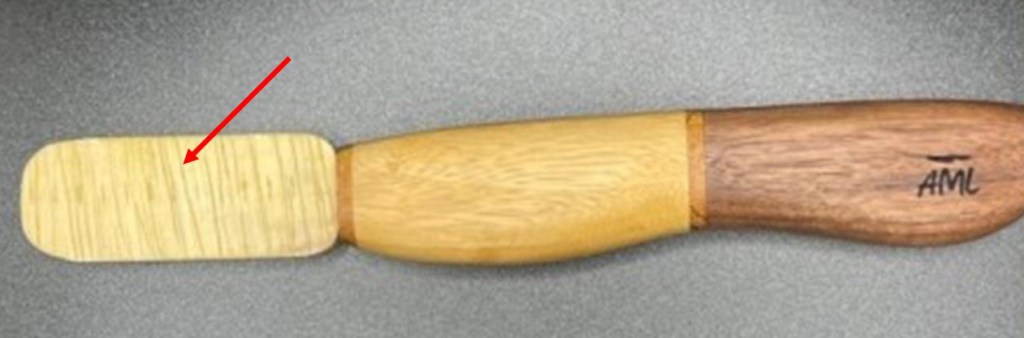
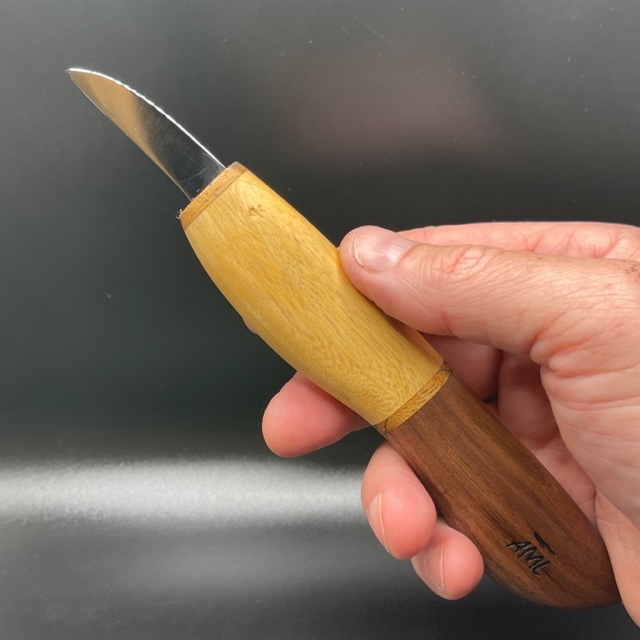
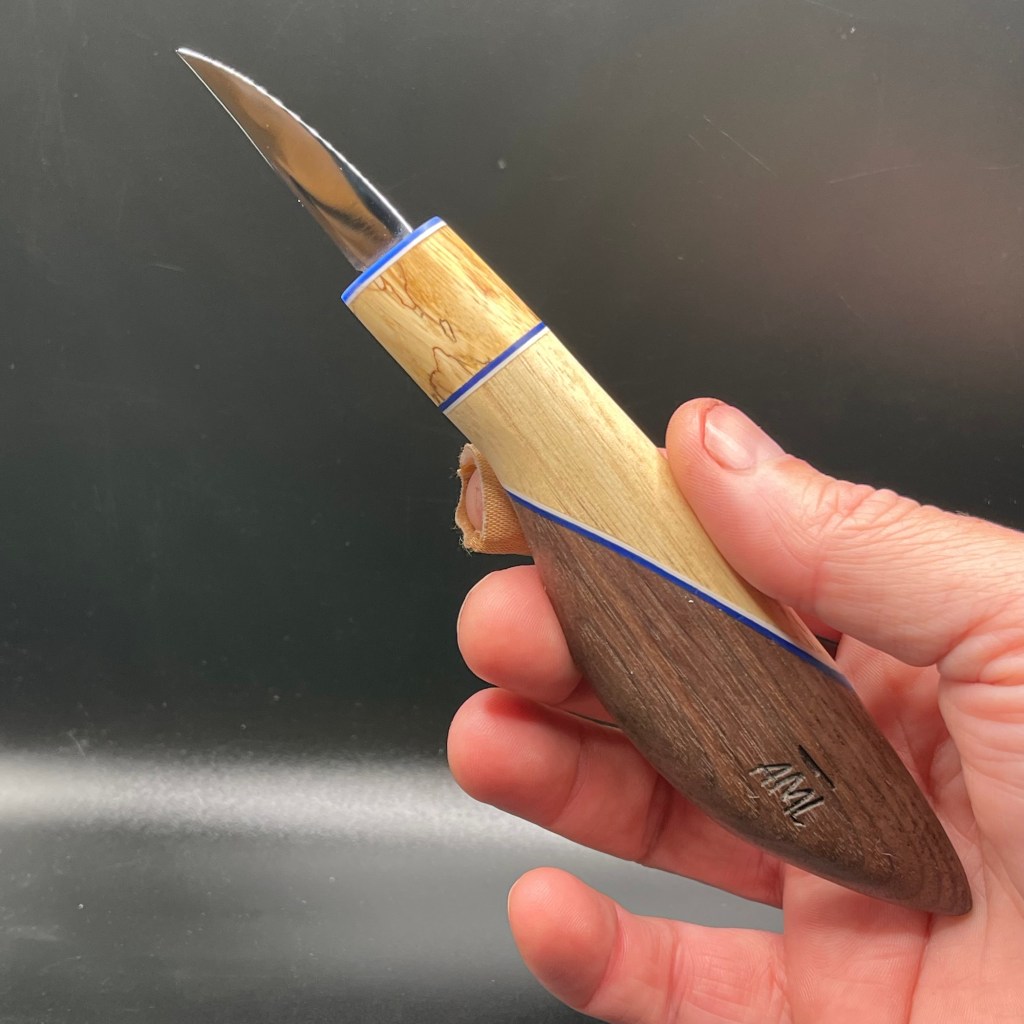
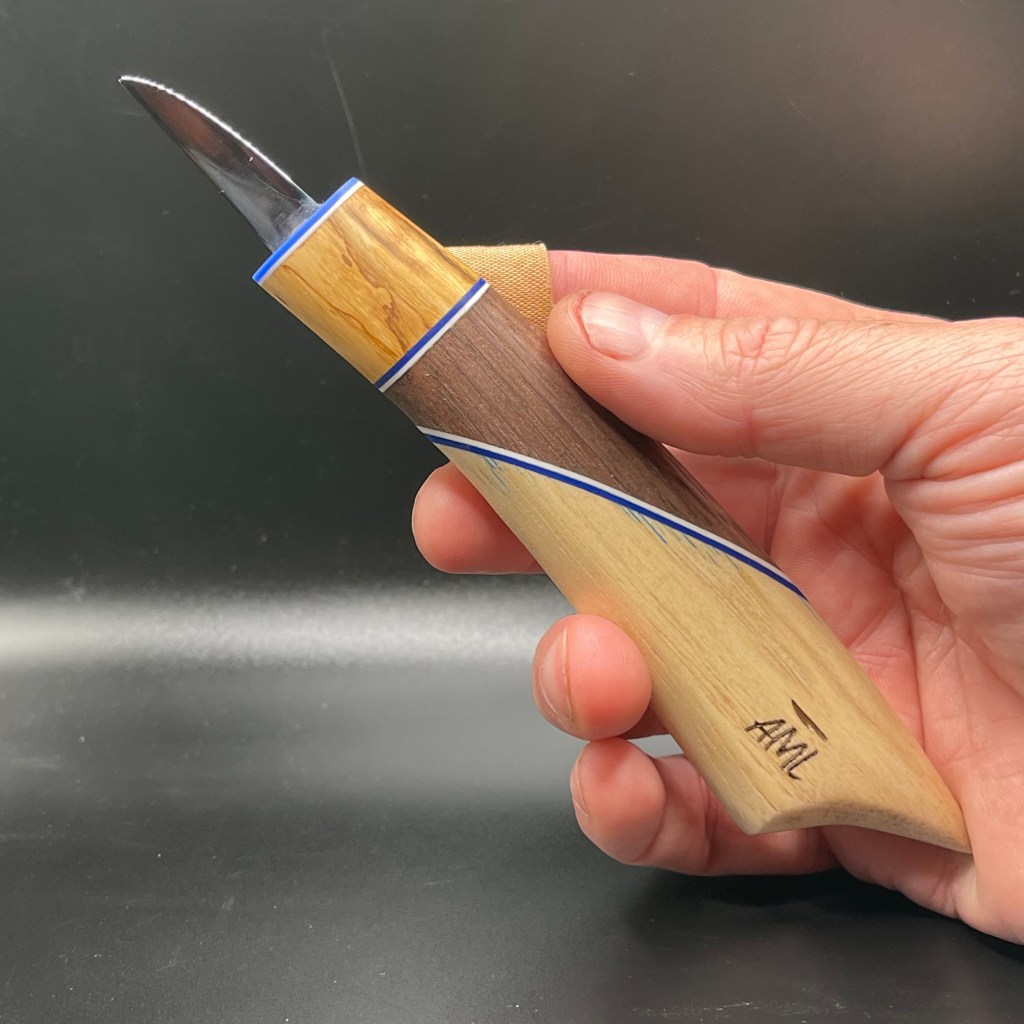
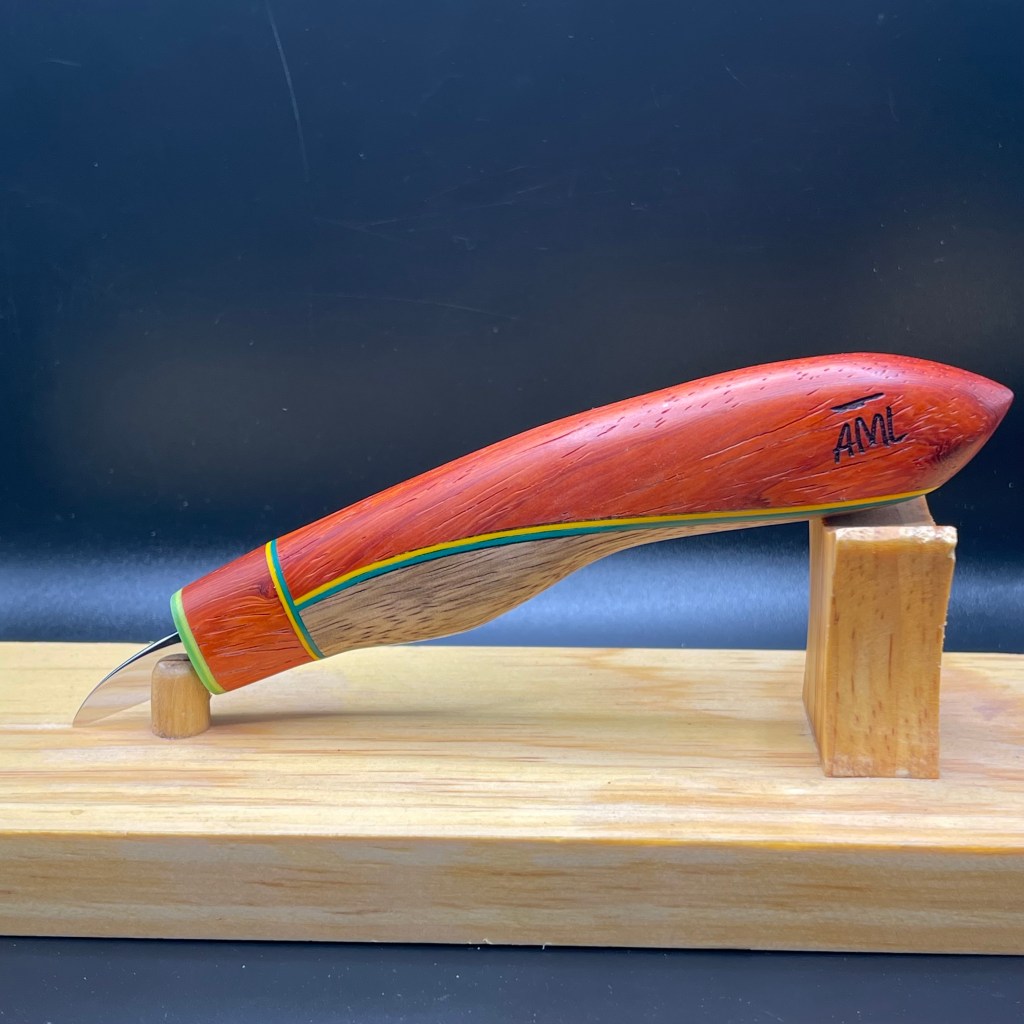
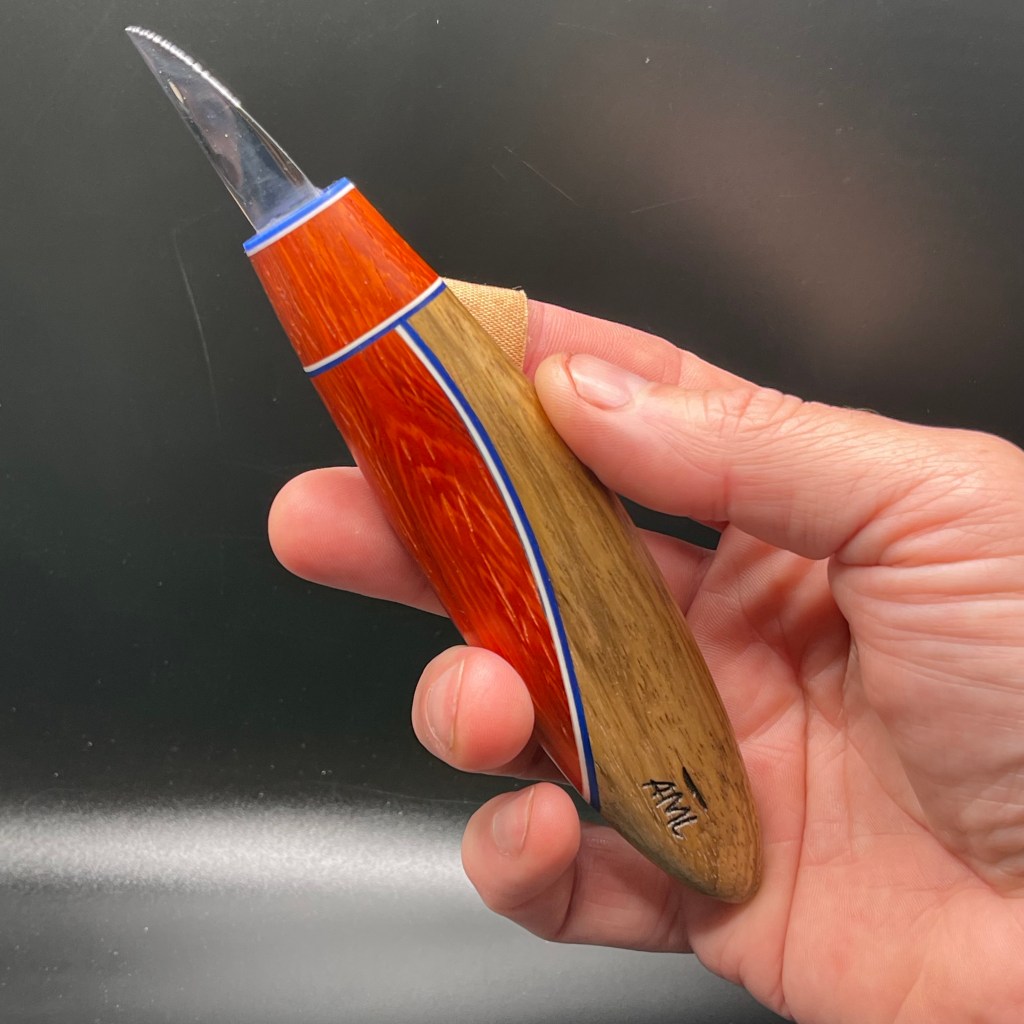
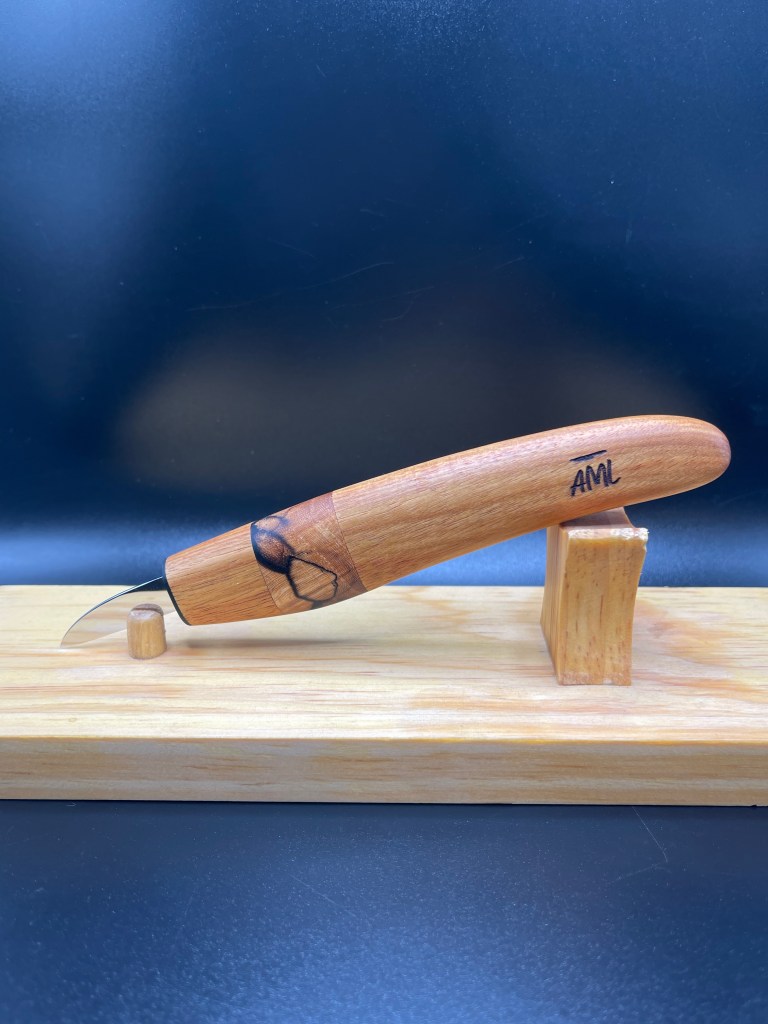
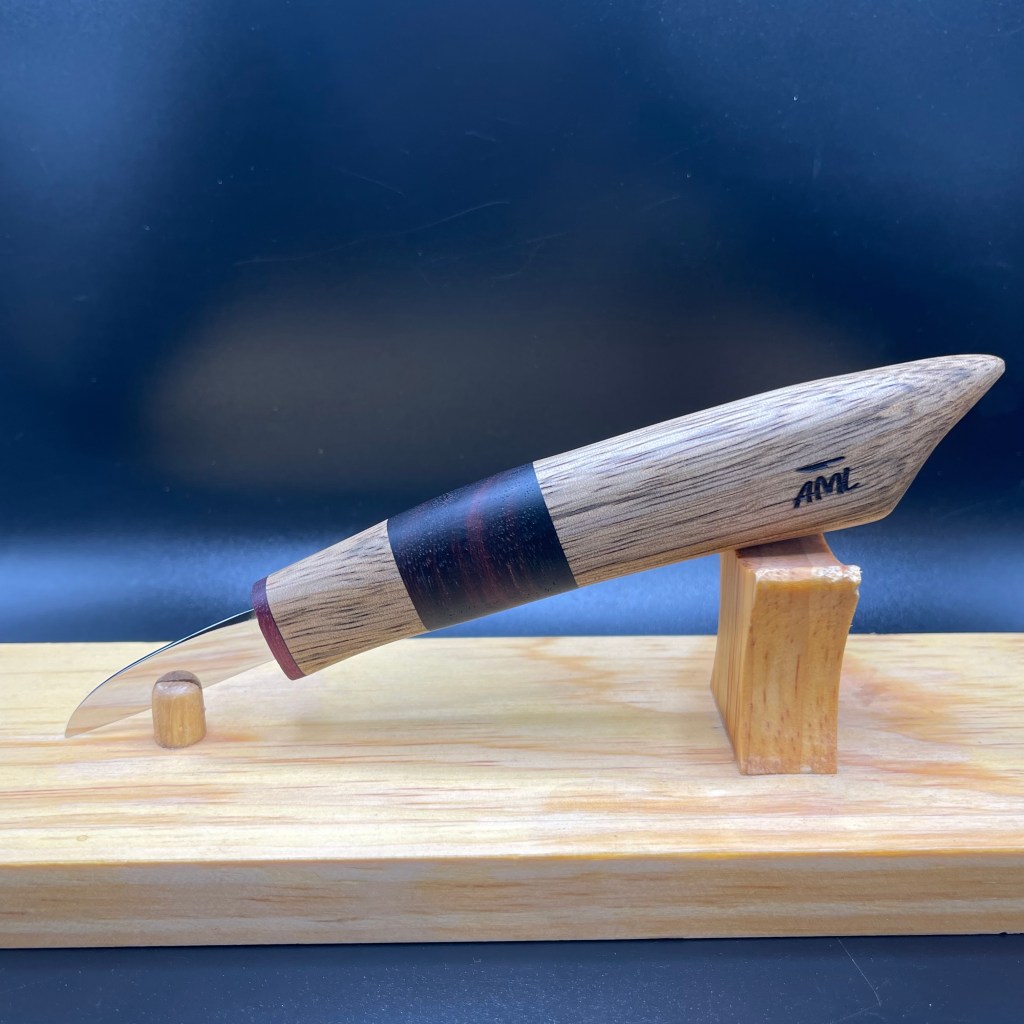
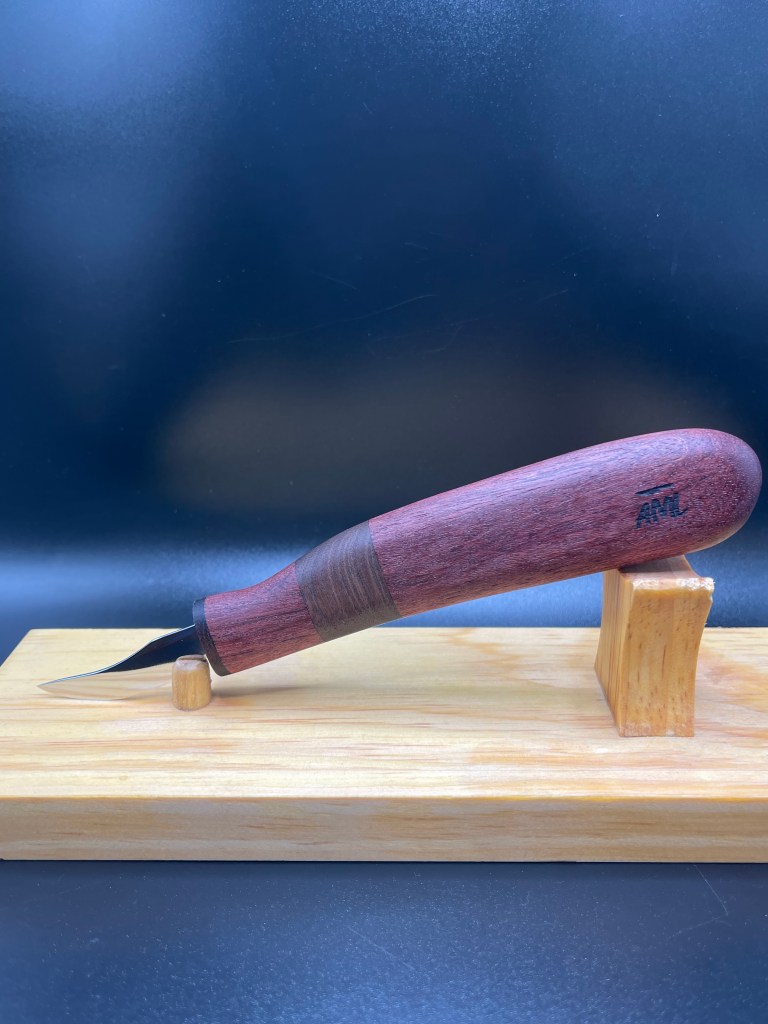
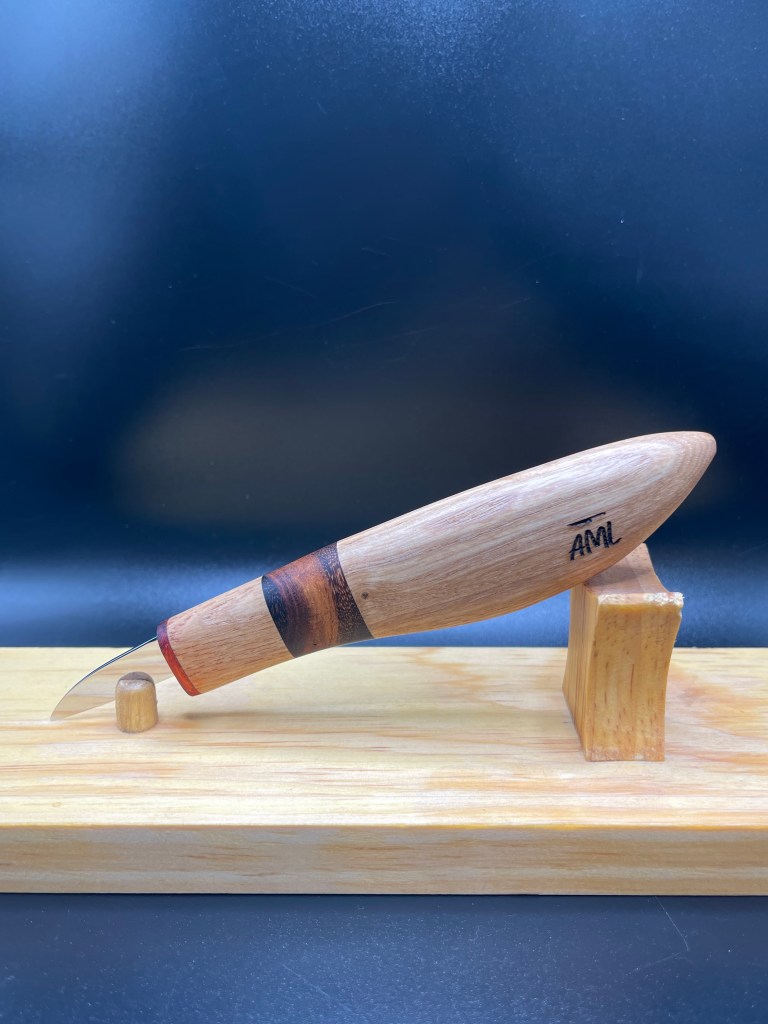
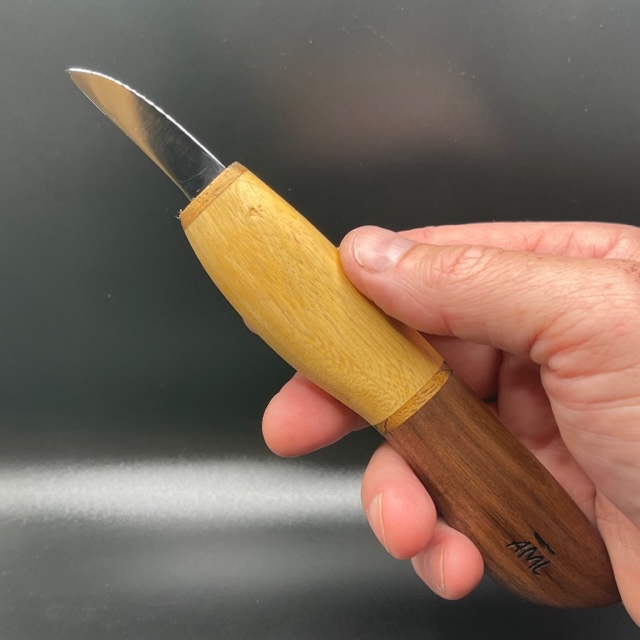
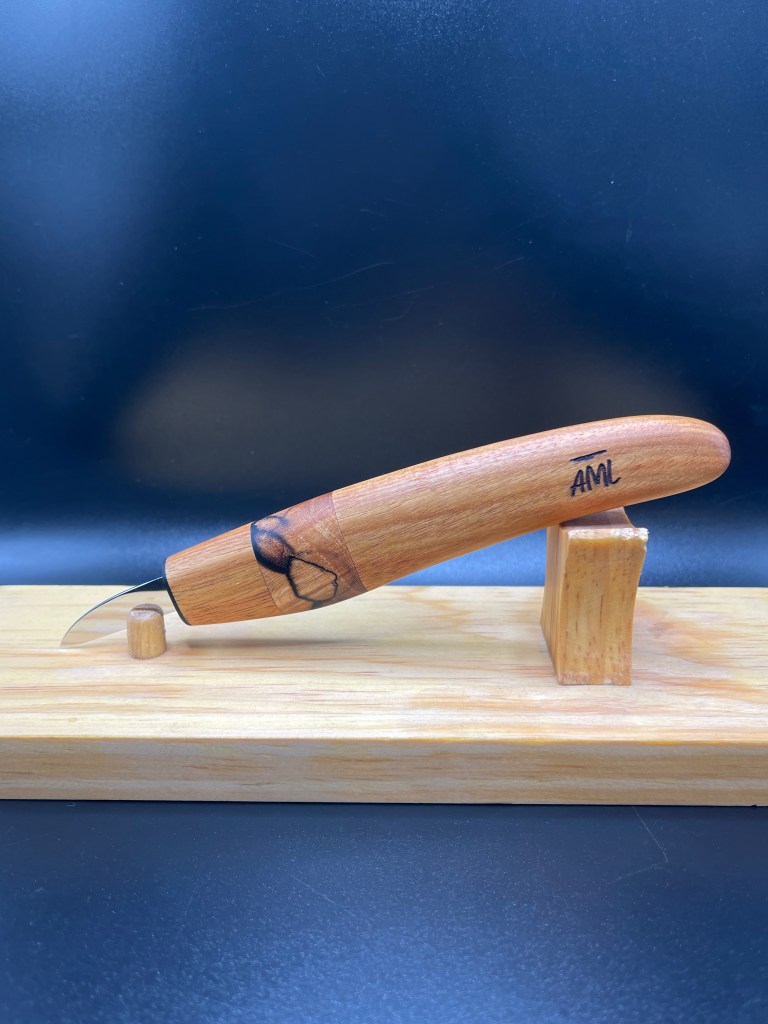
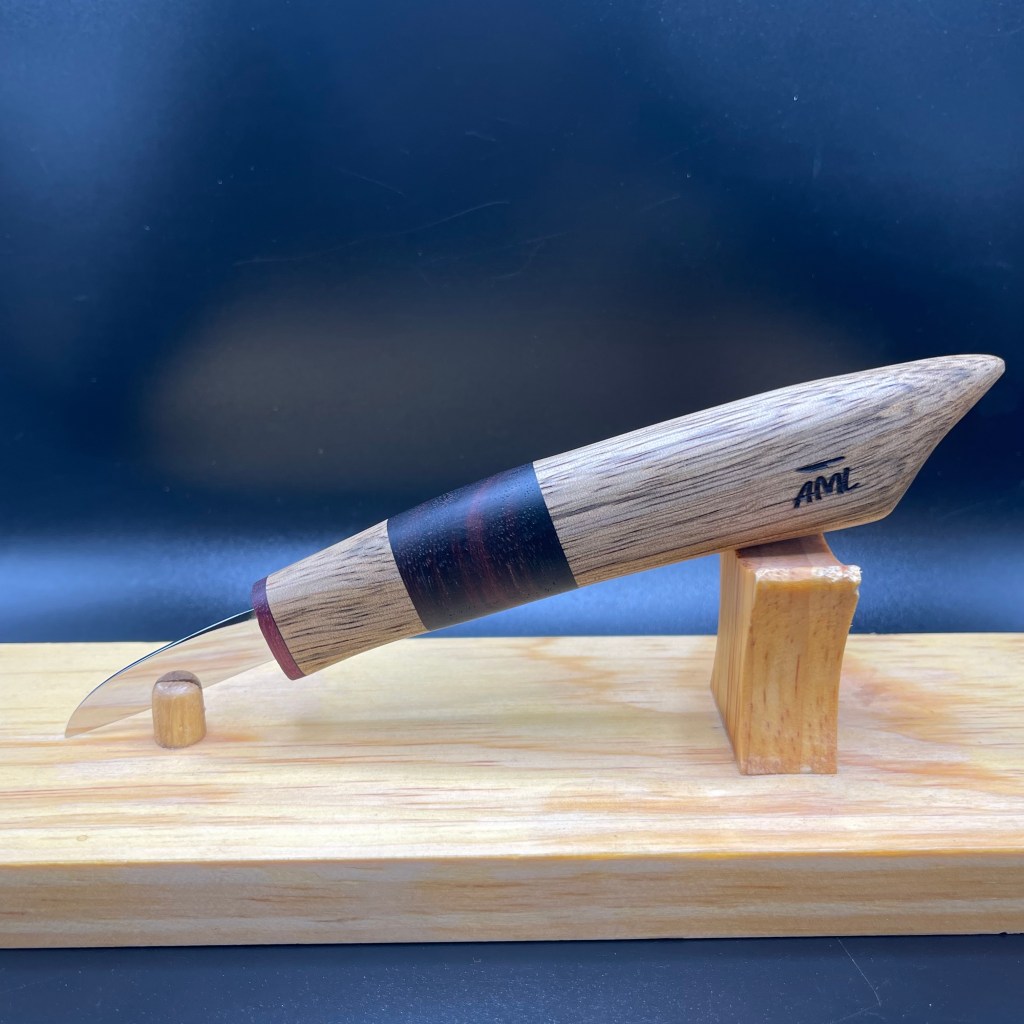
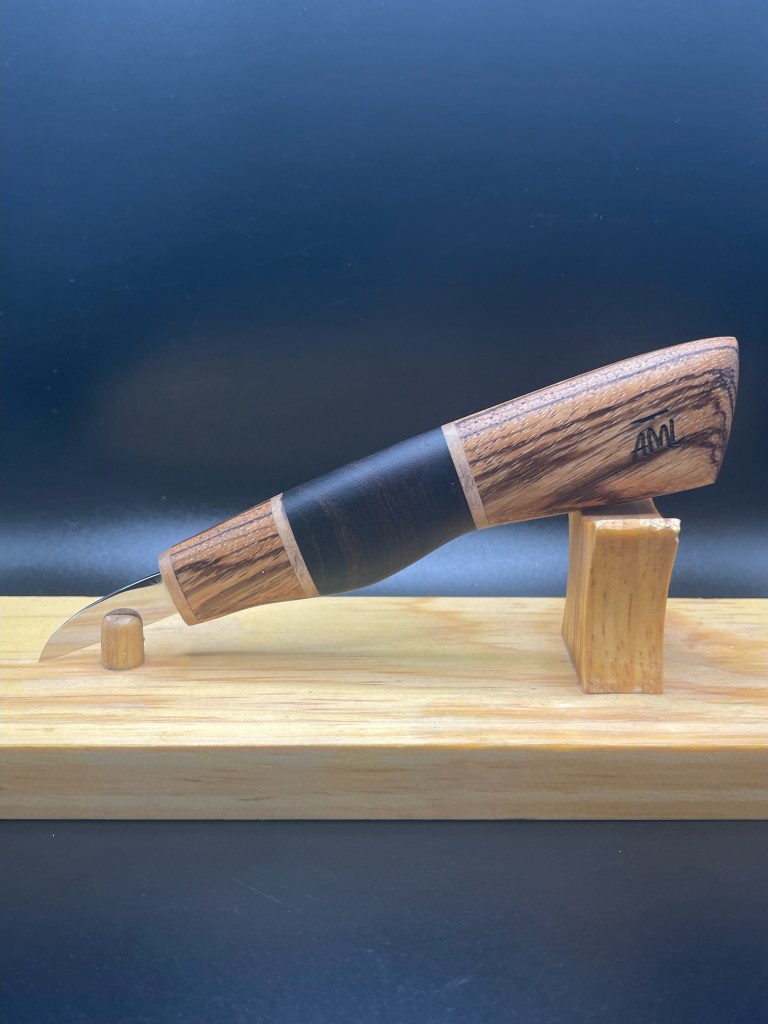
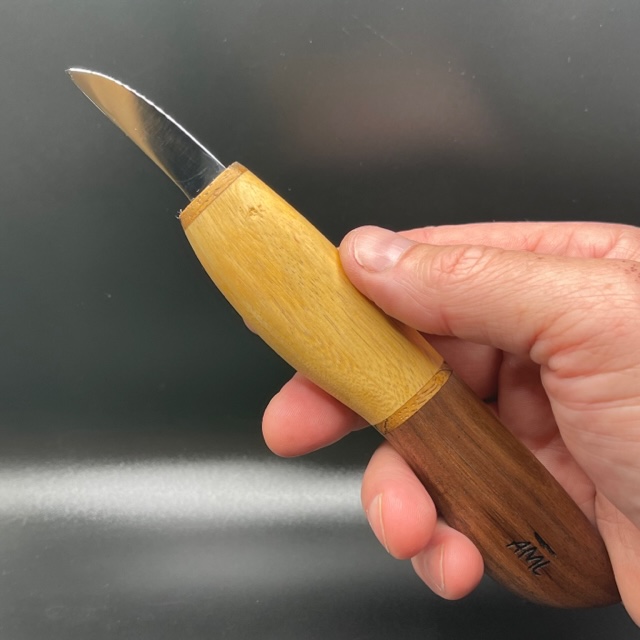
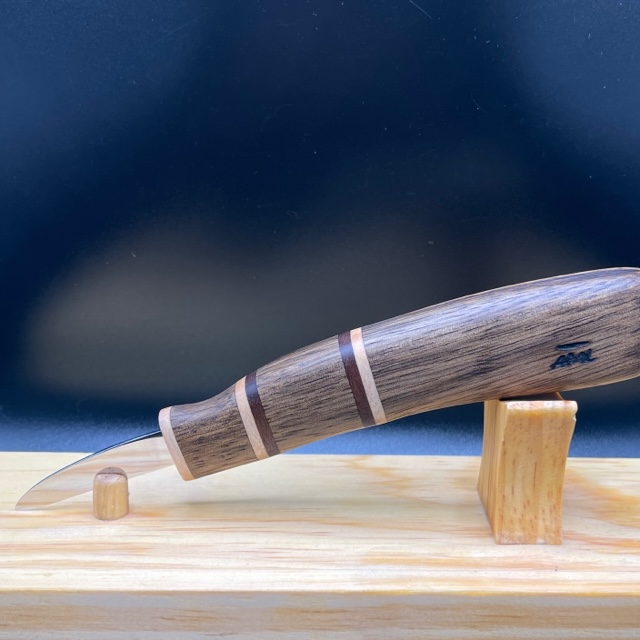
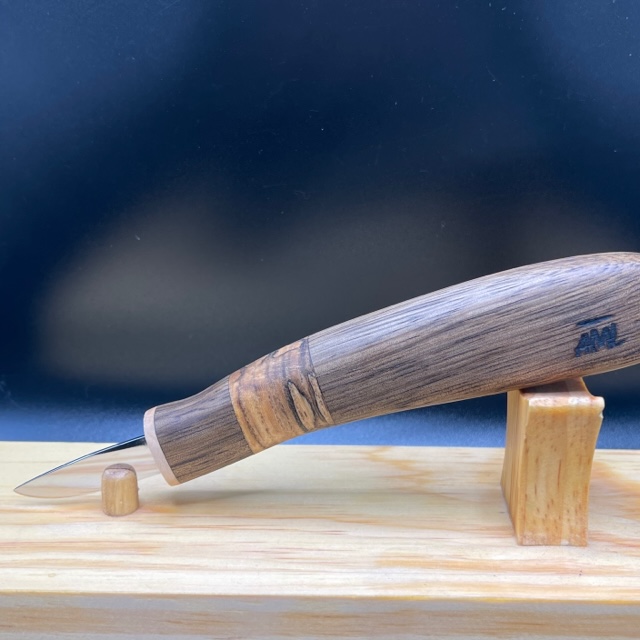
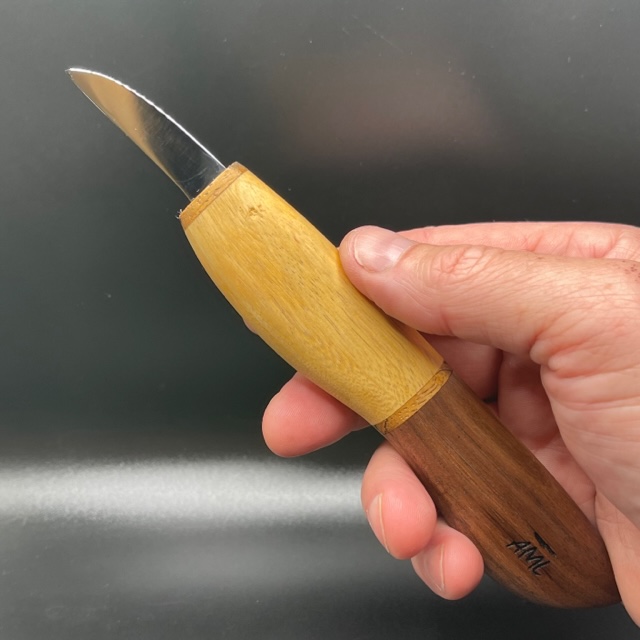
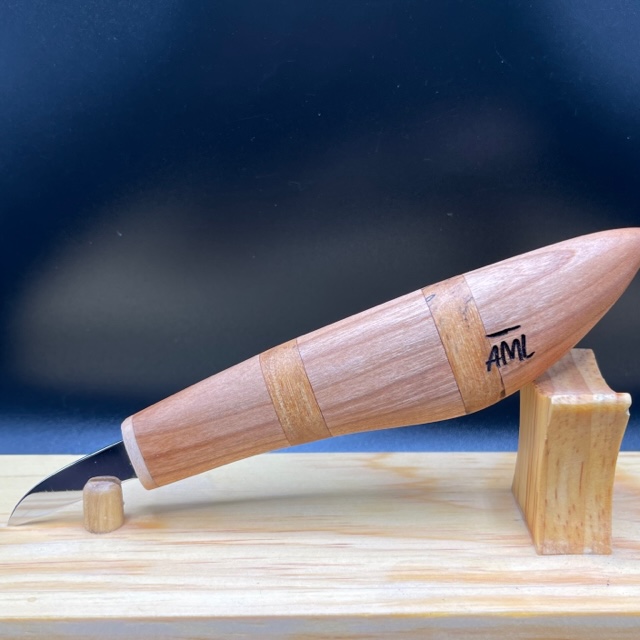
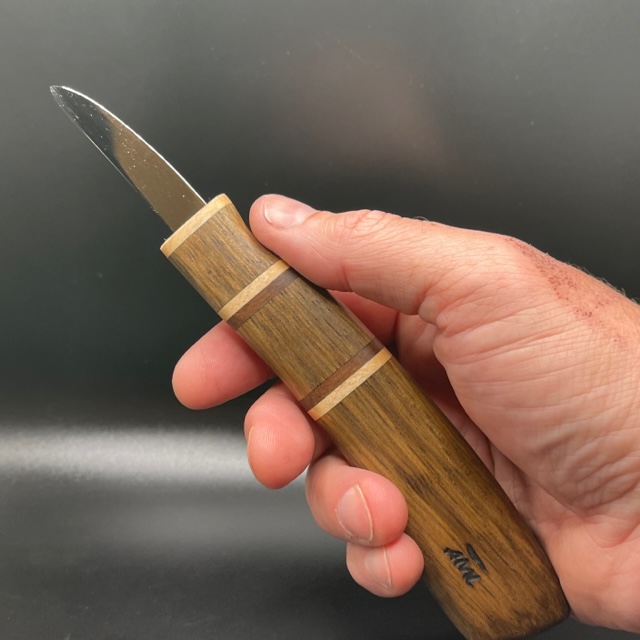
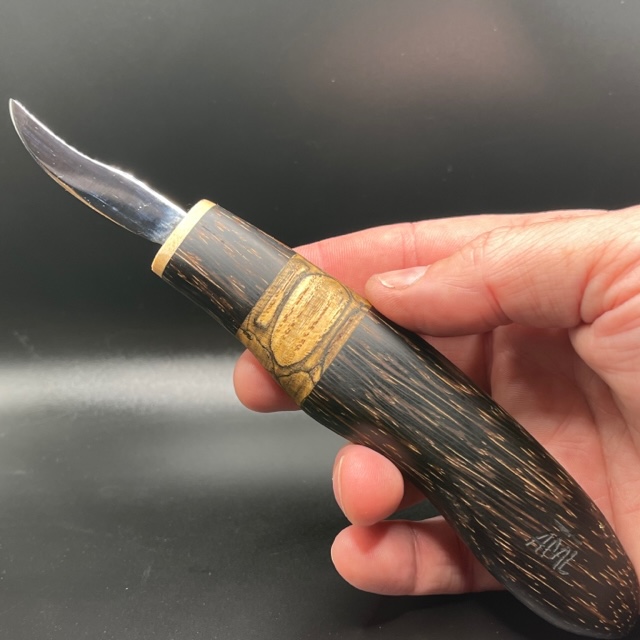
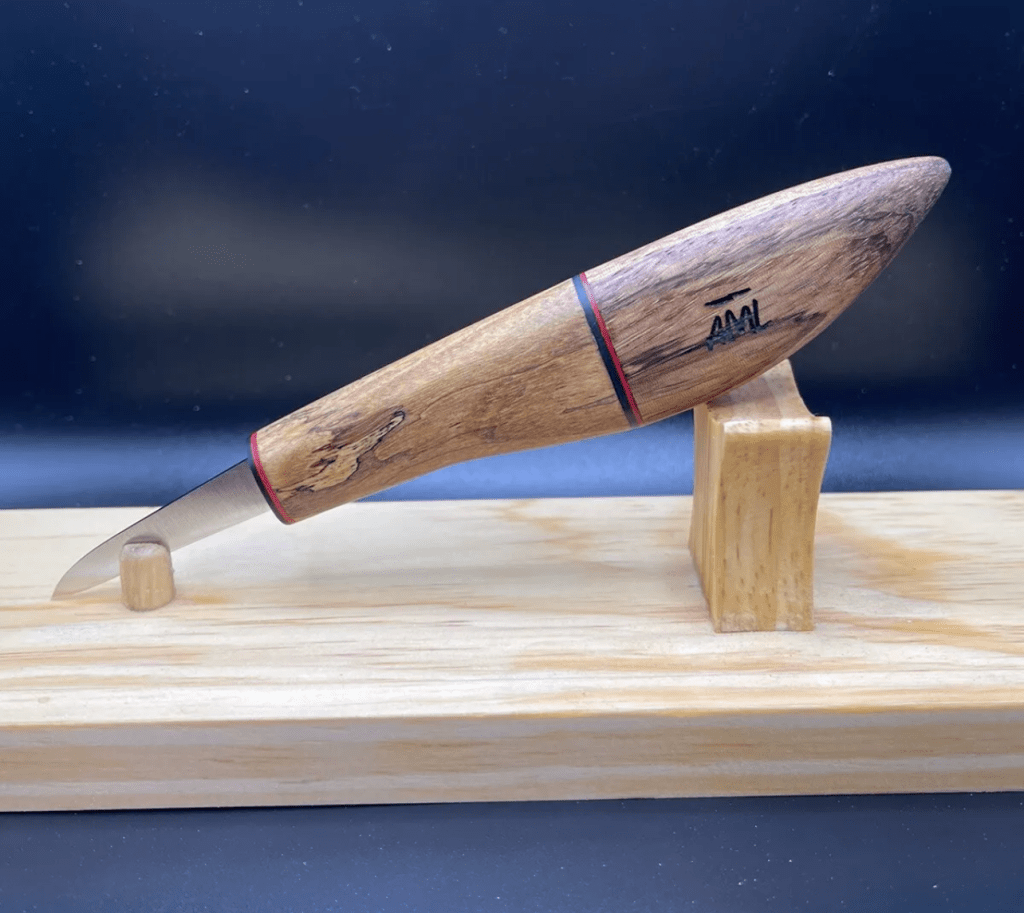
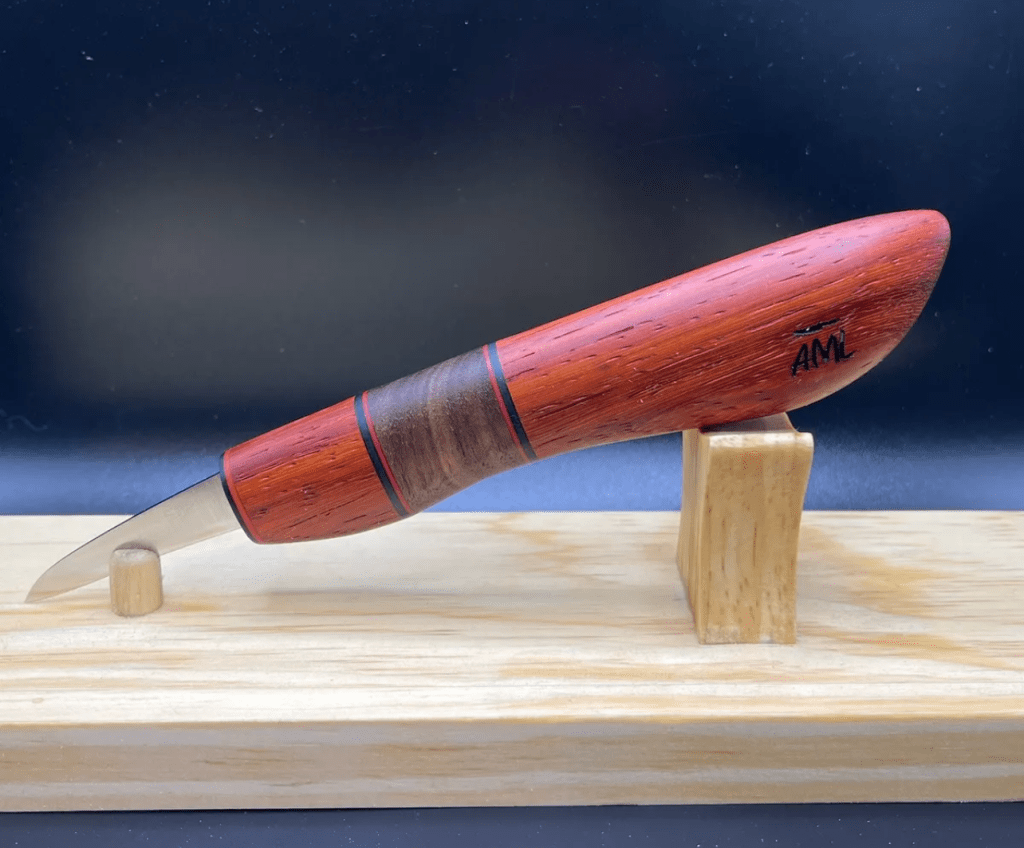
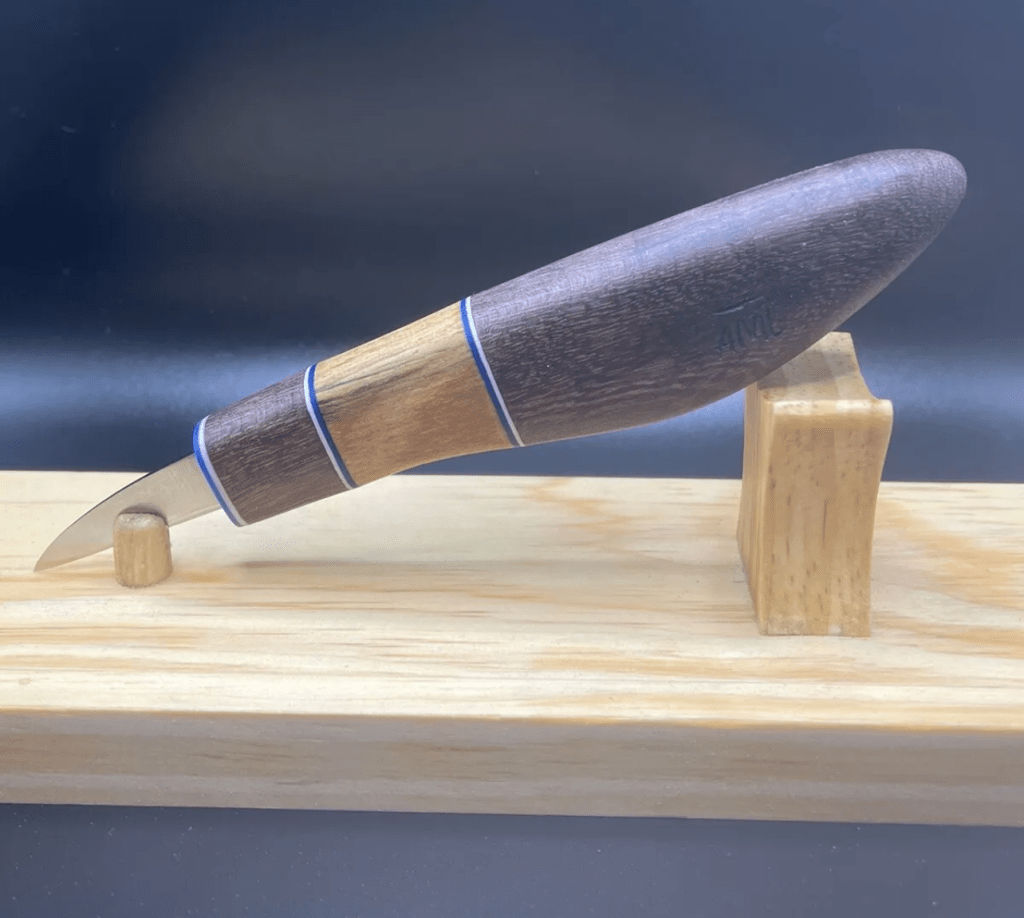
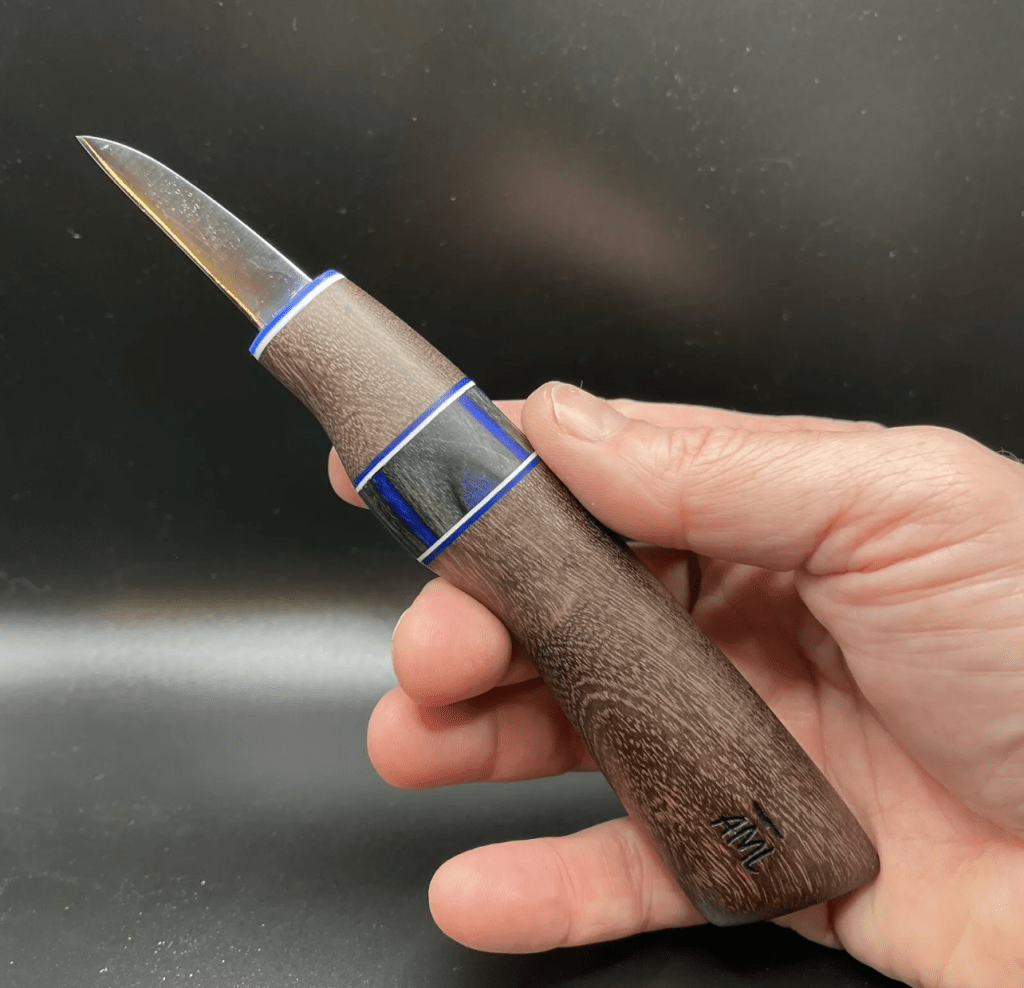
AML Wood Carving Knives are handmade by Andy Loughlin in Monroe, New York.

The blades are made from 1095 high carbon steel sharpen easily and hold an edge well.  The variety of handle styles are all made from diverse exotic woods from all around the world.  The knives are all available for auction on EBay under “AML Knives.”  Bidding usually starts at $22 and most knives sell for between $40 and $100.

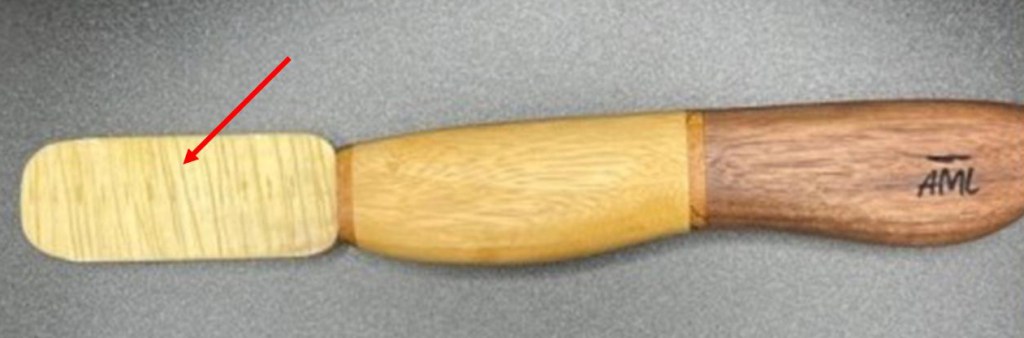
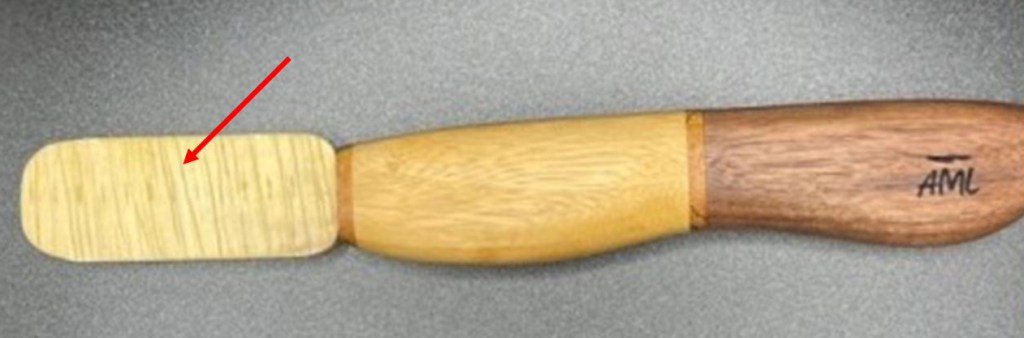
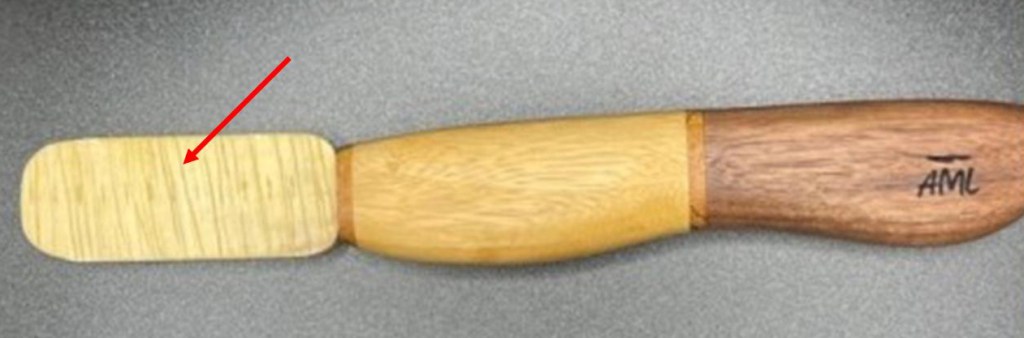
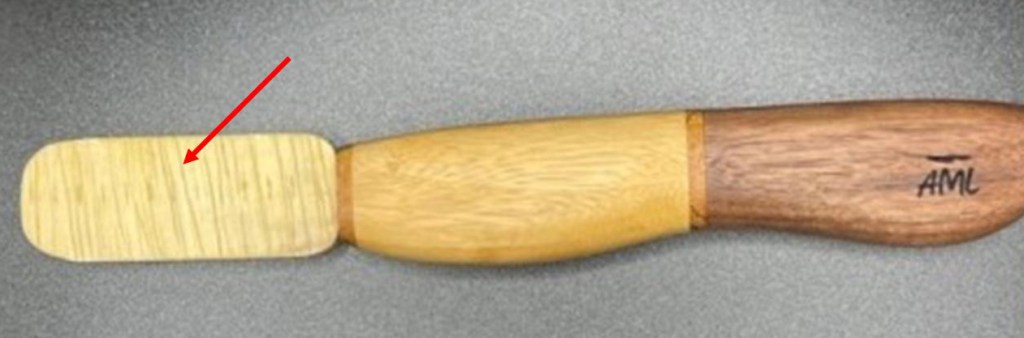
Every knife comes carving sharp right out of the package and each one comes with a custom made magnetic wooden sheath (see below) at no extra cost.

I now own two AML Knives and can speak personally about their quality.  These are not production knives. Each knife is handmade by Andy, himself.  The knives are very sturdy, well made, and will stack up well to the big boys.  These knives have quickly become quite popular and sell out fast so check the site (“AML Carving Knives” on EBAY) often for availability.  Below are examples of some knives currently available or which have recently sold:

Complimentary Knife Sheath

Funny Bone

The Stories of Halloween & the Jack-O-Lantern

This month (October) is my annual Halloween Special issue where I’ll be telling some Halloween and Wood Spirit stories.  Long-time subscribers may have seen a couple of these but I’m posting them again for the benefit of all the new subscribers who just joined this year.  However, I’m sure you will all find something new and interesting.

The Story of Halloween

Most people think of Halloween as a night of dress up in ghostly or funny costumes, to have parties, or to go “trick-or-treating” and never consider why or how much a holiday evolved from a serious annual rite in ancient times.  What is actually being celebrated is two customs that have been combined into one.

The first tradition is the observance of a Catholic religious day set aside to honor saints.  Referred to as “All Hallows Day” or “All Saints Day,” this holy day is held on November 1st.  The night before  is known as “All Hallows Eve,” from which the name Halloween evolved.

The second celebration is from Northern France and the British Isles where the Celtic people celebrated the end of the Celtic year known as Samhain (pronounced sow-en) or “Summer’s End.”  This festival was a time set aside to honor the dead.  The Celts believed that the realm of the dead, or the spirit world, and the physical world were closest together during Samhain.

The traditional celebration of Samhain included carving jack-o-lanterns from gourds and turnips, then lighting them with coals or candles to show the way for deceased loved ones.  At the same time, these lanterns were believed to ward off evil spirits.  Another version of the celebration indicates that disembodied spirits of those that died during the year intermingled with the living on that night.  They attempted to possess the living to hopes of being allowed to have an afterlife.  In an effort to frighten away the spirits, people would leave their houses unlit and cold, dress up in ghoulish costumes and parade around town being destructive as possible.  This tradition set the stage for today’s children’s refrain “trick or treat.”  When the Europeans arrived in the New World, they discovered a new fruit that was larger than the turnip and easier to carve: the pumpkin.  The pumpkin has been the symbol of Halloween ever since.

The Story of The Jack-O-Lantern

Halloween pumpkins

The story of the name Jack-o-lantern has a history of its own.  It derives from a folk tale about a disreputable drunkard by the name of Jack who, upon learning that the devil had come for his soul, tricked the devil into buying him one last drink.  Having no money, Jack convinced the devil to transform himself into coins so that Jack could buy his last drink.  Instead of buying the drink, Jack placed the coins in his pocket along with a silver cross, thus preventing the devil from returning to his common state.  To be released the devil agreed to leave Jack’s soul alone for ten years.

After ten years had passed, the devil appeared to Jack as he was walking down a country road.  The silver tongued Jack managed to talk the devil into climbing an apple tree before claiming his soul.  While the devil was in the tree, Jack pulled out his knife and carved a cross in the base of the tree, thus trapping the devil again.  Again he struck a bargain with the devil, this time extracting a promise that the devil would never take his soul.

When Jack finally died, he went to Heaven but was not allowed in because of his drinking and dastardly ways.  With no place to go he went to Hell.  The devil, remembering Jack’s trickery, refused him entrance.  Jack then convinced the devil that the way back was so dark and windy that he needed a light to find his way.  To get rid of Jack, the devil gave him an ember from Hell.  Jack placed the ember in a turnip he was eating to shield the flame from the wind and began to wander back in the darkness forever doomed.

The Legend of the Wood Spirit

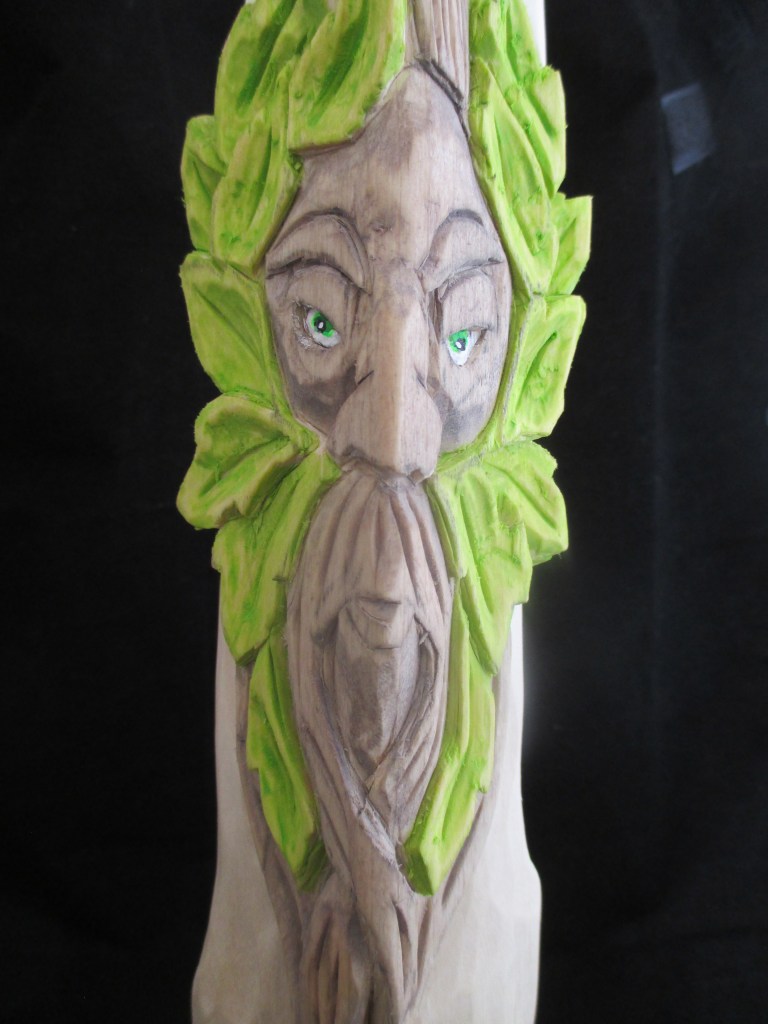
The Wood Spirit is a 15th Century European legend originating from villagers who made long journeys through the forest.  Most often glimpsed as a green man with leaves for his beard and hair, the Wood Spirit is said to be Lord of the forest and natural things.  Seeing one is said to be quite lucky, and European villagers used to go out on regular hunts, hoping to find a Wood Spirit to foretell the future of their village.

On calm days when the wind does not blow, there is a sense of peace and tranquility in the forest.  On days when storms are brewing and winds are blowing, though, the trees of the forest make sounds of moaning and sighing as though voices can be heard from spirits within.  For centuries the people believed the forests were filled with mystical evil spirits and that those who dared to enter would earn the spirits’ wrath.

During the 15th Century the villagers believed that when the men went into the woods to hunt and didn’t return, that they had been taken by the evil spirits.  They also believed that the tree spirits were the most powerful of all spirits and were good and wise.  Wood Spirits are extremely strong.  They can tear an opponent limb from limb and can tame any wild animal, including ferocious dragons and skittish unicorns.  At the same time, they are gentle with the maidens, children, and men of good heart.  They believed that the tree spirits would protect them from the evil spirits.  So before they would venture into the woods to hunt, they would knock on a tree to awaken the sleeping Wood Spirits to protect them.  This is where we get the saying ‘Knock on wood’.

Wise travelers assured their safety by carving Wood Spirit images on their walking sticks or pieces of wood and bark.  These carvings appeased the Wood Spirits, thus the traveler was allowed to enter and leave the forest without difficulty.

It is said that the forest will stand for as long as the Wood Spirit remains to keep order.  And if you’re lucky enough to see a Wood Spirit, health, happiness, and good fortune will be yours.  However, that does not happen often.  Wood Spirits would rather see than be seen.  Most sightings are by children or by the pure of heart.

Wood Spirits were carved to bring luck to a household, ward off undesirable spirits and keep the household safe.  Still today Wood Spirits are being carved into pieces of wood and bark, and are often given as gifts.  The Wood Spirit should be given a special place within the home in order for its presence to bring wisdom, prosperity, humor, good health and good luck to all who live there.  Any house which is home to a Wood Spirit will stand protected and be blessed with good luck, health and happiness.

“Photo Shop” is the section of Wood Chip Chatter where carvers can send in photos of their wood carvings for display. It’s your chance to show off your work…sort of a show and tell. The photos will only be displayed and no comments or critiques will be made.  For critiques on your carvings send them in to the “Carver’s Corner.”  Send your photos to carverbobk@woodchipchatter.com

September was a fantastic month for the “Photo Shop”…our best month ever!  We received loads of contributions from many  of my friends, and that really helps make Wood Chip Chatter fun and interesting.  Thank you so much to everyone who sent in their photos!

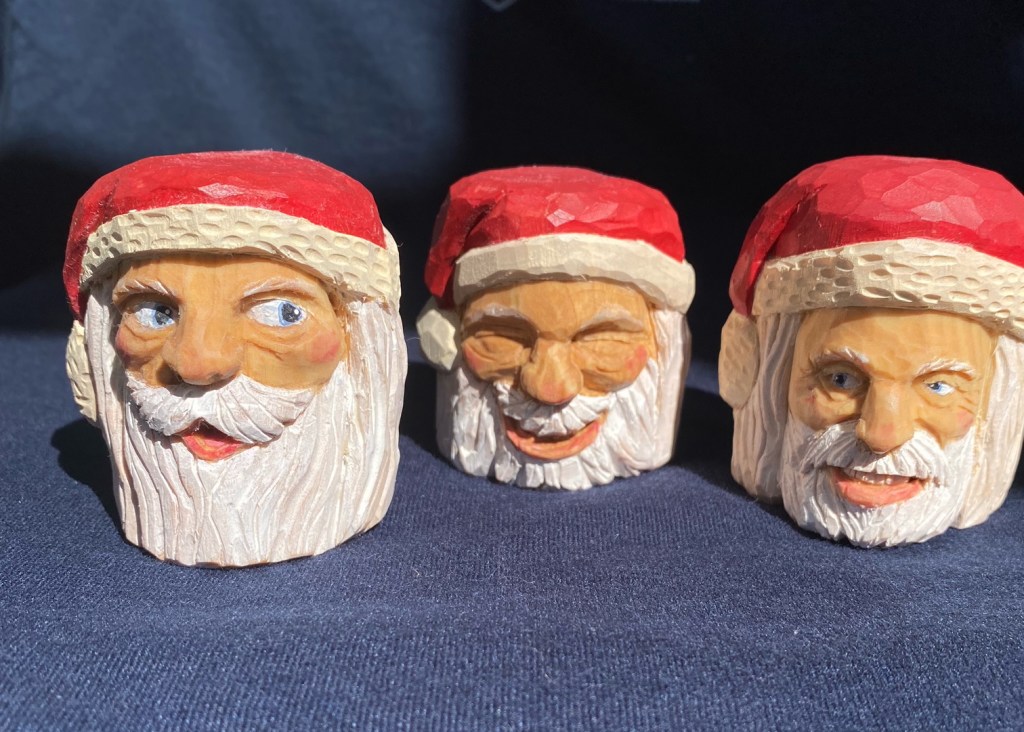
Our first entry to the “Photo Shop” this month comes from my good friend, Dean Stewart who has been busy practicing his Santa faces.  Here are some examples of his work:

Those are great Santa faces, Dean!  You’re really getting the facial expressions down and every one is different.  Nice work!

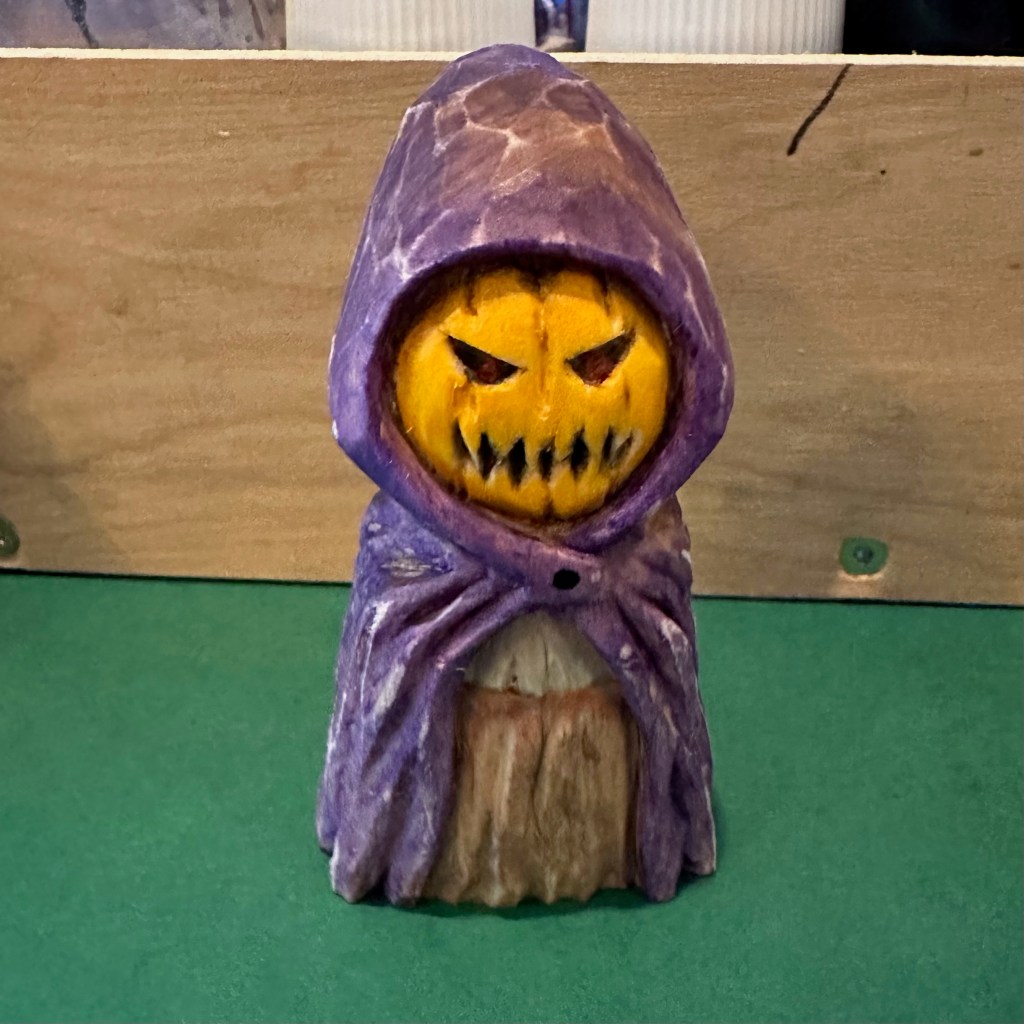
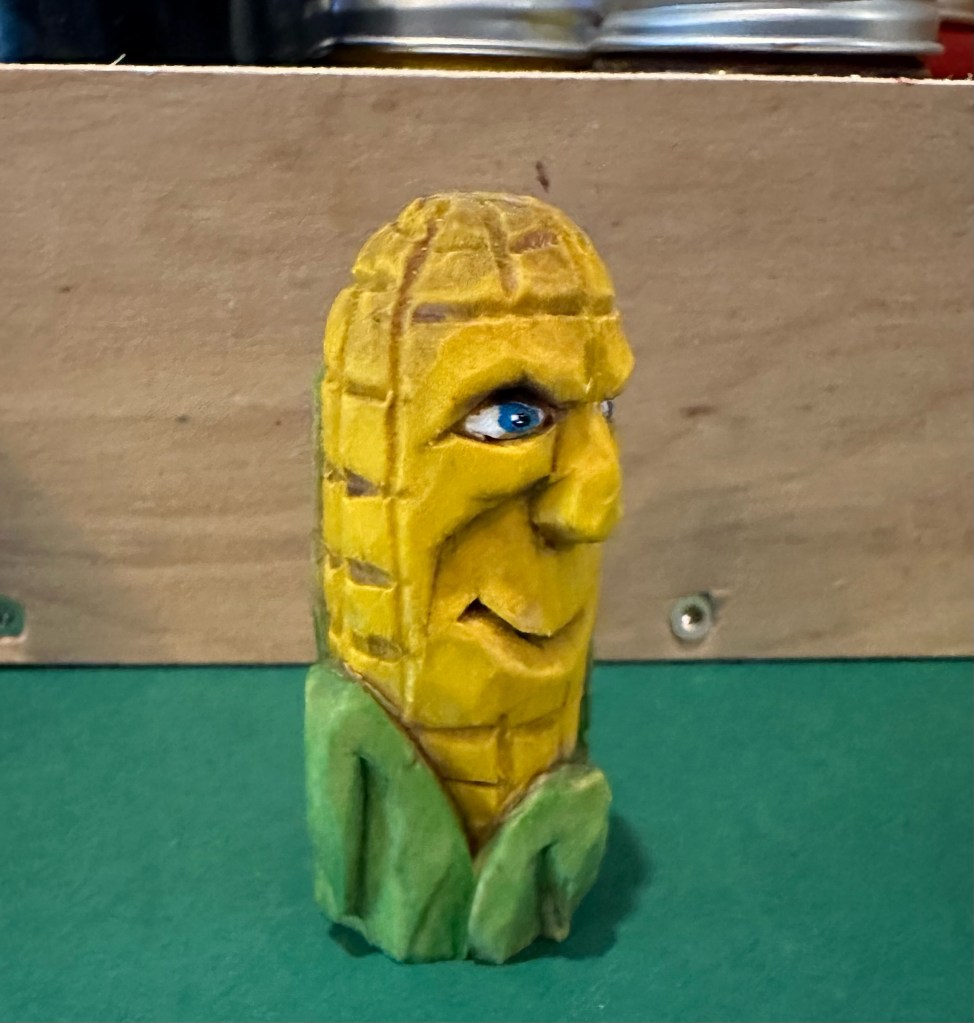
Our next entry comes from my good friend, Geir Larsen who sent in several photos of some of his recent work:

Excellent work as always, Geir!  I really like your little men, and your ducks and pelican are super.  Your hooded pumpkin man is amazing as is you caricature ear of corn, and your signature chicken, Olaf, is always a treat to see!

We also have a special entry from my friend, Jack Proceilo who took the challenge and carved the Extreme Ball-in-Cage from my article in the Woodcarving Illustrated Fall 2023 issue #104.  Jack writes:

“A couple of times I thought about defriending you Bob, but that would be giving up?  A great little challenge my Friend!”

Jack’s Extreme Ball-in-Cage

Wow!  Amazing job, Jack!  Well done…nice clean work.  Congratulations!

Anyone else want to take the challenge to carve my Extreme Ball-in-Cage?  If you do, we’d like to see a photo.

Our next entry comes from my good friend, Dick Bonewitz from Carmel, Indiana.  Dick writes:

“This piece was from a roughout blank from Pat Moore.  Basswood and sealed with Briwax.  The hands were a little harder to do than I originally thought but turned out OK and my wife was well pleased.

Dick Bonewitz

Carmel In”

Dick’s Hands

Hands are hard to do but you did a real nice job on them.  Thanks for the photo!

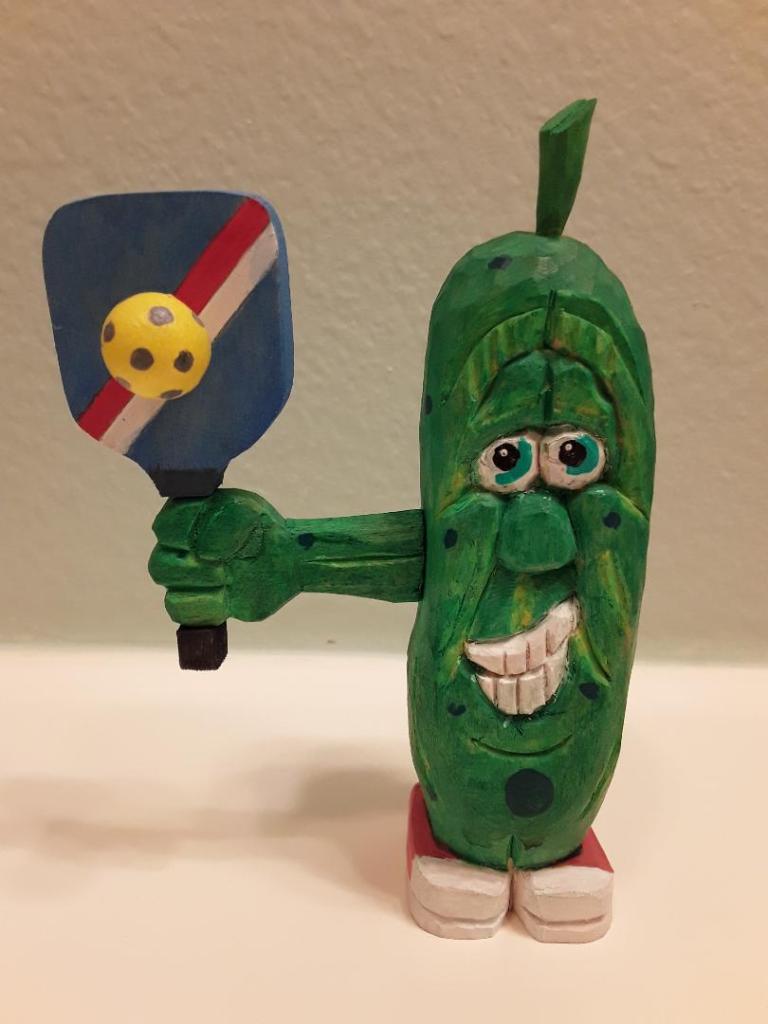
I received another entry from my friend Elise Hartnagel from Palm Harbor, Florida who send in a photo of the cutest pickleball player she recently carved.  Elise said:

“Hi Bob,

This is a carving that I did for my nephew who is a  pickleball player. 

Here in Florida, it is a very popular sport, especially with seniors.

The carving is 5 inches tall, 3 1/2 inches wide and 1 1/2 inches thick.  The wood is basswood with the exception of the wiffle ball.

The ball is a white bead that was painted to resemble the pickleball.

It is obviously a play and literal interpretation on the unusually name of the sport. 

I very much enjoy your blog post. Thank You.

Elise Hartnagel

Palm Harbor, FL”

Elise’s Pickleball Player

Another great entry came in from my new subscriber and friend, Paul Flatt from Norfolk, England.  Paul wrote:

“Hi Bob

My name is Paul Flatt, I live in the county of Norfolk in England.

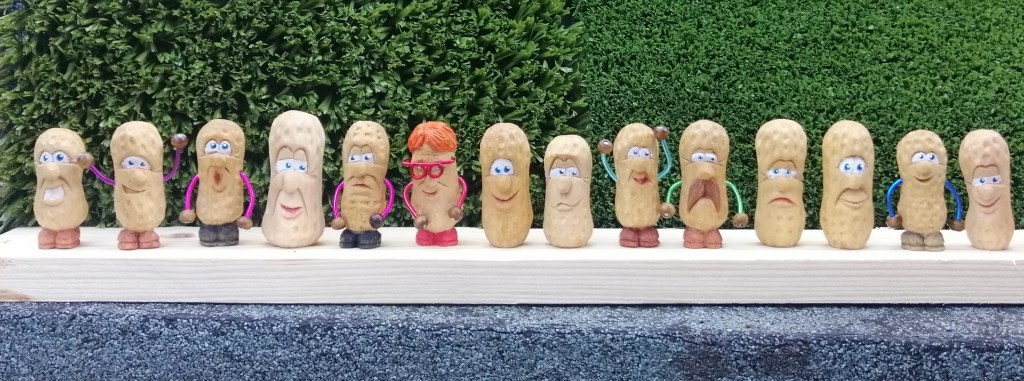
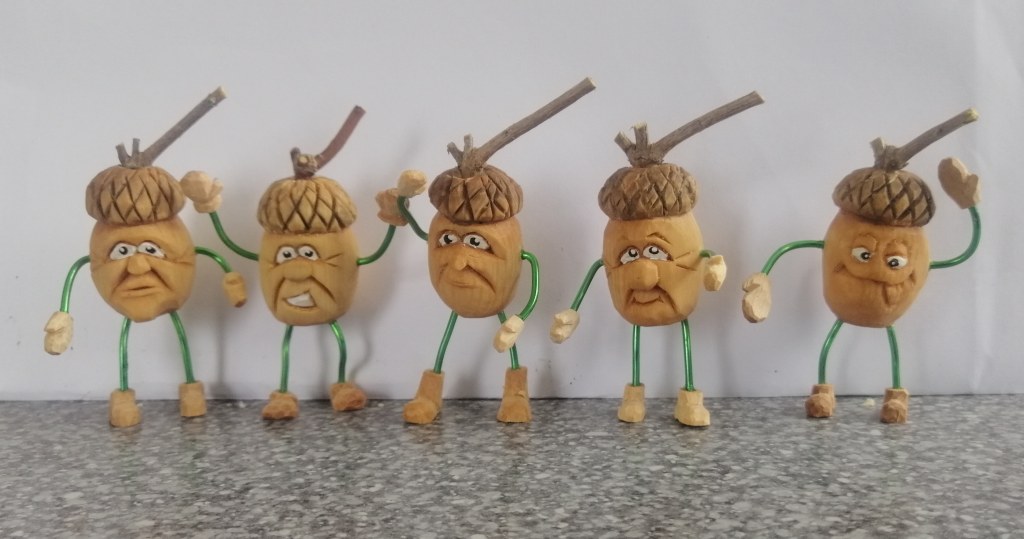
Attached are the photos of the peanuts you requested and also some acorns.

Will send some more projects later, love the blog by the way

Kind Regards

Paul”

Paul’s Peanut Men
Paul’s Acorn Men

I‘ve been looking forward to getting your photos, Paul.  I love your peanuts and have to try a few myself.  Your acorn men are terrific also.  I especially like how you added the stems to the caps, they really dress things up.  I greatly appreciate the photos and more future photos are always welcome!  Thanks!

Our next entry comes from my good friend and frequent contributor, Jim Babcock from Columbus, Indiana with a photo of what he calls a “quick carve.”  Jim writes:

Bob:

I am attaching an image of a carving that I have done a few times.   A  fairly quick carve that only requires a couple tools.

Jim Babcock

Columbus, Indiana

Jim’s Carving

Very nice carving, Jim, and I can see where it would be fairly quick to carve with only a few tools.  Thanks for sending it in.  Always appreciated!

Carver’s Corner

“Carver’s Corner” is the section where you can send in photos of your carvings to have me critique them and offer you my truthful opinions on what you did right and what you might improve on next time.  It’s an excellent opportunity to improve your carving skills!  Send your photos to: carverbobk@woodchipchatter.com

“Bob, I’ve been enjoying your emails, with their insights, suggestions, and ideas. I do a lot chip carving, so especially liked the pattern you shared this month. Thought I’d send a couple of photos, showing it transfered a trivet board and after carving it. Would love your input on it. Best wishes, Jon Gledhill Hurricane, UT”

“Since the first email, I carved another version, taking bigger chips. I look forward to your input. Jon”

Last month I asked if you would send in photos of your pumpkin carvings.

Our first response comes from my friend, Greg Meece who submitted a photo of the terrific Halloween carvings he has done.  Greg writes:

Hi Bob.

Great idea about sharing our pumpkin carvings. For some reason, I enjoy carving pumpkins and anything with a Halloween theme. When I took my first woodcarving lesson for beginners the task was to carve a sphere out of a square block. I took it a step further and completed the pumpkin in the front of this picture. I can’t take credit for the other designs shown here. I wish I could give proper credit to whoever did them first. I just did my best to imitate pictures I saw in various internet postings, such as Instagram and Pinterest.

Thanks for writing such a great blog!

Greg Meece

Greg’s Pumpkin Grouping

I don’t know what to say, Greg, every single one is fantastic!  The carving is clean and the painting is neat.  Well done, and thanks for sending in the photo!

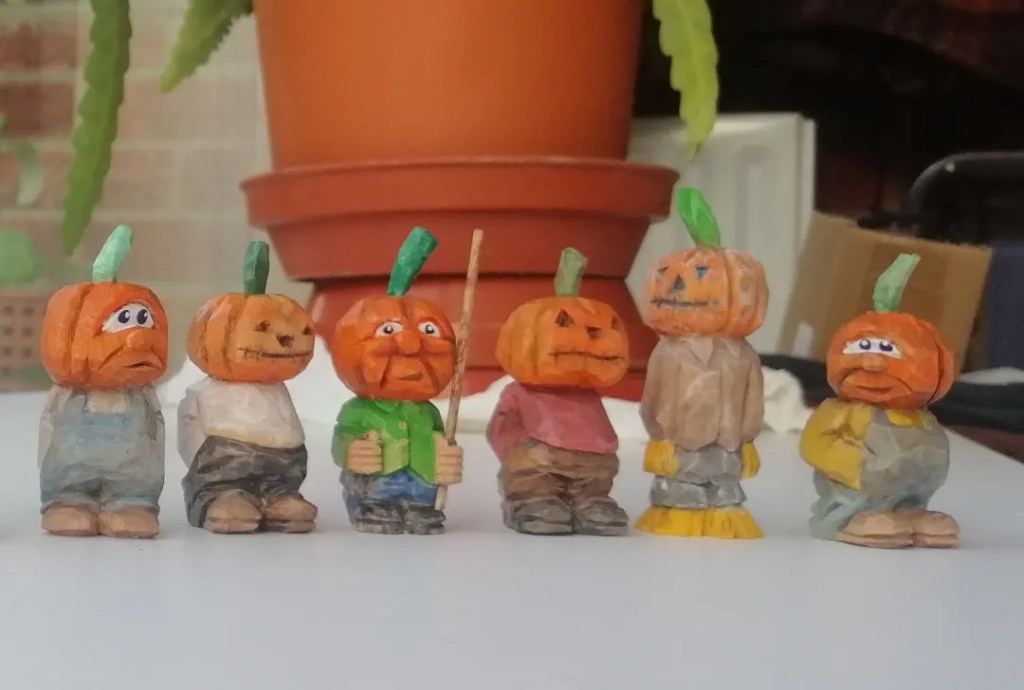
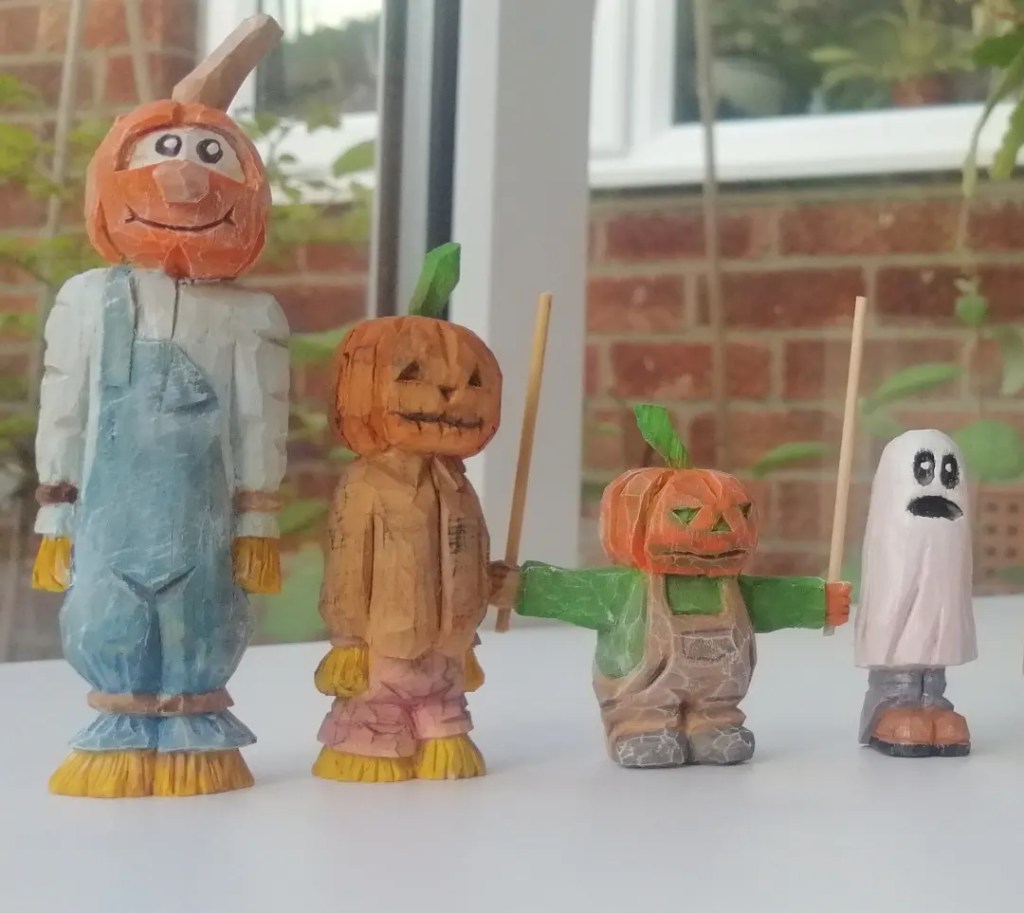
Our next pumpkin entry comes from my friend, Paul Flatt from Norfolk, England who send in some photos of the terrific pumpkin men he’s carved recently.  Paul writes:

“Hi Bob

Read you were after pumpkin photos, hope you don’t mind me sending these.

These are based on Doug Linker’s 1 x 1 hillbillies and scarecrows. The tall one based on Dan Carpio’s scarecrow.

Kind Regards

Paul Flatt”

Paul’s Small Pumpkin Men
Paul’s Tall Pumpkin Men

Those are, as they say “Great Pumpkin” men, Paul!  I love the variety and how you made all of the expressions different.  Excellent work.  I look forward to seeing more of your carvings!

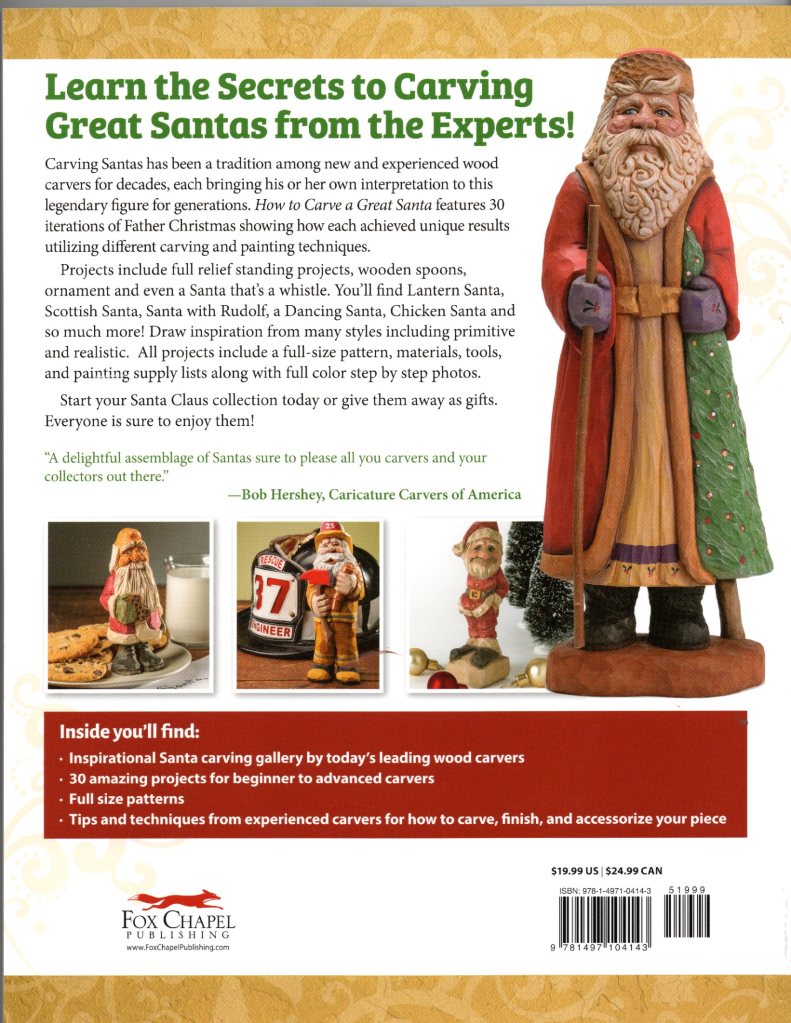
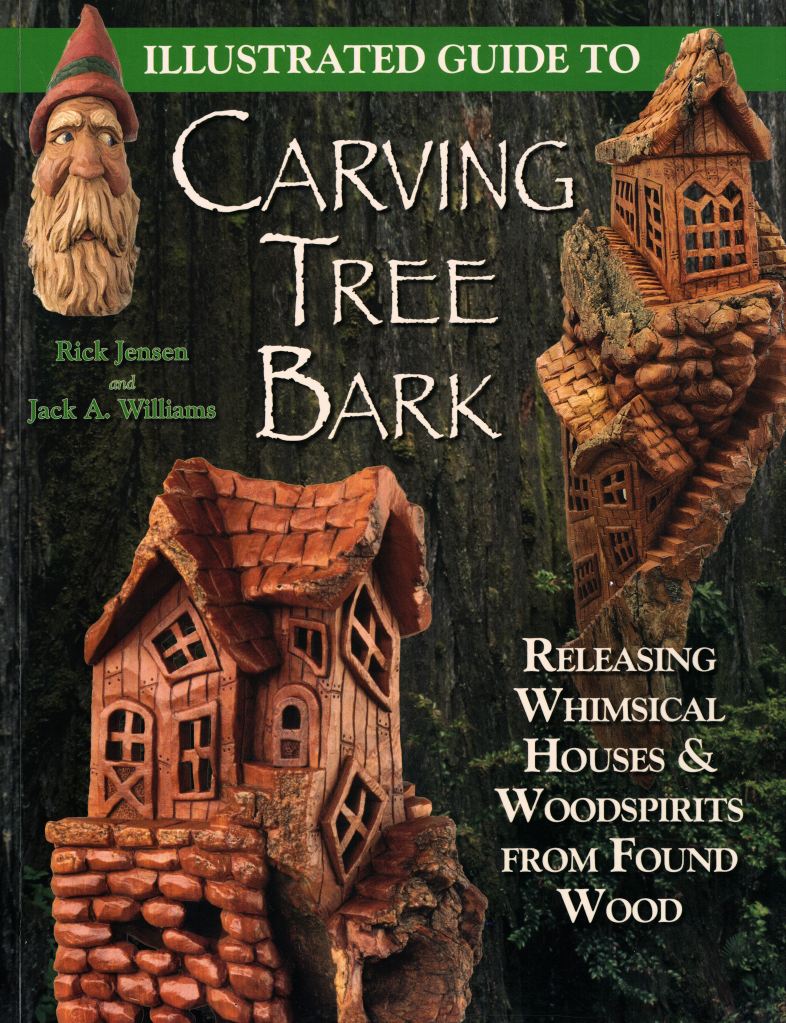
Fox Chapel Publishing has just released two amazing new woodcarving books just in time for the holidays! 

How-To Book of Christmas Carving

The first publication which was released this past August is the terrific 144 page book called How-To Book of Christmas Carving which contains 32 projects all geared to the Christmas holiday.  It’s a compilation of past articles written by some of the country’s top wood carvers which appeared in Woodcarving Illustrated over the past 10 years.

How-To Book of Christmas Carving even includes three of my projects on carving my Chimney Santa, carving my Pinecone Ornament, and carving Norbert the Elf.  I highly recommend you add this book to your carving book library!

How To Carve A Great Santa

The latest new publication is the fabulous 160 page book called How To Carve A Great Santa.  The book which was just released in mid-September, just in time for your Christmas carving is a comprehensive compilation of articles from expert wood carvers on how to carve 30 different Santa figures ranging in all skill levels from beginner to advanced.

How To Carve A Great Santa includes two of my projects on carving my Chimney Santa and carving my Frostbite Santa.  It really is a fun book and a must-have for every Santa carver’s library.

Order both books directly from Fox Chapel Publishing today!

Creating Eyebrows

Many times it can be a challenge to carve eyebrows on small wood carvings because the wood often crumbles and breaks off.

Painting them on is always an option, but here’s another idea to try:

Use 3D fabric paint to build your eyebrows. Apply the paint directly from the nozzle of the bottle.

You can find 3D fabric paint on Amazon or in your local craft store.

Source: carvingjunkies.com

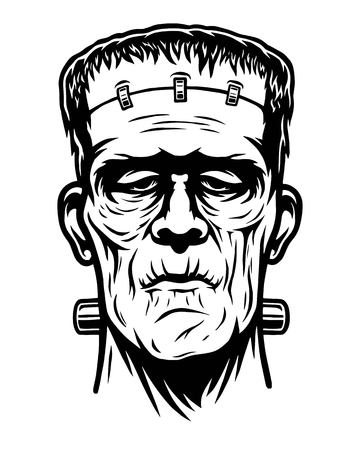
Here is a Halloween challenge for all you face carvers out there!

Frankenstein

Teacher: Dave Stetson

Dates:  October 21,22,28,29 Nov  4,5

Times:  Sat, Sun – 9:30am-11:30 Pacific /11:30am-01:30pm Central / 12:30pm – 2:30pm Eastern

12 hours (6 sessions – 2 hours each day)

 Location: Online (Via Zoom)

 For details and to sign up email Dave Stetson

Contact Dave

 Teacher: Janet Cordell

Dates:  NOT YET CONFIRMED – Potentially – November  3,6,10,13,17,20 

Times: 2-4 p.m.  Pacific Time 3-5 p.m.  Mountain Time 4-6 p.m.  Central Time 5-7  p.m.  Eastern Time

12 hours ( 6 sessions – 2 hours each day) 

 Location: Online (Via Zoom)

For details and to sign up email Janet Cordell 

Teacher: Dale Green

Dates: December2,3

Saturday & Sunday  9:30 am-11:30 Pacific / 10:30 am – 12:30 pm Mountain /
11:30 am- 1:30 pm Central / 12:30 pm – 2:30 pm Eastern

4 hours ( 2 sessions – 2 hours each day) 

 Location: Online (Via Zoom)

Cost: $95, includes class, rough-out and shipping in the US 

(International students $115)

Pay for registration  with Dale here:  https://paypal.me/DaleGreenWoodcarving

Sign up With Dale

Online Classes With Chris Hammack

Teacher: Chris Hammack 

Chris Hammack is offering a new series of online classes to help students learn and sharpen their woodcarving skills.  Individual and Group Classes are available through his web site chrishammackart.com/groupclass
Whittle Wednesdays

Teacher: Dwayne Gosnell  

Dates: Two – 2 hour classes each month on Wednesdays

Location: Online (Via Zoom)

To sign up contact Dwayne Gosnell via email dagwood_76@gmail.com

Woodcarving Academy

Established in 2020, the Woodcarving Academy offers dozens of videos and seminars created by some of the country’s top level instructors.  More videos are added regularly as they are created by the instructors.

With a paid subscription to the Woodcarving Academy you can view any videos you like for as many times as you like.

Subscription rates:  Monthly = $19.95   Quarterly = $49.95   Annual = $139.95

There is even a Free level which allows you to tour the website and watch the sample videos and content, and receive email updates as new content becomes available.

Check out the Woodcarving Academy and learn with the masters right in the comfort of your own home!  Go to: www.woodcarvingacademy.com or Email: support@woodcarvingacademy.com

The International Association of Woodcarvers has upcoming Zoom meetings on the following Saturdays at 3PM EST with special guest presenters.  Check them out…

Zoom:  310-460-3575

Presentation Schedule:

10/7 – Tom Wilkinson

10/14 – Live from the Sevierville Show

10/21 – Chucky Ducky Schuck

10/28 – Ashton Brown of Badger State Blades

11/4 – Live from the Mid-South Alabama Show

INTERNATIONAL ASSOCIATION OF WOODCARVERS

COME JOIN US!!!

The Jersey Hills Wood Carvers (JHWC) club is a small but growing group of wood carvers sharing time, knowledge and joy of woodcarving.  The JHWC generally meets from 7:00 PM EST to 9:00 PM EST on the 1st, 3rd and 5th Thursday of each month (when school is in session) at the Jefferson Township High School wood shop classroom.

Membership is “FREE” and open to anyone interested in woodcarving regardless of their ability.

JHWC’s Upcoming Meetings and Events

2023

October 19th

November 2nd, 16th and 30th

December 7th and 21st

2024

January 4th and 18th

February 1st, 15th and 29th

March 7th and 21st

April 4th and 18th

May 2nd, 16th and 30th

June 6th and 20th

For more information contact:

Al Santucci  alsantucci4@gmail.com  President

Bill Brunner  billbrunnerdesign@gmail.com  newsletter/website editor

Or visit:

Website:  https://www.jerseyhillswoodcarver.com/

Facebook:  https://www.facebook.com/groups/736479646821641/

AML Wood Carving Knives are handmade by Andy Loughlin in Monroe, New York.

The blades are made from 1095 high carbon steel sharpen easily and hold an edge well.  The variety of handle styles are all made from diverse exotic woods from all around the world.  The knives are all available for auction on EBay under “AML Knives.”  Bidding usually starts at $22 and most knives sell for between $40 and $100.

Every knife comes carving sharp right out of the package and each one comes with a custom made magnetic wooden sheath (see below) at no extra cost.

I now own two AML Knives and can speak personally about their quality.  These are not production knives. Each knife is handmade by Andy, himself.  The knives are very sturdy, well made, and will stack up well to the big boys.  These knives have quickly become quite popular and sell out fast so check the site (“AML Carving Knives” on EBAY) often for availability.  Below are examples of some knives currently available or which have recently sold:

Complimentary Knife Sheath

Funny Bone

How to Measure and Use a Cane

How to Measure and Use a Cane

How to Determine Proper Cane Height and Length

Before you start using a cane or walking stick it is important to measure it to find your proper cane height so it is the right length for you. These factors should be considered up front before you start making your own cane, if you choose to do so.  Undersized or over-sized canes may not offer the same stability and performance as a properly sized cane.

There are several ways to determine what your cane length should be–even if the user is not available to measure.  Choose 1 of these 3 easy methods for sizing a cane. 

How to Measure for a Cane

Before you start using a cane or walking stick it is important to measure it to find your proper cane height so it is the right length for you.  Undersized or over-sized canes may not offer the same stability and performance as a properly sized cane.

There are three ways to determine what your cane length should be…even if the user is not available to measure.

1. Measure the Size of an Existing Cane

Simply take an existing cane, and measure from the lowest part of the top of the handle to the bottom of the tip. Round up to the nearest half inch. (see Diagram A)

2. Measure the Cane User

  1. Have the user put on their walking shoes.
  2. User should stand naturally upright as much as possible.
  3. Let their arms fall to the sides naturally with a normal relaxed bend at the elbow (see Diagram A for correct posture).
  4. Using a tape measure or yard stick, measure the distance from their wrist joint (bottom crease at the wrist) down to the floor.  Round up to the nearest half inch.

(**For accurate length a second person must read measurement to prevent wrist from moving)

3. Measure Half the Height of the User

If the user is not available or does not have an existing cane, use this method.

Although this works for most cane users it is not always exact.

Most users cane measurements will be within one inch of half the users height.

  • Convert height into inches: Example user height is 5’6″ which is 66 inches. 66 divided in half = 33 inches (always round up to the nearest half inch).
  • Add half an inch to this measurement to get 33.5 inches.

The estimated cane length would be 33.5 inches for the above example.

How to cut your own Walking Cane

(use for wood, Lucite, carbon fiber or aluminum canes)

  1. Measure your proper cane height by using step #2 in the cane sizing information above.
  2. Measure your cane from the lowest part on the top of the handle to the bottom of the rubber tip  (see diagram A).
  3. Take this length and subtract the length determined by step #2.  This is will be the size that will need to be cut off from your cane.
  4. To size the cane, remove the rubber cane tip by using a twisting motion.
  5. Cut the needed amount off your cane using a hack saw or fine tooth blade.  Make sure to cut it at a flat angle.
  6. Replace the rubber tip and make sure it is on securely before use.

Example – A cane measures 37″.  The size determined in Step #2 is 32″.  (37″-32″=5″)  The length that should be removed is 5″.

How to Use and Walk With a Cane

Canes are not intended to be used like a crutch for full weight bearing.  It’s important you match your cane to your body type.

An important consideration in choosing a cane is to match the cane with the user’s body size, so that the cane becomes the key to better mobility and safety for the user.  Canes are not designed to substitute for bearing all the weight you normally would on your legs, as crutches do but to provide you with an extra foot on the ground for balance.  The cane adds a third point of ground contact that alters the bio mechanics of walking to affect balance, relieve painful joints and provide stability to the user.

  • Grip the cane in hand on your “strong” side so it provides support to the opposite lower limb.
  • Take a step with the “weak” leg and move the cane forward at the same time.
  • Lean your weight through the arm gripping the cane as needed.
  • Ensure the weak leg assumes the first step, which holds the most weight, on level surfaces
  • The walking cane should be moved around 1 1/2 feet forward with each move.

Canes are intended to help with a users balance.  A cane size is designed to be proportionate to a cane users body size.  The cane’s shaft size, handle size and construction are factors in determining a cane users size.

About Falls

Falling is a serious issue for our older population. 1 out of 3 seniors fall every year. 90% of broken hips are the direct result of falls.  By the time a senior reaches age 75, falls are the major cause of fatal injuries.

Cleaning a Cane

The best method of cleaning your cane is simple soap and water.  Other products may leave a slippery film or possibly damage your cane. In particular, Lucite canes should NOT be cleaned with Windex or other window or cleaning products.  These cleaners can actually cause the clear acrylic to look dull and hazy..

Weight Considerations

Not all canes and walking sticks are made to support weight.  Use discretion and common sense in the use of canes which are very thin, or have a dual use or feature.  For example, for a sore ankle, use a support cane, not a sword cane.

Resource: Fashionable Canes

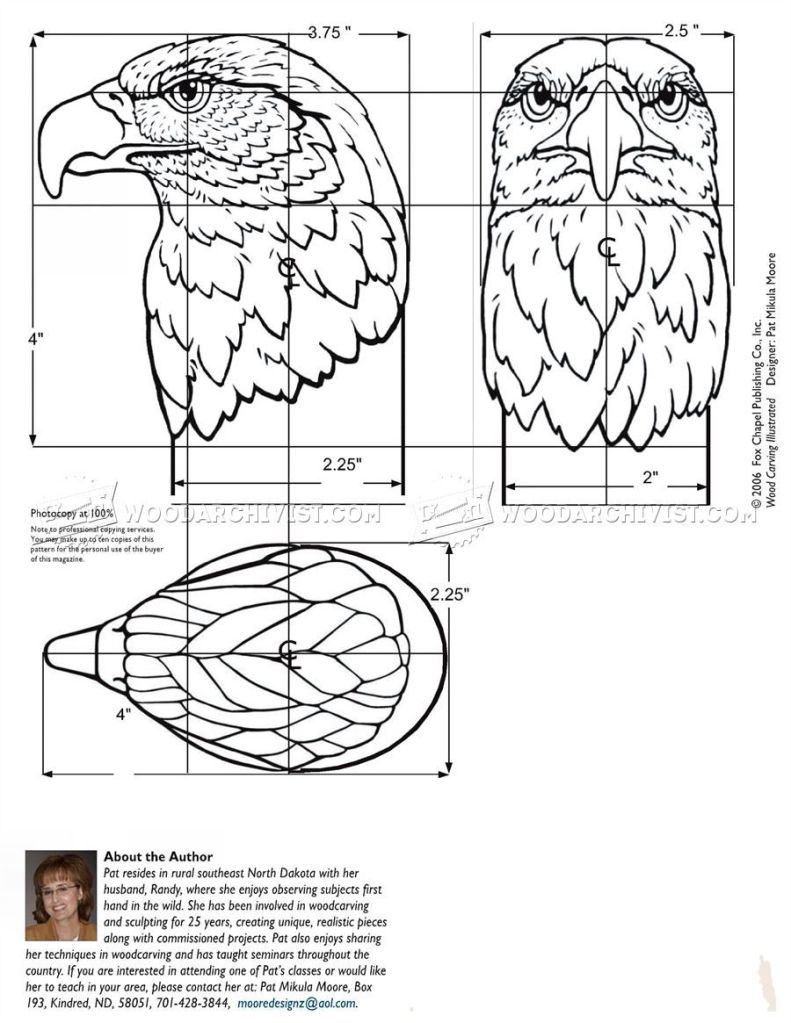
Carve an Eagle Head Cane Topper

The following link will take you to an article that appeared in the Fall 2017 Issue of Woodcarving Illustrated which gives you step-by-step instructions on how to carve this Eagle Head Cane Topper:

http://woodcarvingillustrated.com/blog/2017/06/13/realistic-eagle-bust/

Reader’s Comments

My first comments this month come from my good friend, Jim Babcock from Columbus, Indiana.  As a follow up to my remarks on experimenting with your wood carving Jim tells about how he likes to experiment with tinting oils with oil paints.  Jim writes:

“Bob:

Always look forward to a new edition of Wood Chip Chatter; always something new to learn & try from yourself and others. I especially appreciated your opening comments about experimentation and trying new finishing methods and materials. Can’t tell you how many times I have tried something new and been surprised by the outcome.

I have learned to use a bit of scrap wood to check stains, even if I have had a past experience with a brand or shade. That has been true with penetrating oil stains that can vary more than one would think they should.

Keep up the good work Bob !

Jim Babcock Columbus, Indiana”

Jim later wrote:

“Bob:

To add one more thing to the application of a finish on a carving, I sometimes tint an oil base stain to gain a desired color.   Others have done this as well by adding a bit of oil paint to a neutral oil base penetrating stain; in this case, the green highlights to the attached basswood carving.    Consistency might be a concern if I were applying a tinted stain to a large surface area on a carving .

Jim Babcock

Columbus, Indiana”

Jim’s Carving

Thank you for the pleasant comments and words of encouragement, Jim!

Many carvers tint their oil treatment with an oil paint (usually raw sienna) but I see that you are taking the concept to another level by using various other colors and using these tinted oils like stains.  In my mind it’s like painting with very diluted oil paints.

I like the result you got on your carving in the photo.  The green color has a vivid hue and appears to be applied very evenly.  I hope you will continue to experiment, Jim, and I  look forward to hearing more about your results.

Next, I received some very complimentary words from My good friend, Dick Bonewitz from Carmel, Indiana.  Dick wrote:

“Thanks so much for sharing your experience with using a spray before you painted and the unsatisfactory results you experienced.  That was great information.

And thanks for your efforts of putting out this blog every month.   It’s much appreciated.

Dick Bonewitz

Carmel In”

Thank you so much for your kind words, Dick!  They are greatly appreciated.

Next comes a very important comment from my friend, Donald Crippen about giving credit where credit is due.  Donald Writes:

“I really enjoy your email each month and read it all. Today, though, I felt I had to respond to this issue. One of the photos showed three pumpkins (which were done very well) that leaves you with the feeling that they were the original designs of the carver. In actuality they are from a Doug Linker video that is available on YouTube. I do a lot of Linker’s carvings, but would never put it online without giving credit to the designer. It might just have been an unintentional omission, but thought you would want to know.”

Thank you for your input, Donald, and your point is well taken.  It’s very simple.  If the design is not yours or if you got the idea from someone else, mention that person’s name and give him/her credit for the creativity, time, experimentation, and hard work that went into developing that carving.  It’s more than showing common courtesy, it’s showing respect. 

I don’t know why this happens so often but I would like to believe it’s either lack of knowledge or an oversight by the carver, as I’m sure was the case this time.  It’s a debate that’s been going on for as long as I can remember.  In fact, to read more on this topic search back to my blog of October 5, 2021 where I have written on this in the past.  Thank you again, Donald for bringing up this meaningful subject.

My next comment comes from my friend, Jon Gledhill from St. George, Utah with some pertinent information he learned along his woodcarving journey.  Jon writes:

“Bob, Thanks for including me in this group. I appreciate your insights and thoughts about experimenting and being willing to try new things. I agree whole-heartedly.

I was really resistant to learning from other sources (books, etc.) when I began carving in 1995, because I wanted to “discover my own style”. Thanks to some friends who gave me books and tools for birthday gifts over the next few years, I began to experiment with different carving styles.

When I finally decided to seek guidance from others, I was surprised and pleased at two things: first, my carving skills improved dramatically, and at a much faster pace, and, second, the carving community is amazingly friendly and helpful.

As my skills have developed, I’ve tried to give back, and share my enthusiasm and skills with others – as a way to honor and express gratitude for those who have helped me along the way.

Your emails are appreciated for more than their content. They’re a connection to the kind of people I love being associated with. Thank you!

Sincerely, Jon Gledhill St. George, Utah”

Thank you for writing and for your kind words, Jon!  They are greatly appreciated.  In my opinion, the best way to learn to be a better wood carver is to keep an open mind.  Don’t get hung up on just one type of resource or method.  Try everything…read books, watch videos, attend shows, talk to other carvers and study their work, and perhaps even join a local woodcarving club.  As you have found, wood carvers are some of the nicest people you will ever meet and almost every one of them is more than willing to help and share their knowledge.  With that every carver in his/her own small way is actually giving back to the community.  Helping other carvers and giving back is not only important to the growth of the woodcarving community but also very gratifying to yourself, and I encourage you to continue the good work you are doing.

“Photo Shop” is the section of Wood Chip Chatter where carvers can send in photos of their wood carvings for display. It’s your chance to show off your work…sort of a show and tell. The photos will only be displayed and no comments or critiques will be made.  For critiques on your carvings send them in to the “Carver’s Corner.”  Send your photos to: carverbobk@woodchipchatter.com

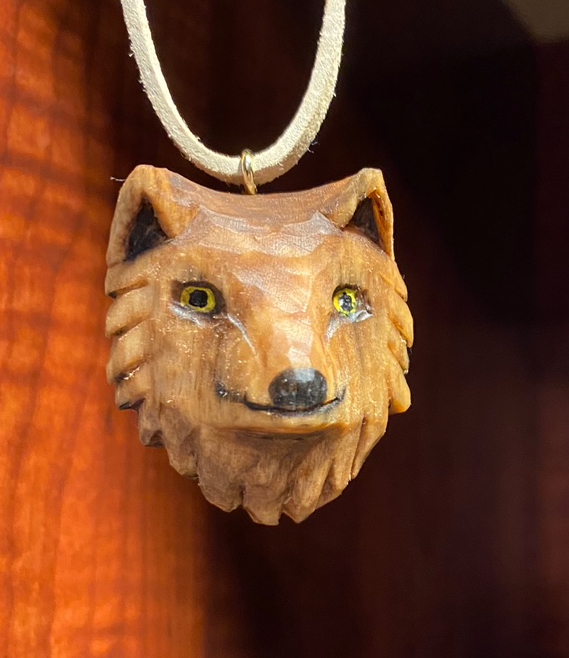
Our first entry to the “Photo Shop” this month comes from my good friend, Dean Stewart who sent in some photos of two beautiful pendants he recently carved. “BobIn case you need some context here is a recent fox pendant I carved from basswood and a wolf from black walnut.”

Nice work on both, Dean!  I really like them.  Thanks for the photos!

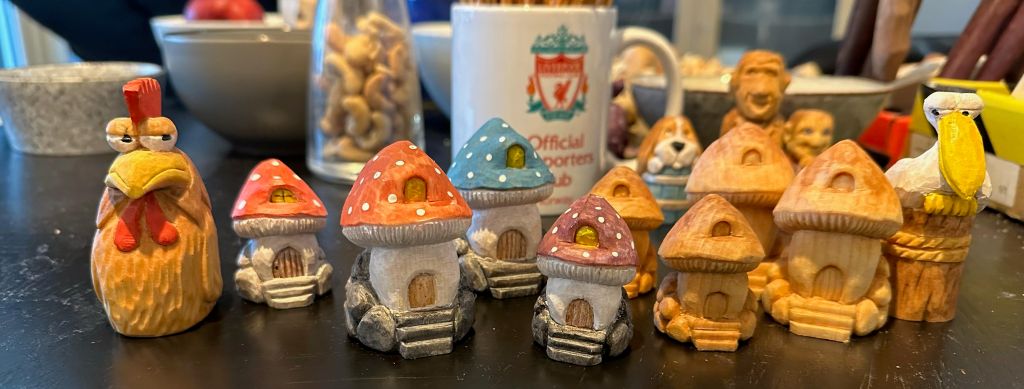
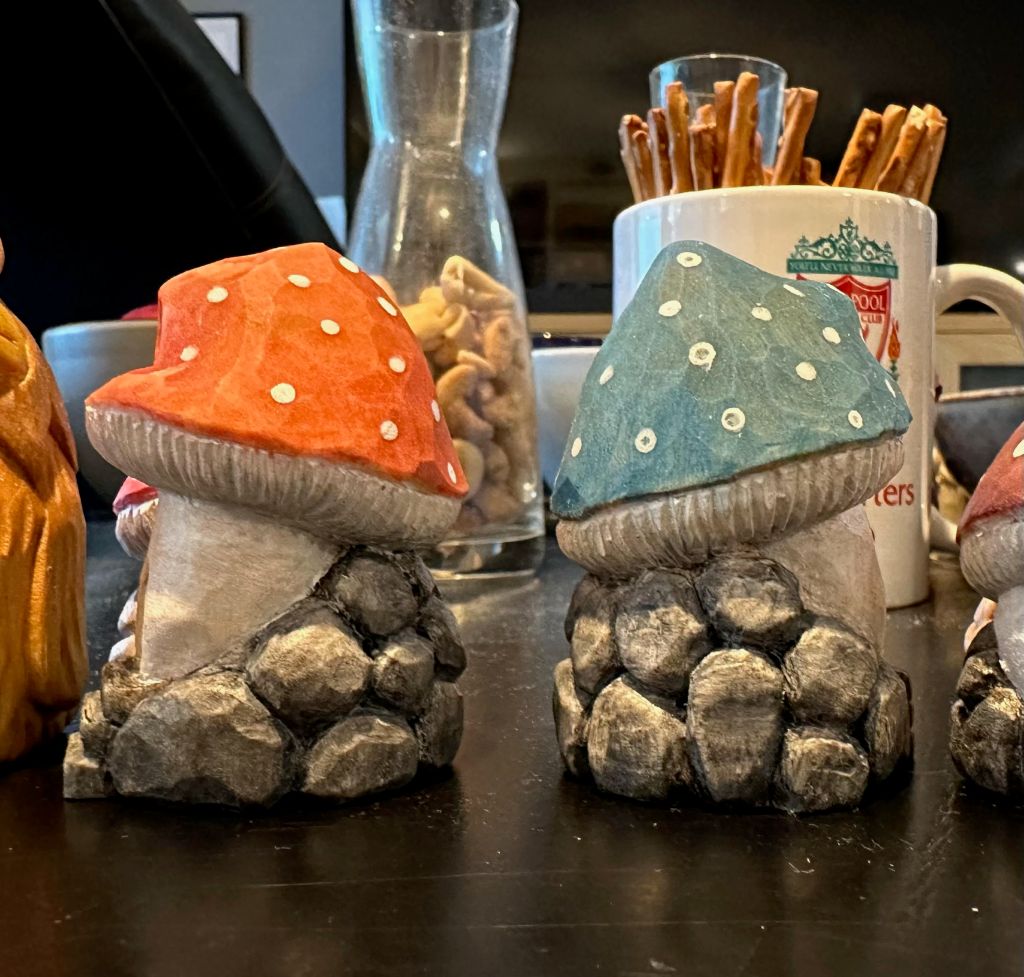
Our next entry comes from my good friend, Geir Larsen from Lofthus, Norway.  Geir has been carving for four years and learned from books and watching YouTube videos.  Geir says he is partial to small and cute pieces.  These are some of the mushroom houses he has carved recently.

Thank you so much for the photos, Geir.  Your carvings are terrific!  It’s amazing how accomplished you have become in just four years.

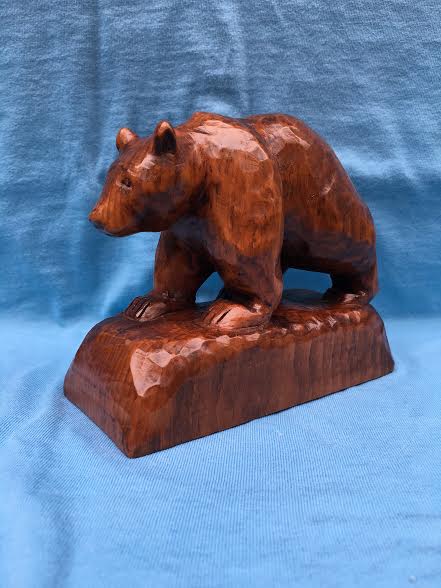
I thought I would add a carving photo to the “Photo Shop” this month so here is a carving of a grizzly bear I did many years ago:

Bob’s Grizzly Bea

I received some excellent comments from my friend John Nielson of Overgaard, Arizona with answers to the cracking problem he had with his carving last month.  John agreed with my advice and did not give up because of the problem he had.  The answer he found is most enlightening.  John Writes:

“Bob:

Follow up on the previous email about wood cracking.

After spending more than 70 hours on my carving, I did not want to give up because “wood does what wood wants to do.” I just had to try to salvage my first human bust. 

I was browsing YouTube and found a couple videos on repairing cracked carvings. They were more geared towards chainsaw carvings but the cracks they showed were similar to my dilemma, so I watched and then tried one of their solutions for stained/natural wood.

Using cut-offs saved from the blank, I created wood wedges to put in the cracks. Wedges were same wood & inserted in the same grain direction. In all I had to make 10 wedges to address the major voids in my blank.

The secret they used was Gorilla glue! Why? The glue is activated by water and expands 3-4x its volume once activated. Since the crack is not straight and the wedges don’t completely fill the void, the expanding foam from the Gorilla glue helps fill the gap.

Spray the crack with water. Then put Gorilla glue on both sides of the wedge. Use a mallet or piece of scrap to tap the wedge into the crack and let the Gorilla glue do its thing. Continue until all wedges have been inserted. Leave all of the wedges proud of the wood. Set aside for 24 hours.

I am providing a few before & after pictures. 

You can see that the Gorilla glue does make a bit of a mess if you don’t use a brush to apply it. (I just squeezed it from the bottle.) This fix is adding substance to the existing blank &  allowing me to continue carving. Much of the surface will be modified as I finish the piece, so I am not really worried about the foam oozing out.

When trimming the wedges, it is recommended that care be taken. Using a saw, Dremel or a grinder is better than a mallet and chisel. Basically the trimming should not be a blunt force that could tear out the wedge.

The smaller cracks will be filled with Elmer’s Pro Bond because of its ability to take on stain. 

I will send pictures of my progress and hopefully the final product in the near future. Bottom line-I hope this offers a solution that others find helpful.

Keep the chips flyin’!

John Nielsen”

Excellent work, John, and congratulations for sticking with it.  It pays to do research.  Hopefully, the solution will work and by all means send in your WIP photos.  I am anxious to see how things progress.  Also, Gorilla makes many different types of glues.  Can you tell us exactly what type is the one you used?

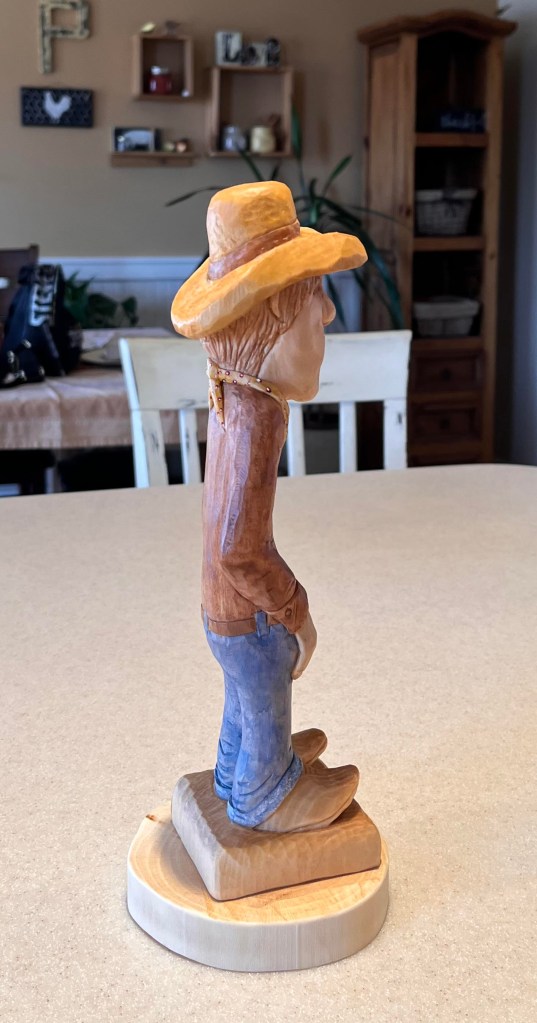
Cowboy Boot

Woodcarving an Angel


Teacher: Dave Stetson

Dates:  September 2,3,9,10,16,17

Times:  Sat, Sun – 9:30am-11:30 Pacific /11:30am-01:30pm Central / 12:30pm – 2:30pm Eastern

12 hours (6 sessions – 2 hours each day)

 Location: Online (Via Zoom)

For details and to sign up email Dave Stetson

Contact Dave

Woodcarving Lion in tree

Teacher: Janet Cordell

Dates:  September 8,11,15,18,25,29

Times: 2-4 p.m.  Pacific Time 3-5 p.m.  Mountain Time 4-6 p.m.  Central Time 5-7  p.m.  Eastern Time

12 hours ( 6 sessions – 2 hours each day) 

 Location: Online (Via Zoom)

For details and to sign up email janet_cordell@yahoo.com

Carving Witch Hazel

Teacher: Dale Green

Dates: September  30 October  1,7,8

Saturday & Sunday both weekends 9:30 am-11:30 Pacific / 10:30 am – 12:30 pm Mountain /
11:30 am- 1:30 pm Central / 12:30 pm – 2:30 pm Eastern

8 hours ( 4 sessions – 2 hours each day) 

 Location: Online (Via Zoom)

Cost: $100.00 includes roughout and shipping within the US (International $120)

Pay for registration  with Dale here:  https://paypal.me/DaleGreenWoodcarving

Email Dale

Woodcarving Santa

Teacher: Dave Stetson

Dates:  October 21,22,28,29 Nov  4,5

Times:  Sat, Sun – 9:30am-11:30 Pacific /11:30am-01:30pm Central / 12:30pm – 2:30pm Eastern

12 hours (6 sessions – 2 hours each day)

 Location: Online (Via Zoom)

 For details and to sign up email Dave Stetson

Contact Dave

Online Classes With Chris Hammack

Teacher: Chris Hammack 

Chris Hammack is offering a new series of online classes to help students learn and sharpen their woodcarving skills.  Individual and Group Classes are available through his web site chrishammackart.com/groupclass

Whittle Wednesdays

Teacher: Dwayne Gosnell  

Dates: Two – 2 hour classes each month on Wednesdays

Location: Online (Via Zoom)

To sign up contact Dwayne Gosnell via email dagwood_76@gmail.com

Woodcarving Academy

Established in 2020, the Woodcarving Academy offers dozens of videos and seminars created by some of the country’s top level instructors.  More videos are added regularly as they are created by the instructors.

With a paid subscription to the Woodcarving Academy you can view any videos you like for as many times as you like.

Subscription rates:  Monthly = $19.95   Quarterly = $49.95   Annual = $139.95

There is even a Free level which allows you to tour the website and watch the sample videos and content, and receive email updates as new content becomes available.

Check out the Woodcarving Academy and learn with the masters right in the comfort of your own home!  Go to: www.woodcarvingacademy.com or Email: support@woodcarvingacademy.com

The International Association of Woodcarvers has upcoming Zoom meetings on the following Saturdays at 3PM EST with special guest presenters.  Check them out…

Zoom:  310-460-3575

Presentation Schedule:

9/2 – Brian Doty

9/9 – TBA

9/16 – Robert Rangel

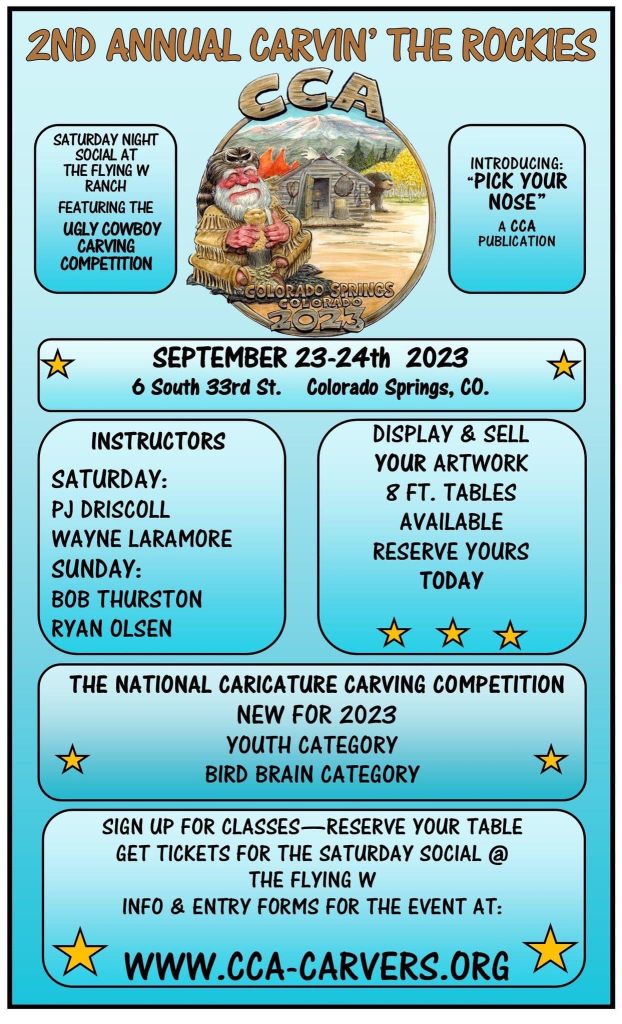
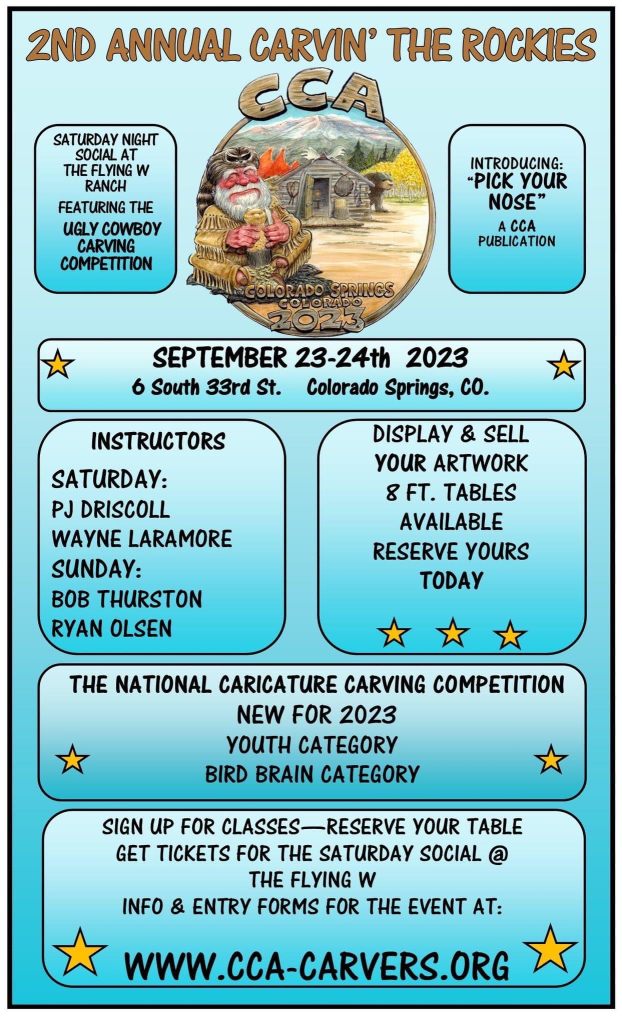
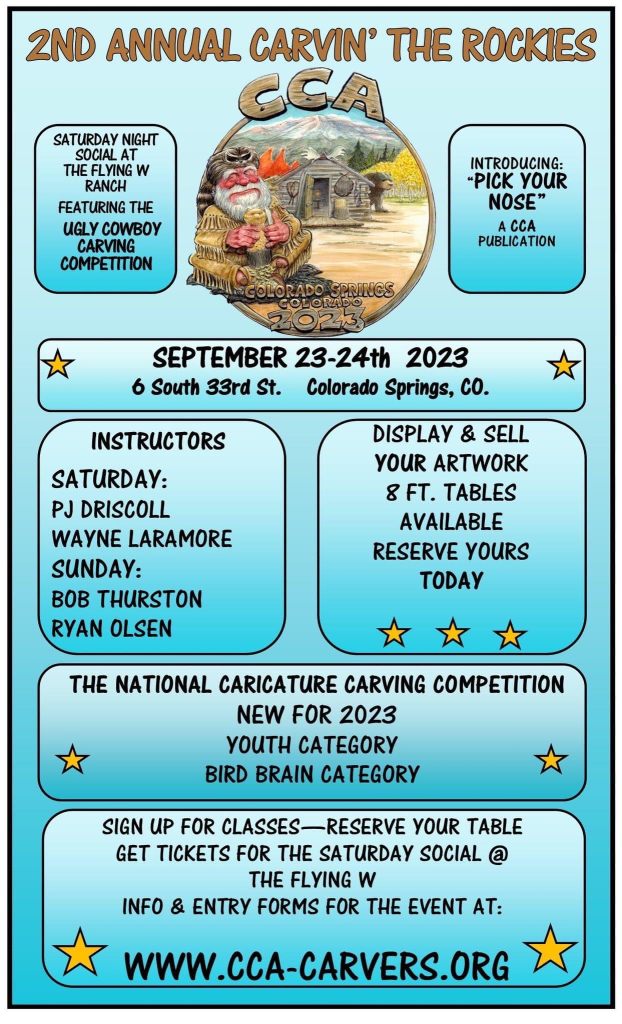
9/23 – Live broadcast from the CCA’s Carvin’ The Rockies 2nd Annual Event

9/30 – Rich Embling

10/7 – Tom Wilkinson

10/14 – Live from the Sevierville Show

10/21 – Chucky Ducky Schuck

10/28 – Ashton Brown of Badger State Blades

INTERNATIONAL ASSOCIATION OF WOODCARVERS

COME JOIN US!!

The Jersey Hills Wood Carvers (JHWC) club is a small but growing group of wood carvers sharing their time, knowledge and joy of woodcarving.  The JHWC generally meets from 7:00 PM EST to 9:00 PM EST on the 1st, 3rd and 5th Thursday of each month (when school is in session) at the Jefferson Township High School wood shop classroom.

Membership is “FREE” and open to anyone interested in woodcarving regardless of their ability.

JHWC’s Upcoming Meetings and Events

2023

September 7th and 21st

October 5th and 19th

November 2nd, 16th and 30th

December 7th and 21st

2024

January 4th and 18th

February 1st, 15th and 29th

March 7th and 21st

April 4th and 18th

May 2nd, 16th and 30th

June 6th and 20th

For more information contact:

Al Santucci  alsantucci4@gmail.com  President

Bill Brunner  billbrunnerdesign@gmail.com  newsletter/website editor

Or visit:

Website:  https://www.jerseyhillswoodcarver.com/

Facebook:  https://www.facebook.com/groups/736479646821641/

Complimentary Knife Sheath

Funny Bone

Learn Through Experimentation

I‘ve been carving for close to 60 years now and I’m still learning.  That’s the thing about carving, you never stop learning.  The more you look around, the more you find new ways of doing things, whether it’s how to carve eyes or how to antique your carvings.  There’s always something out there that you never knew or tried before, which brings me to the purpose of this story.

I made my career as a chemist, so naturally I was always experimenting.  Experimenting is in my blood.  So even after 12 years of retirement I’m still experimenting, even when it comes down to woodcarving.  This is how we learn.  We learn through experimentation.  In other words, if you don’t try it how do you know if you can do it or if it works?

We all have our preferred methods of finishing our carvings, including me.  Some of us seal our carvings with oils before painting while others just paint right on the dry wood or some even paint on wet wood.  After painting, the sky is limit as the finishing possibilities are endless.  Do I antique or not antique?  Do I finish with acrylic, polyurethane, lacquer, varnish, etc.?  Do I wax or not wax?  And finally, what combination of all of the above do I use?

I, like most, have my preferred method and I’m happy with the results I get, but the chemist in me asks, do I have the best method?  Maybe I should experiment some more, so I continue to experiment, and continued to learn.

So let me tell you about my latest experiment.  I had just completed carving a Santa ornament and it was now ready for the painting stage.  At this point, more often than not I will coat the carving with walnut oil, let it dry a bit then go on with the painting (with acrylics).  This time, however I thought I would experiment.  So instead of coating with walnut oil I decided to spray the carving with Krylon clear matte acrylic spray.  I immediately noticed a big difference that I didn’t like.  The carving had turn very light, almost white, a far cry from the golden brown color I get with the walnut oil.

However, I was too far along with this carving to give up so I continued on to the painting phase after the acrylic dried.  That’s when I noticed the second failed result from my experiment.  It was impossible to paint with watered down paints because the paint looked chalky after it dried.  So I was forced to apply the paint heavier than I wanted, although I have to admit with the heavier coat of paint some parts of the carving began to look okay.

There was one area of the carving I couldn’t save though, and that was the face, a critical area of any caricature.  When I use walnut oil I find that I don’t usually need to paint the face.  I only use a little red to add some blush highlights.  This time, though, because the face was so white I was forced to paint the face with rather heavy coats of paint which did not give me the results I wanted.

After the paints were completely dry I forged on with my normal method of finishing a carving.  I gave the paint a sealer coat of the Krylon clear matte acrylic spray, allowed the Krylon to dry for about 4 hours then applied a coat of Howard Feed-N-Wax as I normally do.  After letting the wax cure overnight I buffed it with a soft cloth and horsehair shoe brush.  In the end, in my opinion the carving looked acceptable but not what I really wanted. 

My experiment was a failure, but I learned three valuable lessons from it.  I learned 1) Spraying a carving with Krylon clear matte acrylic is not a good choice.  2) Never give up on a wood carving.  Most of the time you can make it work, and if you can’t, it’s a learning experience, and 3) If I had never experimented I would have never learned lessons #1 & #2.

The moral of the story is don’t be afraid to experiment, try new things or ask questions, and never stop learning.  Get out of your comfort zone!  For example, if you never carved eyes, ears or hands before, try them.  Practice on scrap wood.  If you never attempt to carve an eye you will never carve an eye.  Learn through experimentation, never give up, and never stop learning.

Reader’s Comments

I received some very nice comments from a few of my reader celebrating the two year anniversary of Wood Chip Chatter.  The first one comes from my good friend, Bob Nesbit who said:

Thank you so much for your kind words, Bob!

I received a second message from my good friend, Robert Martel but the there was no content in the message.  I’m sorry there was nothing to read in your message, Robert but I’m sure you had some nice things to say.

My next comment comes from my friend Anthony Ionnotta who enjoyed my tutorial on How to Carve a Moravian Star ornament that I posted way back on July 24, 2021.  Anthony writes:

Anthony, I’m glad you enjoyed carving the Moravian Star and found my instructions helpful.  Thank you for your kind compliment.

My next comment comes from my friend, Glenn Smith with the Boynton Beach Woodcarvers in Florida in the form of an idea responding to last month’s article on how to make a depth gauge for relief carving.  Glenn writes:

That’s a great idea too, Glenn, and I’m glad you’re enjoying Wood Chip Chatter!  Do you have or can you take some pictures of it for me to post along with your comment?

My good friend, Jim Babcock of Columbus, Indiana wrote in to report on his experience using walnut oil to pre-treat his carving.  Jim Said:

I‘m glad you are happy with the walnut oil results, Jim.  The walnut oil gives the wood a nice golden tone and has no odor.  Lots of times I can avoid painting my faces and just add a little red here and there for blush highlights.

And last but not least I received a note from my friend, Lawrence (Laurie) Keating from British Columbia, Canada.  Last month Laurie sent in two photos of the plinth he carved to the “Photo Shop” and since he signed his note as Laurie I mistakenly referred to him as a female.  Well, Laurie writes in this month to set me straight.  He said:

Thanks once again for sending in your photos, Laurie, and my sincere apologies on the gender mistake.  I was unaware of the use of the nickname Laurie for Lawrence in Canada.  In the United States males named Lawrence are commonly referred to as Larry.

Photo Shop

“Photo Shop” is the section of Wood Chip Chatter where carvers can send in photos of their wood carvings for display. It’s your chance to show off your work…sort of a show and tell. The photos will only be displayed and no comments or critiques will be made.  For critiques on your carvings send them in to the “Carver’s Corner.”  Send your photos to carverbobk@woodchipchatter.com.

My first entry to the “Photo Shop” this month comes from my good friend, Ray Steinhart who sent in a photo of some very cool looking pumpkins he carved.  Ray said: “Congratulations on wood chip chatter. Happy Anniversary. I’ve only been carving a couple years  I wished I had started a long time ago. I try to pick carving’s without eyes, they drive me crazy.”

Ray’s Pumpkins

Thanks for the photo, Ray…always very much appreciated.  And thanks for the congratulations.

 I really like your pumpkins, especially the straw hair under the hats.  

Here’s a little bit of tough love, you will never learn to carve eyes if you don’t try them.  There are all types of eyes and ways to carve them.  You have nothing to lose.   Start with simple cartoon eyes and work your way up.  

Remember, if you ruin it, it’s just a piece of wood, and chalk it up to practice and a learning experience. 

My next entry to the “Photo Shop” comes from my good friend, Henrik Rydberg from Sweden who send in two photos of an excellent 80’s Rock Fan he carved.  Henrik wrote:

Hello Bob,

Regards from Sweden!

Here is a picture of my ”80s rock n’ roll fan”. I carve the figures in linden and my daughter Kim paints them with acrylics. I finish them with danish oil. I have made a new website at www.henrikrydberg.com where I posted pictures of my carvings.

Thank you for your great blogg!

Best regards

Henrik Rydberg

Thank you for the photos, Henrik!  That’s a really great carving.  I like everything about it, especially the job you did on the hands  You and your daughter make a terrific team.  I hope you’re enjoying Wood Chip Chatter and that we’ll be seeing more of your great carvings in the future. 

Carver’s Corner

“Carver’s Corner” is the section where you can send in photos of your carvings to have me critique them and offer you my truthful opinions on what you did right and what you might improve on next time.  It’s an excellent opportunity to improve your carving skills!  Send your photos to carverbobk@woodchipchatter.com.

I received an entry to the “Carver’s Corner” from my good friend Jim Weiner who sent in a photo of three Santa ornaments he recently completed and would like some advice on them.  Jim writes:

“HI Bob,

              I am a relatively new carver of 3 years, and I have greatly improved since the beginning, attached is a photo of 3 Santa Ornaments I have recently carved. Can you look at them and recommend one area I should focus on for improvement please? I “think” the beard would be the area, as I am struggling with hair layering and any advice would be greatly appreciated.

Thanks,

Jim “

Thank you for the photo, Jim!  I’ll be happy to help where I can.

The overall shape of the heads and faces are fine, as are the hats.  You also did a good job on the eyes.  I would work on adding some bags and creases below the eyes on your next ones, though.  Add some nostril holes to your noses in the future.  They will make a big difference in the appearance of the carvings and can easily be added with a small U-gouge or even your knife if you don’t have the right gouge.

I can see your concern over your beards and mustaches.  You’ve made a valiant attempt to use wavy lines but like with everything, there is a technique to carving good ones.  Besides making use of S-cuts you want to use different sizes and shapes of gouges.  Start with a large U-gouge or soft V-tool and make just a couple (3 or 4) of random deep cuts, then go to a medium-sized U-gouge or V-tool and carve random S-cuts all around the beard area.  Finish by using a small U-gouge or V-tool to make more S-cuts.  Then take your carving knife and carve some random deep cuts throughout the beard.  No more than 3-5 cuts will do it.  I also find it important to bring some of my gouge cuts all the way to the edge of the carving as I go, to break up the ends of the beard and create separations.  Use your carving knife to enhance these separations.  Do the same thing on the mustache.  The photos below show two Santa ornaments which are by no means perfect examples, but help to show the separations achieved by using the techniques I just described.

Your painting also needs improvement.  The paint is applied way too thick and it gives the carving a plastic look.  Water down your paints and apply them in several thin layers rather than in one thick layer.  The faces all appear to be painted with one flesh tone color.  In the future, blend in some VERY thin coats of red to areas like the tip of the nose and cheeks to create blush highlights and bring the faces to life.  You will see a big difference.  Use the two photos above as guides.

As a relatively new carver you are doing a terrific job, Jim.  You are carving faces and as anyone will tell you they are not easy to carve.  I hope you will find this critique helpful, and that your carvings continue to improve as a result.  I would love to see more of your work as your carvings progress further.

I received a question from my friend Judy about what kind of knife I used in my How to Carve a Moravian Star tutorial.  Judy wrote:

“What type of knife are you using? Great tutorial, hoping my hubby will give it a try.”

The knives I use are Helvie knives but any good wood carving knife will do as long as it’s sharp. Helvie knives are hard to get but Flexcut, OCCT, AML and Deep Holler are also good knives which are readily available at reasonable prices. I hope your hubby will try the tutorial, Judy.  It’s a fun project and the star looks nice hanging on your Christmas tree. 

If he needs a recommendation for some good wood carving knives just send me a note. 

I received a very intriguing question from my friend, John Nielsen of Overgaard, Arizona regarding a serious problem with wood cracking.  John writes:

“I have a question about wood cracking.

I took a class recently in Colorado where the average humidity ranged from 10 to 20%. We had butternut log “roughouts” that were cut from logs harvested 2 years ago. They were prepared for class about a week before in a location that was about 50% humidity and put into plastic trash bags & tied off for transport to class.

My blank was an end cut from the original log so there was some minor cracking to begin with. The blank was moist and the plastic bag was wet when I opened it. I did not notice anything significant when I mounted the blank to the carving vise. Each day at the end of class I covered the carving with the plastic bag and tied it off.

On the third day I began to notice a crack developing on both sides of the carving. It grew a little each day but became very obvious on the fifth day as wood fibers began tearing. On the seventh day when I removed the carving from the vise, I noticed the crack open up more. Apparently the attachment to the vise was bridging the gap. It was then I realized the crack was the entire width, through the pith, and was 2/3 up the carving.

That night I soaked the entire carving. The next afternoon I pulled the carving out and saw some wood fibers had swollen and the crack had closed up midway up the carving, but otherwise the soaking did nothing. I rewrapped in plastic, doubled with another and set it aside.

Two days later I checked and though the wood was moist, there was no obvious change other than the cracking seemed to stop.i flipped the carving so the end cut was facing up and poured water into the crack and to my surprise water poured through the pith as if it was a drain.

Any advice to stop this major crack, prevent any future cracking, and to salvage the carving I have so I can complete it?

Thanks in advance!

John Nielsen Overgaard, AZ”

John,

To answer your question about stopping the major crack I’m afraid it is likely too far gone to do much with. although sealing the carving with a polyurethane or lacquer should deter future cracking and, therefore possibly salvage the carving in general.

Based on what you have told me, and some things we don’t know, it appears you may have been headed for problems right from the start, especially if the butternut logs which were harvested 2 years ago were simply cut and left to dry while laying on the ground outside.  Immediately after logs are cut they begin to lose moisture.  Most of the moisture is lost rapidly through the ends of the logs.  The proper way to store fresh cut logs is to seal the ends with paint or other type of sealer.  This slows the moisture loss and reduces checking (or cracking).  The logs should also be stored on a rack off the ground.

You mentioned your blank was an end cut from the log which as we now know is the area where most of the cracking occurs, so I think you were in trouble right there.  Also, the fact that the blank was moist and the inside of the bag was wet when you opened it piques my interest.  Air that contains 50% humidity is not considered saturated and should not cause the amount of condensation you are describing from a typical piece of wood after it is placed in a plastic bag. It appears to me your blank may have been soaked with water before it was placed in the bag and shipped.

Soaking your blank with water and double bagging it was a futile effort as you found out.  The only thing water will do is swell the wood fibers temporarily, but it  not deter the cracking process.  In fact, if anything it made it worse.  Drying is a natural process that wood undergoes.  It is inevitable and cannot be stopped, only slowed down, and once wood starts cracking you cannot reverse the process.

Unfortunately, you were given a bad blank which was cracked and wet.  Too wet, in my opinion.  Wood is destined to dry, and so was your blank.  Covering the carving with the plastic bag every night may have slowed the drying process very slightly but at that point you had a relatively small piece of wet wood which was going to lose its moisture (rapidly) in a short amount of time with further cracking being the result.

Apply a coat of polyurethane to the carving and be sure to allow it to get inside the cracks.  If you carve more on the blank I suggest you recoat the areas that have been carved away.  This will help to slow the cracking of the blank. 

I hope this has been somewhat helpful.  Feel free to write back if you have any further questions.

Here is a nice challenge for all of you chip cavers. This would make a nice project for a plate.

Introducing Fab Phoebe!!!

  • Instructor: Bob Hershey
  • Dates:  August 19, 20, 26 & 27
  • Times:  Saturday & Sunday both weekends 12:30pm – 2:30pm Eastern Time / 11:30am – 1:30pm Central Time / 10:30am – 12:30pm Mountain Time / 9:30am – 11:30am Pacific Time
  • 8 hours (4 sessions – 2 hours each day)
  • Location:  Online Via Zoom
  • Cost: $130.00 includes roughout and shipping within the US.

Payment may be made through PayPal, Zelle or personal check.  If paying by PayPal add $5.00 service charge UNLESS you send it to friends & family.  For PayPal and Zelle please use email bzcarvn@ptd.net.  This is NOT the same email address as this email was sent from.   For personal check mail to Bob Hershey, 13 Pfautz Ave., Lititz, PA 17543.  Please include your mailing address so I can send the roughout.  About two weeks before the class I’ll email you the link to the Zoom page for the class and the password to view the videos. 

Thank you for participating in past classes and I look forward to carving with you again.

For more information contact Bob Hershey at bzcarvn@gmail.com or 717-951-5569.

Carving the American Cowboy


Teacher: Janet Cordell

Dates:  August 7,11,14,18,21.25 

Times: 2-4 p.m.  Pacific Time 3-5 p.m.  Mountain Time 4-6 p.m.  Central Time 5-7  p.m.  Eastern Time

12 hours ( 6 sessions – 2 hours each day) 

 Location: Online (Via Zoom)

For details and to sign up email janet_cordell@yahoo.com

Woodcarving an Angel


Teacher: Dave Stetson

Dates:  September 2,3,9,10,16,17

Times:  Sat, Sun – 9:30am-11:30 Pacific /11:30am-01:30pm Central / 12:30pm – 2:30pm Eastern

12 hours (6 sessions – 2 hours each day)

 Location: Online (Via Zoom)

For details and to sign up email Dave Stetson

Contact Dave

Online Classes With Chris Hammack

Teacher: Chris Hammack 

Chris Hammack is offering a new series of online classes to help students learn and sharpen their woodcarving skills.  Individual and Group Classes are available through his web site chrishammackart.com/groupclass

Whittle Wednesdays

Teacher: Dwayne Gosnell  

Dates: Two – 2 hour classes each month on Wednesdays

Location: Online (Via Zoom)

To sign up contact Dwayne Gosnell via email dagwood_76@gmail.com

Woodcarving Academy

Established in 2020, the Woodcarving Academy offers dozens of videos and seminars created by some of the country’s top level instructors.  More videos are added regularly as they are created by the instructors.

With a paid subscription to the Woodcarving Academy you can view any videos you like for as many times as you like.

Subscription rates:  Monthly = $19.95   Quarterly = $49.95   Annual = $139.95

There is even a Free level which allows you to tour the website and watch the sample videos and content, and receive email updates as new content becomes available.

Check out the Woodcarving Academy and learn with the masters right in the comfort of your own home!  Go to: woodcarvingacademy.com or Email: support@woodcarvingacademy.com

The International Association of Woodcarvers has upcoming Zoom meetings on the following Saturdays at 3PM EST with special guest presenters.  Check them out…

Zoom:  310-460-3575

Presentation Schedule:

The International Association of Woodcarvers will be going back to its regular monthly meeting schedule beginning in September.

8/26 – Rich Smithson – Helvie Knives

9/2 – Brian Doty

9/23 – Live broadcast from the CCA’s Carvin’ The Rockies 2nd Annual Event

9/30 – Rich Embling

10/7 – Tom Wilkinson

INTERNATIONAL ASSOCIATION OF WOODCARVERS

COME JOIN US!!!

Complimentary Magnetic Knife Sheath with Every Knife

Funny Bone

Time Flies

Congratulations to Wood Chip Chatter!  This issue marks the second anniversary of my blog.  I began two years ago in July, 2021 as a small publication with only a handful of subscribers, and today Wood Chip Chatter has grown to a monthly newsletter with nearly 1,000 subscribers bringing woodcarving and whittling information and news of a wide range of topics.

I want to thank all of my valued subscribers , both those who have been with me since the beginning and those who have recently signed on.  I work tirelessly every month to gather stories, tutorials and other woodcarving related information as well as other topics of interest to make Wood Chip Chatter a valuable source that’s worth reading, and I hope you find benefit in what I produce. Here’s to many more years of wood carving and whittling fun!

Happy Anniversary!!!

How to Make a Relief Carving Depth Gauge

from an article by Jim Dupont

To construct the depth finder, select a narrow piece of wood about 1/2″ (13mm) x 1 1/2″ (40mm) x 18″ (460mm).  Cut off a section of 1/4″ (6mm) dowel that will accommodate the width of your board plus the deepest penetration you expect to make into a relief carving.  Add a couple of extra inches for the eraser and a handhold.  Sharpen one end in a pencil sharpener.

Drill holes, slightly larger than the diameter of the dowel, along the edge of the piece of wood every 2″ (50mm).  These holes allow you to take depth readings at all areas of the carving.  This provides a stop gauge while holding the dowel in place.

Reader’s Comments

I received a wonderful comment this month came from my good friend, Jim Babcock from Columbus, Indiana.  Jim writes:

“Bob:

Thanks much for the latest Wood Chip Chatter; always much appreciated and a good chance to see what you and others are up to. Also great that you have an expansive calendar of events and seminars. Like so many things, the pandemic was very tough on carving shows and our vendors. In addition to sharing knowledge and checking out the vendor tables, they also provide support for their local communities. Keep up the good work Bob.

As a side note, have not yet tried your suggestion for walnut oil as a finish. I have used diluted gel stains from time to time and wonder if the results will be similar.

Jim Babcock Columbus, Indiana”

Thank you so much for your kind words of encouragement, Jim!  I’m glad you are really enjoy Wood Chip Chatter.  I try to bring new exciting and interesting information every month.

Definitely give walnut oil a try.  When you do you’ll be glad you did and will never go back to boiled linseed oil again.

Gel stain is not the same as walnut oil or boiled linseed oil.  The oils are wood finishes used for sealing wood and are mainly used by wood carvers as a pre-treatment prior to painting.  Gel stain, on the other hand is just what it says…a stain.  It is used to stain or color the appearance of the wood..  You would not want to use gel stain first and then paint over it.  That said, gel stain makes and excellent antiquing medium to be used AFTER you paint.  You can even apply a coat of walnut oil to the carving to seal the wood after the gel stain is completely dry.

I received another note from my good friend Todd Martin from Huntington, Indiana commenting on my response to his question about bugs in cottonwood bark.  Todd Said:

“Thanks for the feedback, Bob! Very helpful. And thanks again for tracking down the information a out addressing bugs in bark.”

Anytime, Todd!  I’m glad I was able to help.

Photo Shop

Photo Shop is the section of Wood Chip Chatter where carvers can send in photos of their wood carvings for display. It’s your chance to show off your work…sort of a show and tell. The photos will only be displayed and no comments or critiques will be made.  For critiques on your carvings send them in to the Carver’s Corner.  Send your photos to carverbobk@woodchipchatter.com    

My first entry to the Photo Shop the month comes from my good friend, Geir Larsen,  Geir has been busy making carvings from the new Ddalo carver series.  Geir writes:

“1x1x2 Ddalo carver dog in barrel. Basswood, BLO, acrylics”

Super job on your dog in a barrel, Geir!  I’ll have to try one of those some time.

My next entry to the Photo Shop comes from my friend, Laurie Keating from British Columbia, Canada.  Laurie describes her carving below:

“Hi Bob. Thought I’d send in a couple of photos for the “show and tell” section of your newsletter. 

I call these my Curious Folk carvings. Material is a 1”x2”x4” block of butternut. They’re carved in a rough, flat plane-ish style. The plinth is just a scrap piece of pine. Painted first with a black wash in the shadow areas. This is selectively carved back then thin color washes applied overtop. A coat of finishing wax completes it. There’s a short length of thick copper wire fitted into the plinth and up one leg of the character to hold him in place but also makes him removable. These characters are inspired by @aeminnoti on Instagram. 

Thanks again Bob. Enjoy the newsletter 👍

Laurie Keating

BC, Canada”

Thank you for sending in your photos, Laurie!  I always appreciate getting comments, questions and photos from my readers.  I had never heard of a plinth before so I had to look it up.  Apparently it is basically a slab used as a supporting structure.  If yours is that kind of plinth it is a very elaborate one.  In any case,  you did a very nice job on it, and although it is not a detailed caring it does appear to be in the flat plane style.  Nice work on it, Laurie, and I’m glad you are enjoying Wood Chip Chatter!

I thought I would add a couple of photos of a carving I did a few summers ago.  I hope you like it.

Question & Answers

I received a question from my friend, Ernie Kelley who is looking for a good Santa carving book.  Ernie writes:

“Hey Bob! I always enjoy your post! A lot of great information. Is the a Santa carving book that you would recommend? Thanks, Ernie Kelley”

Thanks for writing and your kind words.  There are a lot of books on carving Santas out there.  Some are better than others but I’ve never seen a great one yet.  Woodcarving Illustrated is going to publish a book called How to carve a Great Santa.  I believe it’s due to be published sometime before the end of this Summer.  It will contain approximately 30 different projects from about 24 different popular authors, including myself (two of my projects will be featured in the book).  It promises to be an excellent book on Santa carving which I’m sure every Santa carver will want to have in his library.  If you’re not in a rush I would wait and look for when that book comes out.  It will be well worth it.

Free Pattern

Woodland Gnome

Upcoming Workshops & Seminars

Introducing Fab Phoebe!!!

  • Instructor: Bob Hershey
  • Dates:  August 19, 20, 26 & 27
  • Times:  Saturday & Sunday both weekends 12:30pm – 2:30pm Eastern Time / 11:30am – 1:30pm Central Time / 10:30am – 12:30pm Mountain Time / 9:30am – 11:30am Pacific Time
  • 8 hours (4 sessions – 2 hours each day)
  • Location:  Online Via Zoom
  • Cost: $130.00 includes roughout and shipping within the US.

Payment may be made through PayPal, Zelle or personal check.  If paying by PayPal add $5.00 service charge UNLESS you send it to friends & family.  For PayPal and Zelle please use email bzcarvn@ptd.net.  This is NOT the same email address as this email was sent from.   For personal check mail to Bob Hershey, 13 Pfautz Ave., Lititz, PA 17543.  Please include your mailing address so I can send the roughout.  About two weeks before the class I’ll email you the link to the Zoom page for the class and the password to view the videos. 

Thank you for participating in past classes and I look forward to carving with you again.

For more information contact Bob Hershey at bzcarvn@gmail.com or 717-951-5569.

Carving the American Cowboy


Teacher: Janet Cordell

Dates:  August 7,11,14,18,21.25 

Times: 2-4 p.m.  Pacific Time 3-5 p.m.  Mountain Time 4-6 p.m.  Central Time 5-7  p.m.  Eastern Time

12 hours ( 6 sessions – 2 hours each day) 

 Location: Online (Via Zoom)

For details and to sign up email janet_cordell@yahoo.com

Woodcarving an Angel


Teacher: Dave Stetson

Dates:  September 2,3,9,10,16,17

Times:  Sat, Sun – 9:30am-11:30 Pacific /11:30am-01:30pm Central / 12:30pm – 2:30pm Eastern

12 hours (6 sessions – 2 hours each day)

 Location: Online (Via Zoom)

For details and to sign up email Dave Stetson

Contact Dave

Online Classes With Chris Hammack

Teacher: Chris Hammack 

Chris Hammack is offering a new series of online classes to help students learn and sharpen their woodcarving skills.  Individual and Group Classes are available through his web site chrishammackart.com/groupclass

Whittle Wednesdays

Teacher: Dwayne Gosnell  

Dates: Two – 2 hour classes each month on Wednesdays

Location: Online (Via Zoom)

To sign up contact Dwayne Gosnell via email dagwood_76@gmail.com

Woodcarving Academy

Established in 2020, the Woodcarving Academy offers dozens of videos and seminars created by some of the country’s top level instructors.  More videos are added regularly as they are created by the instructors.

With a paid subscription to the Woodcarving Academy you can view any videos you like for as many times as you like.

Subscription rates:  Monthly = $19.95   Quarterly = $49.95   Annual = $139.95

There is even a Free level which allows you to tour the website and watch the sample videos and content, and receive email updates as new content becomes available.

Check out the Woodcarving Academy and learn with the masters right in the comfort of your own home!  Go to: woodcarvingacademy.com or Email: support@woodcarvingacademy.com

News & Announcements

Becky Weisgerber from the Flickertail Woodcarvers wrote and asked me to add their upcoming show to my calendar of upcoming events so I thought I would mention it here in my News & Announcements section:

53rd Annual Flickertail Woodcarvers carving show and sale

Woodcarving displays, classes, tool and wood vendors, raffle of carvings from local artists

Featured artists: Chip carving with Charlene Lynum, rosemaling with Alan Pearson, Josh Epping

• Saturday and Sunday, October 14 & 15 

• Classes in the morning with pre-registration, open to the public 12-4:30 both days – free admission

• Location: Bismarck, North Dakota – Bismarck Public Schools Career Academy, 1221 College Drive, Bismarck, ND 58501

• Contacts: Eric Gaasland (307) 349-9782

• Email: flickertailwoodcarversnd@gmail.com

• Website: flickertailwoodcarvers.org

The International Association of Woodcarvers has upcoming Zoom meetings on the following Saturdays at 3PM EST with special guest presenters.  Check them out…

Zoom:  310-460-3575

Presentation Schedule:

The International Association of Woodcarvers is now on its Summer schedule for the months of June, July and August.  Meetings will be held just once per month during that time.

Summer Presentation Schedule:

7/15 – Randall Stoner (The Mad Carver)

8/26 – Rich Smithson – Helvie Knives

INTERNATIONAL ASSOCIATION OF WOODCARVERS

COME JOIN US!!!

AML Wood Carving Knives

AML Wood Carving Knives are handmade by Andy Loughlin in Monroe, New York.

The blades are made from 1095 high carbon steel sharpen easily and hold an edge well.  The variety of handle styles are all made from diverse exotic woods from all around the world.  The knives are all available for auction on EBay under “AML Knives.”  Bidding usually starts at $22 and most knives sell for between $40 and $100.

Every knife comes carving sharp right out of the package and each one comes with a custom made magnetic wooden sheath (see below) at no extra cost.

I now own two AML Knives and can speak personally about their quality.  These are not production knives. Each knife is handmade by Andy, himself.  The knives are very sturdy, well made, and will stack up well to the big boys.  These knives have quickly become quite popular and sell out fast so check the site (“AML Carving Knives” on EBAY) often for availability.  Below are examples of some knives currently available or which have recently sold:

Complimentary Magnetic Wooden Sheath With Every Knife

I NEED YOUR HELP!!!

I am in serious need of your contributions to Wood Chip Chatter.  Your questions and comments help to keep this blog active and going!  Effective discussions are one of the best ways to learn about the topics that interest you.  Remember, there’s no such thing as a dumb question.  Plus we would all love to learn about the unique tips, techniques and products YOU use in your woodcarving process.  Please send your comments to the “Reader’s Comments” section and any questions you may have to the “Questions & Answers” section.  Thanks for pitching in!

I also need more photo contributions to the “Carver’s Corner” and “Photo Shop”.  My “Carver’s Corner” is a great way to get constructive critiques on your carvings so you can learn where to improve on your next ones, and I’m sure you all have some terrific carvings to share in my “Photo Shop” section.  Photos of your carvings liven up the blog’s appearance and make it more interesting. 

Send your questions, comments and photos to carverbobk@woodchipchatter.com.  They are always greatly appreciated.

The next issue of Wood Chip Chatter will be posted on August 4, 2023.

Keep a sharp eye out for it!

Keep a sharp edge, and keep on carvin’!

Funny Bone

I Need Your Help

I’m trying to find a lost email message:

Yesterday, May 2, 2023 I received a message (email) from someone in British Columbia, Canada. It came from someone named Lawrence, and it contained two photos of a carving sent in for my Photo Shop. The message mentioned something about a copper wire being used in it.

Anyway, somehow that message got deleted from my files. So I’m hoping that person will see this post and resend the message so that I can post it in my next blog.

Thank you!

Bob K.

“2023 Woodcarving Shows & Events”

Remaining Woodcarving Shows & Events for 2023

The following is a list of the remaining woodcarving shows & events for 2023.  Get out and look for one near you!

June 1-3 – Clayton, Indiana. Central Indiana Woodcarvers Roundup at Martha’s Orchard; 9-5 daily. $15 preregistered; $20 at the door. Bob Woodruff (317) 459-4454.

June 2-4 -Spokane, Washington. Spokane Carvers’ annual rendezvous at Tin Cup Cafe, 10013 W Charles Rd, Nine Mile Falls. Free classes, 8 to 4 daily. Roger (509) 467-3342; email Spokanecarversinfo@gmail.com. Web: SpokaneCarvers.com.

June 3-9 – Crete, Nebraska. 46th Doane Woodcarving Experience at Doane University, 1014 Boswell Avenue. Five-day seminar. Rohn Collins (402) 880-6721; rohncollins@cox.net. Website: www.thedoaneexperience.com/index.html.

June 10-17 – Maquoketa, Iowa. Affiliated Wood Carvers host annual International Woodcarvers Congress. Visit website: www.woodcarverscongress.org.

June 14-17 – Evart, Michigan. Evart Woodcarvers Roundup at Osceola County Fairgrounds (camping available). Free workshops (cost for supplies only). Call (734) 649-3259. Website: evartroundup.com.

July 8-14 – Creede, Colorado. Creede Woodcarvers Rendezvous at Underground Mining Museum & Community Center. Marianne Benjamin (719) 648-6854; email: maben4580@ gmail.com; website: www.creedewoodcarvers.com.

July 10-14 – Ellensburg, Wash. Northwest Carving Academy. Email tbmoss@msn.com. www.nwcarvingacademy.com

July 19-22 -Fletcher, Ohio. Buckeye Woodcarvers Roundup at Poor Farmers Campground, 7211 Lost creek-Shelby Rd.; 9am to 5pm. Admission: $25. Barb Foster (937) 773-7314 or (937) 214-0790. Campground: (937) 368-2449.

July 29-30 – Colorado Springs, Colo. Pikes Peak Whittlers 39th show/sale at Colorado Springs Shrine Club; 10-4. $5 adults; $4 military/seniors; scouts free; under 12 free w/adult. Email: good-wood@comcast.net; or sgurnett@comcast.net.

August 11-12 – Broken Arrow, Okla. Woodcarving and Arts Festival at Broken Arrow Central Park Community Center, 1500 S. Main St.; 9 to 5. Blake (918) 629-8007, bawerner57@gmail.com; Bill Payne (918) 251-8734, wudcrvr@cox.net.

August 26 – Saginaw, Michigan. Tri-City Wood Carvers 34th annual woodcarving and art show, competition, and sale at KC Hall, 4840 Shattuck; 10am to 4pm. Admission: $3. Jack Harper (989) 600-0262; harperjack1S@gmail.com.

September 2 – Williamsville, Illinois. Sangamon Valley Wood­ carvers’ 32nd show/sale/competition at Williamsville Village Hall, 141 W. Main St; 10 to 4. Admission free. Bill (217) 414- 4790,williamwrice@sbcglobal.net;www.svwoodcarvers.org.

September 2-3 – Wheeling, West Virginia. Oglebay Wood­ carvers Show. Email: clark@unimaxsystems.com. Website: www.oglebaywoodcarvers.com.

September 9 – Janesville, Wisconsin. Rock River Valley Carvers Show and Sale at Craig Center, Rock County Fairgrounds, 1301 Craig Ave.; 9am to 4pm. Free admission. Brad Crandall (608) 931-0188, bwkicrandall@gmail.com.

September 16 – Ballwin, Missouri. West County Woodcarvers 17th annual show at Salem in Ballwin United Methodist Church, 14825 Manchester Road; 10 to 4. Free admission. Larry Keller (636) 227-4598; club.mail@wcwoodcarvers.org.

September 16 – Eau Claire, Wisc. Carve In on the Chippewa,                                                                                        

hosted by West Wisconsin Wood Carvers Guild at Brick

House Pub and Banquet Room (not handicap accessible), 2233 Birch St.; 10am to 4pm. Free admission. Call Charlene at (715) 497-6296; thelynums@gmail.com.

September 21-23 – Spanish Fork, Utah. Utah Valley Wood­ carvers Show. Info at website UVWC.org, and on Facebook.

September 23-24 – Colorado Springs, Colo. Carvin’ the Rockies with Caricature Carvers of America. Dale Green (801) 503- 8754; dalecarves@gmail.com.

September 23-24 – Trenton, Ohio. Barn-N-Bunk Woodcarvers Weekend (show and sale) at 3677 Wayne Madison Road. Website: miamivalleywoodcarvers.com.

September 30-October 1 – Spokane, Washington. Artistry in Wood Show at The Hive, 2904 E Sprague Avenue. Website: SpokaneCarvers.com.

October 7 – Saline, Michigan. Saline Woodcarvers Show. Email Peggy Lubahn at plubahn@aol.com.

October 7-8 – Coon Rapids, Minn. Metro chapter of Minnesota Woodcarvers Assoc hosts 20th carving weekend seminar at Coon Rapids VFW, 1919 Coon Rapids Blvd. Saturday 8-5; Sunday 8-4. Email Tom Sheldon at tbshel@comcast.net.  

October 13-14 – Oklahoma City, Oklahoma. Artistry in Wood Show at Will Rogers Gardens Exhibition Center, 3400 NW 36th Street; 10am to 4pm. Free admission. Marvin Jones (405) 397-2034; carvinmarvinej@gmail.com.

October 19-29 – Pensacola, Florida. Woodcarving competition and display at the Pensacola Interstate Fair. Email Bert Black btblack_32503@yahoo.com.

October 21 – Camdenton, Missouri. Lake of the Ozarks Wood­ carvers host 7th annual show at Community Christian Church, 1064N Highway 5. Admission is free; food is not. Doug Bibles (573) 286-1049, dbibles@charter.net.

October  21-22 – Wayne, New Jersey.  North Jersey Woodcarvers Woodcarving and Art show & Sale.  Wayne Police Athletic League (PAL), PAL Rd., Wayne, NJ 07470.  Sat. 10-5, Sun. 10-4.  For more information contact Jerry Cetrulo: njcarver7@optonline.net

October 27-28 – Archbold, Ohio. 36th annual Woodcarvers Show and Sale at Sauder Village. Call (800) 590-9755, or visit website www.saudervillage.org.

October 28 – Proctor, Minnesota. Knotty Carvers of the North Show at St. Luke’s Sport and Event Center, 704 Kirkus St.; 10am to 3pm. Free admission. Sandy Skrien (218) 260-0271; knottycarvers@gmail.com.

October 28-29 – Asheville, N. Car. Western North Carolina Carvers host exhibition at Folk Art Center, Blue Ridge Parkway, Milepost 382. Saturday 10-5; Sunday 10-4. Admission is free. Email: johnnieburg@msn.com.

October 28-29 – Bellville, Illinois. 52nd Midwest Artistry in Wood Show at Belle-Clair Exposition Hall, 200 S. Belt East at Highway 159. Sat. 9am-Spm, Sun. 10am-4pm. Admission $5 (under 12 free). www.midwestwoodcarvers.com

October  28-29 – East Berlin, PA.  Conewago Carvers 31st Annual Woodcarving and     Art Show & Sale.  East Berlin Community Center.  Sat. 9-4, Sun. 9-4   For more            information, contact Kyle Gabel, Show Chairman  info@conewagocarvers.com or         717-676-7612

November 3-4 – Huntsville, Ala. North Alabama Woodcarvers’ 39th Mid-South      Woodcarving Show/Competition at Trinity United Methodist Church, 607    Airport Rd. Friday 9-6; Saturday 9-4. Free admission. Glenda Anderson (256)         990-7776; glenda701@yahoo.com.www.nawawoodcarvers.org/shows

If I have missed any upcoming shows or events please send them in to carverbobk@woodchipchatter.com and I will get them posted.

Reader’s Comments

Our first comment this month comes from my friend Heath Paull in response to last month’s book review on “The Illustrated Guide to CARVING TREE BARK”:

“Have that book and is fantastic.

Thanks for sharing as always!”

Our next comment comes from my friend Rhonda Smith regarding the photos of the Saw Whet owl carved by Dick Bonewitz last month.  Rhonda writes:

I took the Saw Whet class with Dick Bonewitz with Josh Guge in Springfield MO at the Ozark Carving seminar in mid-March.  This was a power carving class. Josh is an excellent instructor!

I also know Rick Jensen quite well and have taken a class with him.  He is a very good instructor and very giving of his time and expertise in carving bark.
I called Rick today after I read your blog to let him know that you were featuring his book on your blog.  He was quite pleased.  I also forwarded the blog on to him.

Thank you, Rhonda.  That was very nice of you to tell Rick about my blog.

I received another comment from Allen regarding my tutorial on how I carve a Moravian star ornament.  Allen said:

“I will give this a try. Thank you so much”

Give it a try.  It’s a fun project and not very difficult.  I’m sure if you follow my tutorial you should have no trouble.  The key is to make sure your knife is very sharp.  Good luck!

Photo Shop

Photo Shop is the section of Wood Chip Chatter where carvers can send in photos of their wood carvings for display. It’s your chance to show off your work…sort of a show and tell. The photos will only be displayed and no comments or critiques will be made.  For critiques on your carvings send them in to the “Carver’s Corner.”  Send your photos to carverbobk@woodchipchatter.com.  

I received an entry to the Photo Shop from my good friend Jim Shay.  Jim writes:

Here is a turtle is finished from a roughout I purchased from Ken Kuhar.  It measures 4 1/2″ x 4″ x 4″ and it’s finished with Howard Feed-N-Wax.

Terrific looking turtle, Jim!  Thanks for sending it in.  The carving work is very clean and the painting is neat.  Nice job!

Carver’s Corner

Carver’s Corner is the section where you can send in photos of your carvings to have me critique them and offer you my truthful opinions on what you did right and what you might improve on next time.  It’s an excellent opportunity to improve your carving skills!  Send your photos to carverbobk@woodchipchatter.com

I received an entry to the Carver’s Corner this month from my good friend, Todd Martin from Huntington, Indiana.  Todd asked if I would review the caricature bust of a construction worker he recently carved.  Here is what he had to say:

“Hi Bob,

Always look forward to seeing Wood Chip Chatter in my inbox. Thanks for your work on this, and for helping others out with their questions.

I’d love to get some feedback on this small bust of a construction worker : ).

Best,
Todd”

Thank you for your kind words, Todd, and especially for submitting your construction worker carving to the Carver’s Corner.

Your construction worker bust looks terrific.  You did an excellent job with the carving and there’s so much to like.  The facial features are all done very well and  I particularly like the job you did on the ears.  The nostrils, however don’t look quite right to me.  I think you cut them in too high and the gouge you used could have been just a bit wider.

I like the eye brows, side burns and hard hat, but next time bring the side burns straight up and give yourself more forehead on the sides.

The way you blended in his 5 O’ clock shadow caught my eye immediately. although next time you might want to try adding a little texture there.  Use a 1/8′ (3mm) V-tool and “dig” tiny marks all around in the area of the beard.  Stab the V-tool into the wood just a little ways, then pry out tiny chips.  Practice on a piece of scrap wood first if you have never done it before.  This is just an idea.  Look at other caricatures and you will see what I mean.  Yours looks great as is, however.

About the only other thing I can add is to maybe start experimenting with adding buttons.  Overall I think you did a terrific job and your construction worker bust is a carving you can be proud of.

Our next entry to the Carver’s Corner comes from my good friend, Jim Shay who carved two Mike Shipley bears.  Jim writes:

Here’s my bears all finished with Howard’s Feed-N-Wax.  You can critique and include in your next blog if you want.  Ma Bear and Barry Bear are basswood roughouts purchased from Van Kelly.  6″ x 2″ x 2 1/2″

Overall I like the work you did on your two bears, Jim.  It appears that you followed the roughouts closely without many changes.  The first thing that comes to mind, as usual in my case , is to apply your paint lighter.  Thin your paint out more and apply it in thin wash coats to build up the color.

Barry Bear looks good for the most part but there are a few things I would have done differently with Ma Bear…and these are partly personal preference,  Starting with her feet I would either cut her dress back to show more of her boots (like with Barry Bear), or cut the boots off altogether and have the dress hang straight down to the ground showing no feet (boots) at all.

Also, I would personally like to see Ma Bear’s muzzle carved more like Barry’s.  I have attached a photo of a Ma Bear that I carved to illustrated what I am talking about.

Ma Bear carved by Bob K.

I hope this was helpful.  Keep up the good work, Jim and I look forward to seeing more of your carvings here in Wood Chip Chatter.

Woodcarving Tip

Noses & Ears

I like big noses and ears on my caricatures, but whatever your preference is always draw them larger (at least 25%) than you want them.  The tendency, at least for me anyway, is to carve away (too much) wood as I form my nose and ears leaving me with smaller features than I would like.  Having that extra wood to begin with helps to eliminate that problem.  Remember, you can always cut wood away but you can never add it back.

Questions & Answers

I received a very interesting question from my good friend, Todd Martin from Huntington, Indiana.  It’s something that should interest all of you cottonwood bark carvers out there.  Todd writes:

“Hi Bob,

I enjoyed your review of the bark carving book. I recently bought a few pieces, and that inspired me to give it a try. I do have the book, but hadn’t delved into it much. But I have a question perhaps you can help with:

After carving the bark, a concern was raised about bringing it into the house because of the possibility of insects. The book mentions using fumigants, but it isn’t specific beyond that. Some people say to microwave the bark; others suggest freezing it for a few days. I wonder if you and your sources have any suggestions or can suggest the best, most effective option.

Thank you in advance.

Todd”

Thanks for your excellent question, Todd.  It’s something that many bark carvers never give a thought about.  To get an answer for you I spoke with Kathryn Overcash from Mineral, Virginia who is a noted cottonwood bark carver and this is what she told me:

“I had an old upright freezer someone gave me.  When I received buggy bark, I’d stick it in the freezer for a few days.  Although that seemed to kill the critters, I didn’t think it was a good solution.  I figured that where most of the bark came from the temperatures were very cold, so the bugs might hibernate.  For some pieces, I’d pop them in the microwave (microwave dedicated to bark).  Heat for about 1 minute.  Don’t overheat and catch fire.  That seemed to work.  I hear of folks putting their bark in a black trash bag and spraying with bug killer and sealing it.  I don’t like that method because of the poison left in the bark.  I have a large storage container where I store the bark.  It gets very cold in the winter and very hot in the summer.  I think that’s why I haven’t had a bug problem for awhile.  Critters can’t get into the container.  And the cold/heat kills the rest.”

I hope this helps, Todd.

Interesting Fact

Amazing but true…

Free Pattern

Here’s a pattern for you to carve for the Fourth of July:

Uncle Sam

Upcoming Workshops & Seminars

Carving A Woman’s Face

Teacher: Janet Cordell

Dates:  June 2,5,9,12,16 

Times: 2-4 p.m.  Pacific Time 3-5 p.m.  Mountain Time 4-6 p.m.  Central Time 5-7  p.m.  Eastern Time

10 hours ( 5 sessions – 2 hours each day) 

 Location: Online (Via Zoom)

For details and to sign up email janet_cordell@yahoo.com

Creative Caricature Heads in Wood

Teacher: Dave Stetson

Dates:  June 3,4,10,11,17,18

Times:  Sat, Sun – 9:30am-11:30 Pacific /11:30am-01:30pm Central / 12:30pm – 2:30pm Eastern

12 hours (6 sessions – 2 hours each day)

 Location: Online (Via Zoom)

For details and to sign up email Dave Stetson

Introducing Fab Phoebe!!!

  • Instructor: Bob Hershey
  • Dates:  August 19, 20, 26 & 27
  • Times:  Saturday & Sunday both weekends 12:30pm – 2:30pm Eastern Time / 11:30am – 1:30pm Central Time / 10:30am – 12:30pm Mountain Time / 9:30am – 11:30am Pacific Time
  • 8 hours (4 sessions – 2 hours each day)
  • Location:  Online Via Zoom
  • Cost: $130.00 includes roughout and shipping within the US.

Payment may be made through PayPal, Zelle or personal check.  If paying by PayPal add $5.00 service charge UNLESS you send it to friends & family.  For PayPal and Zelle please use email bzcarvn@ptd.net.  This is NOT the same email address as this email was sent from.   For personal check mail to Bob Hershey, 13 Pfautz Ave., Lititz, PA 17543.  Please include your mailing address so I can send the roughout.  About two weeks before the class I’ll email you the link to the Zoom page for the class and the password to view the videos. 

Thank you for participating in past classes and I look forward to carving with you again.

For more information contact Bob Hershey at bzcarvn@gmail.com or 717-951-5569.

Online Classes With Chris Hammack

Teacher: Chris Hammack 

Chris Hammack is offering a new series of online classes to help students learn and sharpen their woodcarving skills.  Individual and Group Classes are available through his web site chrishammackart.com/groupclass

Whittle Wednesdays

Teacher: Dwayne Gosnell  

Dates: Two – 2 hour classes each month on Wednesdays

Location: Online (Via Zoom)

To sign up contact Dwayne Gosnell via email dagwood_76@gmail.com

Woodcarving Academy

Established in 2020, the Woodcarving Academy offers dozens of videos and seminars created by some of the country’s top level instructors.  More videos are added regularly as they are created by the instructors.

With a paid subscription to the Woodcarving Academy you can view any videos you like for as many times as you like.

Subscription rates:  Monthly = $19.95   Quarterly = $49.95   Annual = $139.95

There is even a Free level which allows you to tour the website and watch the sample videos and content, and receive email updates as new content becomes available.

Check out the Woodcarving Academy and learn with the masters right in the comfort of your own home!  Go to: woodcarvingacademy.com or Email: support@woodcarvingacademy.com

News & Announcements
The International Association of Woodcarvers has upcoming Zoom meetings on the following Saturdays at 3PM EST with special guest presenters.  Check them out…

Zoom:  310-460-3575

Presentation Schedule:

The International Association of Woodcarvers is now on its Summer schedule for the months of June, July and August.  Meetings will be held just once per month during that time.

Summer Presentation Schedule:

6/24 – Jeff May – Chain saw carving

7/15 – Randall Stoner (The Mad Carver)

8/26 – Rich Smithson – Helvie Knives

INTERNATIONAL ASSOCIATION OF WOODCARVERS

COME JOIN US!!!

The Jersey Hills Wood Carvers (JHWC) club is a small but growing group of wood carvers sharing their time, knowledge and joy of woodcarving.  The JHWC generally meets from 7:00 PM EST to 9:00 PM EST on the 1st, 3rd and 5th Thursday of each month (when school is in session) at the Jefferson Township High School wood shop classroom.

Membership is “FREE” and open to anyone interested in woodcarving regardless of their ability.

JHWC’s Upcoming Meetings and Events

June 15th

There will be no meetings held during the Summer.

For more information contact:

Al Santucci  alsantucci4@gmail.com  President

Bill Brunner  billbrunnerdesign@gmail.com  newsletter/website editor

Or visit:

Website:  https://www.jerseyhillswoodcarver.com/

Facebook:  https://www.facebook.com/groups/736479646821641/

AML Wood Carving Knives

AML Wood Carving Knives are handmade by Andy Loughlin in Monroe, New York.

The blades are made from 1095 high carbon steel which sharpens easily and holds an edge well.  The variety of handle styles are all made from diverse exotic woods from all around the world.  The knives are all available for auction on EBay under AML Knives.  Bidding usually starts at $22 and most knives sell for between $40 and $100.

Every knife comes razor sharp right out of the package and each one cones with a custom made magnetic wooden sheath at no extra cost.

I have personally used AML Knives and can tell you their quality is excellent.  They are very sturdy and well made.  These knives have quickly become quite popular and sell out fast so check the site often for availability.  Below are examples of some knives currently available or which have recently sold:

Complimentary sheath with every knife

The next issue of Wood Chip Chatter will be posted on July 7, 2023.

This will be our 2nd Anniversary issue!

Keep a sharp eye out for it!

Keep a sharp edge, and keep on carvin’!

Funny Bone

Two tons of human hair destined for a wig maker was stolen.

The police are combing the area.

Illustrated Guide To Carving Tree Bark

Illustrated Guide To

CARVING TREE BARK

by

Rick Jensen

and

Jack A. Williams

A Book Review

The “Illustrated Guide To CARVING TREE BARK” is the most comprehensive book on cottonwood bark carving I have ever seen.  Published in 2004 by Fox Chapel Publishing Company this 75-page guide is chock full, from cover to cover, with color photos that take you step-by-step through the carving process of a bark house project. 

The book is written by co-authors, Rick Jensen and Jack A. Williams whom are both highly acclaimed, award-winning wood carvers and instructors, and their expertise shows through in the “Illustrated Guide To CARVING TREE BARK.” 

The book starts out with a page about the authors followed by a page that mentions the reasons why they prefer cottonwood bark as their medium of choice.  Next there is a 15-page gallery of magnificent bark carvings which will inspire you to read further and pique your interest in bark carving. 

Chapter One tells all about the several types of cottonwood bark that exist, and the differences between them.

Chapter Two covers some of the basic techniques and tricks used in cottonwood bark carving such as making special cuts and filling holes and cracks.  Chapter Three provides a step-by-step color photo tutorial on how to carve a whimsical bark house.

Chapter Four shows how to carve a bark tree in the round and Chapter Five goes over various painting and finishing techniques.  The end of the book (Chapter Six) includes several tree spirit patterns.

If you like to carve cottonwood bark or are even considering it then the “Illustrated Guide To CARVING TREE BARK” should be in your library.

Reader’s Comments

My first comment this month comes from an unidentified reader who had some very nice things to say:

“Bob: Longtime reader and just want to thank you for promoting our wonderful hobby. Your newsletter continues to improve and is enjoyable to read. Here is a big “I like it!!!”

Thank you so much for your kind and encouraging words!  They are greatly appreciated.

My next comment comes from my good friend, Doug Prior from West Jordan, Utah who is a new Walnut Oil convert.  Doug says:

“Bob .

I just wanted to let you know that I received my order for Mahoney’s Walnut Oil this past week and used it for the first time on my latest “roughout” cowboy. I really like it after applying it yesterday. The Naturoil I was previously using was 3 times as high per ounce. I appreciate your suggestion.”

I‘m glad you’re having good success with Walnut Oil, Doug.  I have been a big fan of Walnut Oil for over 2 years now and have been getting great results with it.  As you know, I don’t like Boiled Linseed Oil for its odor and fire hazard, and the fact that it hardens after it has been applied.

Mineral Spirits are my second choice to Walnut Oil and the Natureoil you used is basically just mineral spirits at a much inflated price.  While Natureoil is an excellent product in my opinion you can get the same results with plain Mineral Spirits for a lot less money.

As mentioned, Walnut Oil is my wood treatment of choice because it is an odorless, non-combustible, non-refined natural oil.

Be sure and see Doug’s fine cowboy carving in the “Carver’s Corner” below!

Photo Shop

“Photo Shop” is the section of Wood Chip Chatter where carvers can send in photos of their wood carvings for display. It’s your chance to show off your work…sort of a show and tell. The photos will only be displayed and no comments or critiques will be made.  For critiques on your carvings send them in to the “Carver’s Corner.”  Send your photos to carverbobk@woodchipchatter.com  

Our first entry to the “Photo Shop” comes from my good friend, Ray Seinhart who send in a photo of the Leprechauns he’s been carving:

Ray’s Leprechauns

Thanks for the photo, Ray!  Your Leprechauns look great!  I like how you made them all look different.  That’s a good way to challenge yourself and improve your carving skills.

Next we have a photo of a cowboy submitted by my good friend, Doug Prior from West Jordan, Utah:

Doug’s Cowboy

Good job on your cowboy, Doug!  You added a lot of nide details to it.  I like it.

Our next “Photo Shop” entry comes from my good friend Betty Klein who meticulously carved a little duck feather.  Betty writes: “Hello, here is a photo of a little duck feather carved all with hand tools approximately 2” length that was from an old years ago pattern from Chip Chats.” 

Betty’s Feather

That’s a beautiful job you did on your little feather, Betty!  It looks very delicate and realistic.

Next, we have two photos of a Saw Whet Owl carved by my good friend, Dick Bonewitz from Carmel, Indiana.  Along with his photos Dick writes:

"Bob, I thought you might like this for your next issue.  Keep up the good work. 
This is a Saw Whet Owl I just completed in a 5 day  class with Josh Guge at the Ozark Woodcarving Seminar.  It is in Tupelo wood and was all power carved and painted with acrylics.  Josh is a wonderful instructor. 
Dick  Bonewitz 
Carmel, In"
Magnificent job, Dick!  Very realistic looking owl.  The carving, detail, wood burning and painting are all very well done.

We have one more entry from my good friend, Jim Shay who carved a caricature turtle from a Ken Kuhar roughout.  Jim writes:

“Hi Bob ,

 Here are photos of the Turtle which is carved from a roughout purchased from  Ken Kuhar.  This is one of the first roughouts that I’ve worked with.  It’s a whole different process when working with a roughout as opposed to a block of basswood.  I’ve given the turtle a coat of Howard’s Feed and Wax.”

Your turtle looks terrific, Jim!  The carving work is nice and clean, and I like the way you blended different shades of colors in your painting.  Keep up the good work!

Carver’s Corner

“Carver’s Corner” is the section where you can send in photos of your carvings to have me critique them and offer you my truthful opinions on what you did right and what you might improve on next time.  It’s an excellent opportunity to improve your carving skills!  Send your photos to carverbobk@woodchipchatter.com

This month I received a “Carver’s Corner” entry from my good friend, Doug Prior from West Jordan, Utah who carved a cowboy from a Dwayne Gosnell roughout and asked me to critique it.  Doug asked:

“Bob .

I just wanted to say I have finally started to read your last couple of sessions. I have enjoyed them a lot and looks like a good source to share ideas. I am going to send a picture to be critiqued by you.

Doug Prior

West Jordan, UT”

Thank you for subscribing to Wood Chip Chatter, Doug.  I hope you will continue to enjoy reading it and getting its benefits.  Overall your cowboy looks okay.  You’re definitely on the right track but there are several of areas for improvement.

I will try to help you here.  First of all I noticed that your hat brim is too thick. There is plenty of wood there.  Try to get your next one thinner.  The scarf looks good but you want to make your shoulders broader in the future.  Look at the shoulders on some actual people and you will see that they stick out almost perpendicular from the neck before they meet the arms.

The shirt and buttons look good, although I would like to see more wrinkles, and I like how you have the belt pulled down in the front.

You did a nice job on the eyes and the nose is very well done.  The ears, however, are too small.  Ears go from the top of the eye brows to the bottom of the nose, so in your case you just needed to bring the ears down to the bottom of the nose.  Overall, the face looks good but next time I would like to see some bags under the eyes and some wrinkles in the face.  Also, the mouth should be just a bit wider.

Thank you for submitting your cowboy for a critique, Doug.  Keep up the good work and stick with it.  If you concentrate on the areas I mentioned I’m sure you will see improvements in your next one.

Questions & Answers

Shortly after I posted my last blog about the Wood Properties of Cottonwood on April 7th I got a question from my friend, Brad Coval who picked up on a discrepancy in the provided data list.  Brad asks:

“Hello, little confusing. First line of cottonwood properties in the 2nd column states cottonwood is good for carving, then the 3rd grouping of characteristics at the bottom of the 2nd column states “not good for carving”. Do you know if it’s good or bad?  I ask because I have a bunch of cottonwood trees around me that people cut down.   Thanks”

Brad, the source where this data came from sometimes contradicts itself and this is one of those cases.  While cottonwood bark is soft and excellent for carving, the actual wood from the cottonwood tree does not carve well.  The data in that list pertains to the wood from the actual cottonwood tree and NOT the cottonwood bark.  I hope that helps.

Free Pattern

Here are a few letter opener patterns that are both functional and fun to carver.  Chip carvers will have a good time embellishing the handles too.

Upcoming Workshops & Seminars

Carving Little Caricature Pups

Teacher: Dale Green

Dates: May 20, 21

Times: 10:30-12:30 Mountain Time (2 hours each day)

Location: via Zoom

Cost: $95 which includes two roughouts (4″ & 5″) and shipping

Students will learn the different ways to apply texture, carving the eyes and painting for different effects.

For information contact Dale Green at: dalecarves@gmail.com or call 801-503-8754

Female Bust

Teacher: Janet Cordell

Dates:  June 2,5,9,12,16 

Times: 2-4 p.m.  Pacific Time 3-5 p.m.  Mountain Time 4-6 p.m.  Central Time 5-7  p.m.  Eastern Time

10 hours ( 5 sessions – 2 hours each day) 

 Location: Online (Via Zoom)

For details and to sign up email janet_cordell@yahoo.com

Creative Caricature Heads in Wood

Teacher: Dave Stetson

Dates:  June 3,4,10,11,17,18

Times:  Sat, Sun – 9:30am-11:30 Pacific /11:30am-01:30pm Central / 12:30pm – 2:30pm Eastern

12 hours (6 sessions – 2 hours each day)

 Location: Online (Via Zoom)

For details and to sign up email Dave Stetson

Online Classes With Chris Hammack

Teacher: Chris Hammack 

Chris Hammack is offering a new series of online classes to help students learn and sharpen their woodcarving skills.  Individual and Group Classes are available through his web site chrishammackart.com/groupclass

Whittle Wednesdays

Teacher: Dwayne Gosnell  

Dates: Two – 2 hour classes each month on Wednesdays

Location: Online (Via Zoom)

To sign up contact Dwayne Gosnell via email dagwood_76@gmail.com

Woodcarving Academy

Established in 2020, the Woodcarving Academy offers dozens of videos and seminars created by some of the country’s top level instructors.  More videos are added regularly as they are created by the instructors.

With a paid subscription to the Woodcarving Academy you can view any videos you like for as many times as you like.

Subscription rates:  Monthly = $19.95   Quarterly = $49.95   Annual = $139.95

There is even a Free level which allows you to tour the website and watch the sample videos and content, and receive email updates as new content becomes available.

Check out the Woodcarving Academy and learn with the masters right in the comfort of your own home!  Go to: http://www.woodcarvingacademy.comor Email: support@woodcarvingacademy.com

News & Announcements

The International Association of Woodcarvers has upcoming Zoom meetings on the following Saturdays at 3PM EST with special guest presenters.  Check them out…

Zoom:  310-460-3575

Presentation Schedule:

5/6 – Marc Strozyk

5/13 – Mark Dellinger

5/20 – Lucas Kost

5/27 – Woody Wood Spirits (Reese)

The International Association of Woodcarvers will go to its Summer schedule for the months of June, July and August.  Meetings will be held just once per month during that time.

Summer Presentation Schedule:

6/24 – Jeff May – Chain saw carving

7/15 – Randall Stoner (The Mad Carver)

August – TBD

INTERNATIONAL ASSOCIATION OF WOODCARVERS

COME JOIN US!!!

Special Note: Congratulations to the International Association of Woodcarvers who just celebrated their Third Anniversary in April!!!

The Jersey Hills Wood Carvers (JHWC) club is a small but growing group of wood carvers sharing their time, knowledge and joy of woodcarving.  The JHWC generally meets from 7:00 PM EST to 9:00 PM EST on the 1st, 3rd and 5th Thursday of each month (when school is in session) at the Jefferson Township High School wood shop classroom.

Membership is “FREE” and open to anyone interested in woodcarving regardless of their ability.

JHWC’s Upcoming Meetings and Events

May 18th

June 1st, 15th

There will be no meetings held during the Summer.

For more information contact:

Al Santucci  alsantucci4@gmail.com  President

Bill Brunner  billbrunnerdesign@gmail.com  newsletter/website editor

Or visit:

Website:  https://www.jerseyhillswoodcarver.com/

Facebook:  https://www.facebook.com/groups/736479646821641/

AML Wood Carving Knives

AML Wood Carving Knives are handmade by my good friend, Andy Loughlin in Monroe, New York.

The blades are made from 1095 high carbon steel which sharpens easily and holds an edge well.  The variety of handle styles are all made from diverse exotic woods from all around the world.  The knives are all available for auction on EBay under AML Knives.  Bidding usually starts at $22 and most knives sell for between $40 and $100.

I have personally used AML Knives and can tell you the quality is excellent.  They are very sturdy and well made.  These knives have quickly become quite popular and sell out fast so check the site often for availability.  Below are examples of some of the knives that have recently sold:

The next issue of Wood Chip Chatter will be posted on June 2, 2023.

Keep a sharp eye out for it!

Keep a sharp edge, and keep on carvin’!

Funny Bone

Wood Properties of Cottonwood

COTTONWOOD, EASTERN Populus deltoides (Populus – ancient Latin name; deltoides – triangular in reference to the leaf shape)

This tree is known also by several other names, including ASPEN COTTONWOOD, CAROLINA POPLAR, RIVER POPLAR, WATER POPLAR, YELLOW COTTONWOOD.

The tree grows to a height of 100 ft. or more, with a diameter from 5 to 8 ft.  It is at its best in moist soil, along the banks of rivers or edges of swamps.  It has a wide distribution in this country and to early pioneers in the Midwestern plains the trees proved invaluable for shade and timber, and the leaves helped to feed the livestock.  The bright green, broad leaves have a feathery appearance and flutter in the breeze like the quaking aspen.  This is the state tree of Kansas.

The wood of this tree is very similar in texture and appearance to the other eight or ten species of this family.  The tree was named from the cottony fluff that is attached to the seeds.

The color of the wood is creamy white, and the heartwood is white to light brown.  It has a smooth, even texture and is slightly lustrous in appearance.  Difficulty is experienced in seasoning cottonwood, owing to the large amount of warpage, but it is easily worked with tools and is a favorite wood for manufacturing boxes and packaging crates because it takes the stencil ink so well.  It is also used for rough carpentry work, excelsior, firewood, pulpwood and low-priced commercial veneers.

Reader’s Comments

I received some very nice comments this month from two of my readers which I wanted to share.  The first one comes from my friend, Gary O. Baker who said:

“Another good issue Bob, thank you for your work!”

Thank you for your kind thought, Gary.  It is much appreciated.

My second comment comes from my very dear friend Phyllis Stone who wrote:

“Awesome blog as usual Bob. Thanks for all you do to keep this blog going. Take care.”

Thank you, Phyllis.  I appreciate your words of encouragement.

Next, we have an excellent question from Whittle Designs regarding last month’s article on How to Make Emblems & Logos for Wood Carvings.  Whittle Designs asks:

“What type of paper does Ed print is logos on?”

That’s a very good question, so I check with Ed and this is what he had to say:

“I do use just regular computer paper.  You have to be careful on paper weight.  The lighter papers glue onto the wood better.  Heavier papers don’t like to adhere to distortions on the wood from carving plus the edges become more prominent.”

We also have a comment from my good friend, Jim Babcock from Columbus, Indiana who wanted to pass along a little tip to everyone.  Jim writes:

“Bob:

Just passing this along, not sure I would do this often.  I tinted some Howard Feed-N-Wax with a bit of acrylic paint.  Certainly could have achieved a similar effect with diluted paint or stain.

Just an f.y.i.”

Jim’s Figure

Not a bad thought, Jim, and experimenting is always a good thing but I think (in most cases) the coloring should be applied before the finish and wax goes on.

Carver’s Corner

“Carver’s Corner” is the section where you can send in photos of your carvings to have me critique them and offer you my truthful opinions on what you did right and what you might improve on next time.  It’s an excellent opportunity to improve your carving skills!  Send your photos to carverbobk@woodchipchatter.com

It’s been awhile but I finally got another entry into the “Carver’s Corner” for a carving critique.  My good friend, Dean Stewart sent in a photo of a flower with a female face he recently carved.  Here’s what Dean had to say:

“I thought I’d send along a picture of my recent attempt at a female face.  I would appreciate if you put that in the feedback column and offer some input on improvements.”

Dean’s Flower

Thanks so much for your entry, Dean!  I was almost ready to give up on the Carver’s Corner.  There’s a lot to like about your flower.  Your overall execution was well done.  The paint color choice is good and I like the pearlescent look of the whole carving.  The petals are carved nicely but next time try to undercut them more.  Don’t be afraid to carve underneath to give the effect that one petal is overlapping the other.

You also hit a home run with the female face in the center.  Female faces have very smooth features and high cheek bones and you nailed all of that.  Closing the eyes also helped to make it look more feminine.  It wouldn’t pass for a realistic face but it does have a nice angelic look about it.  Nice job…I believe you accomplished your goal.

Photo Shop

“Photo Shop” is the section of Wood Chip Chatter where carvers can send in photos of their wood carvings for display. It’s your chance to show off your work…sort of a show and tell. The photos will only be displayed and no comments or critiques will be made.  For critiques on your carvings send them in to the “Carver’s Corner.”  Send your photos to carverbobk@woodchipchatter.com

This month we have two photos of a unique carving from my very good friend, Nicky Foley.  Nicky describes the carving and tells the intriguing story behind it:

“Hi Bob

          sliothar is a hard solid sphere slightly larger than a tennis ball, consisting of a Cork or rubber core covered by two pieces of leather stitched together. Sometimes called a “hurling ball” they used to be timber also. These are used in the game of hurling which dates back to 1200 BC, this ball would be hit around a pitch with a wood Ash stick called a hurl\hurly.

Look it up on YouTube it’s a tough game and helmets were only made compulsory in 2010 and before this they were optional  . Thank you for thinking that this is good enough for your Blog  which i always look forward to coming out. Keep up the good work.

Hurling is played mainly in Ireland apart from a pocket around the world where Irish

people have emigrated to.  London actually have a small league going on and they pay in the

all Ireland championship now also. Australia has a few teams now playing as well.”

That’s very interesting, Nicky, and something I knew nothing about.  I did look it up in the encyclopedia and found that the game of hurling is much like a cross between lacrosse and field hockey.  The sticks, called hurlings are used to pass or bat the sliothar from one player to another, and to score goals.

Your carving of the sliothar is a very worthy representation, by the way.

Next we have a photo sent in by my very good friend, Bruce Ankeny from Blue Earth, MN of his incredible collection of Hippies:

Bruce Ankeny’s Hippies

Spectacular job, Bruce!  I always love seeing your work but these guys are definitely one of my absolute favorites!  I can’t say enough about the diverse expressions and remarkable attention to the details of that era.  Magnificent work, my friend!

Next we have a photo sent in by my very good friend, Jim Babcock who carved a wizard from my article which appeared in the Summer 2017 issue of Woodcarving Illustrated.  Here is what Jim had to say:

“Bob:

Thanks for publishing your wizard pattern some time ago in the magazine.  It

adapts well to many styles and finishes.

Attached is an image of a garden wizard that I’ve carved often and given to

those who are dealing with illness or loss.   It seems to bring a smile.

Jim Babcock”

Jim’s Wizard

Thank you for the photo of your garden wizard, Jim!  I like how it is cheerfully painted and that you carve them for those who greatly appreciate having them.

Free Pattern

I realize winter just ended but I thought I would squeeze in this fun Eskimo:

Upcoming Workshops & Seminars

Woodcarving the Waving Walker

Teacher: Dave Stetson

Dates: April  22,23,29,30 May 6,7

Times:  Sat, Sun – 9:30am-11:30 Pacific /11:30am-01:30pm Central / 12:30pm – 2:30pm Eastern

12 hours (6 sessions – 2 hours each day)

 Location: Online (Via Zoom)

For more details and to sign up email Dave lcnmichele@aol.com

Woodcarving Old Faithful Horse

Teacher: Janet Cordell

Dates:  April 24, 28 May 1, 5, 8, 12

Times: 2-4 p.m. Pacific Time, 3-5 p.m. Mountain Time, 4-6 p.m. Central Time 5-7  p.m. Eastern Time

12 hours (6 sessions – 2 hours each day)

 Location: Online (Via Zoom)

Contact Janet Cordell at: janet_cordell@yahoo.com

Carving Little Caricature Pups

Teacher: Dale Green

Dates: May 20, 21

Times: 10:30-12:30 Mountain Time (2 hours each day)

Location: via Zoom

Cost: $95 which includes two roughouts (4″ & 5″) and shipping

Students will learn the different ways to apply texture, carving the eyes and painting for different effects.

For information contact Dale Green at: dalecarves@gmail.com or call 801-503-8754

Online Classes With Chris Hammack

Teacher: Chris Hammack 

Chris Hammack is offering a new series of online classes to help students learn and sharpen their woodcarving skills.  Individual and Group Classes are available through his web site chrishammackart.com/groupclass

Whittle Wednesdays

Teacher: Dwayne Gosnell  

Dates: Two – 2 hour classes each month on Wednesdays

Location: Online (Via Zoom)

To sign up contact Dwayne Gosnell via email dagwood_76@gmail.com

Bob Hershey has released his “Woodcarving Louisa Mae” Workshop recordings. All 8 parts have been uploaded. Bob takes you through his process of carving the wonderful “Louisa Mae bunny” just in time for Easter.

Reminder! we have added a Facebook group that is dedicated for students to share their creations that are based on their learnings from the Woodcarving Academy’s videos.  If you are a paying subscriber please join us by Clicking Here and ask to join the group. 

Woodcarving Academy

Established in 2020, the Woodcarving Academy offers dozens of videos and seminars created by some of the country’s top level instructors.  More videos are added regularly as they are created by the instructors.

With a paid subscription to the Woodcarving Academy you can view any videos you like for as many times as you like.

Subscription rates:  Monthly = $19.95   Quarterly = $49.95   Annual = $139.95

There is even a Free level which allows you to tour the website and watch the sample videos and content, and receive email updates as new content becomes available.

Check out the Woodcarving Academy and learn with the masters right in the comfort of your own home!

News & Announcements

The International Association of Woodcarvers has upcoming Zoom meetings on the following Saturdays at 3PM EST with special guest presenters.  Check them out…

Zoom:  310-460-3575

Presentation Schedule:

4/8 – Van Kelly – Van Kelly’s Carving

4/15 – Matt Atland – Deep Holler Knives

4/22 – Ryan Green

4/29 – Richard Houlden

There are no further meetings currently scheduled at the time of this writing.  Check with the International Association of Woodcarvers for more updates.

INTERNATIONAL ASSOCIATION OF WOODCARVERS

COME JOIN US!!!

The Jersey Hills Wood Carvers (JHWC) club is a small but growing group of wood carvers sharing their time, knowledge and joy of woodcarving.  The JHWC generally meets from 7:00 PM EST to 9:00 PM EST on the 1st, 3rd and 5th Thursday of each month (when school is in session) at the Jefferson Township High School wood shop classroom.

Membership is “FREE” and open to anyone interested in woodcarving regardless of their ability.

JHWC’s Upcoming Meetings and Events

Apr. 20th

May 4th, 18th

June 1st, 15th

For more information contact:

Al Santucci  alsantucci4@gmail.com  President

Bill Brunner  billbrunnerdesign@gmail.com  newsletter/website editor

Or visit:

Website:  https://www.jerseyhillswoodcarver.com/

Facebook:  https://www.facebook.com/groups/736479646821641/

AML Wood Carving Knives

AML Wood Carving Knives are handmade by Andy Loughlin in Monroe, New York.

The blades are made from 1095 high carbon steel which sharpens easily and holds an edge well.  The variety of handle styles are all made from diverse exotic woods from all around the world.  The knives are all available for auction on EBay under AML Knives.  Bidding usually starts at $22 and most knives sell for between $40 and $100.

I have personally used AML Knives and can tell you the quality is excellent.  They are very sturdy and well made.  These knives have quickly become quite popular and sell out fast so check the site often for availability.  Below are examples of some of the knives that have recently sold:

New Q&A Section Coming Soon!!!

I’m always in search of ways to make Wood Chip Chatter more informative, and recently came upon the thought of adding a Question & Answer (Q&A) section to my blog.  The Q&A section will be the place for readers to write in and ask anything they have on their minds regarding woodcarving and whittling.  I’m hoping this will be another way that I can be more helpful to the woodcarving community.

Feel free to ask anything you want.  Don’t be bashful.  Remember there is no such thing as a ridiculous or stupid question.  I want this new feature to be something everyone can benefit from.  Just send your questions to carverbobk@woodchipchatter.com and I will answer them in my next blog post.  Just write “For Q&A” in the Subject box of your email so I know what it’s for.  It’s that simple.

I hope you will all take advantage of this excellent opportunity and give it a try.

Don’t Forget!

We are always looking your contributions to Wood Chip Chatter.  Your questions and comments help to keep this blog active and going!  Effective discussions are one of the best ways to learn about the topics that interest you.  Remember, there’s no such thing as a dumb question.  Plus we would all love to learn about the unique tips, techniques and products YOU use in your woodcarving process.

We can also use more photo contributions to the “Carver’s Corner” and “Photo Shop”.  My “Carver’s Corner” is a great way to get constructive critiques on your carvings so you can learn where to improve on your next ones, and I’m sure you all have some terrific carvings to share in my “Photo Shop” section.  Photos of your carvings liven up the blog’s appearance and make it more interesting. 

Send your questions, comments and photos to carverbobk@woodchipchatter.com  They will all be greatly appreciated.

The next issue of Wood Chip Chatter will be posted on Friday, May 5, 2023.

  Keep a sharp eye open for it!

A very Blessed & Happy Easter and Passover to everyone!

Enjoy your holidays!

Keep a sharp edge, and keep on carvin’!

Funny Bone