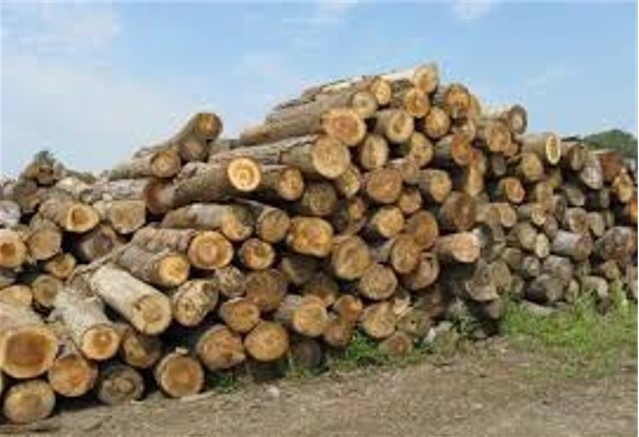
HARDWOODS VS. SOFTWOODS
Here are some benefits/negatives of Hardwoods and Softwoods:
- Hardwoods: have a slower natural growth rate, making them denser and more fire resistant than most softwoods. As such, hardwoods tend to be more expensive. Hardwoods are sometimes challenging to work with, but last for a great deal of time. They are typically used in high quality furniture, desks, flooring as well as some construction that needs to last. Consider using hardwoods in structural pieces such as apex beams where structural integrity is of high importance. Scientifically, they have vessel elements that transport water throughout the wood.
Softwoods: have a faster natural growth rate, making them less dense and less fire resistant in comparison. As such, softwoods tend to be less expensive and make up the bulk (80%) of all lumber used in the construction industry. Softwoods are easier to work with and are typically used in windows, doors, furniture, paper, and medium-density fiberboard. Consider using softwoods in lumber scaffolding, such as non-load-bearing walls and roof rafters. Scientifically, they have medullary rays that transport water and produce sap.

LUMBER VOCABULARY
Now you might have chosen a hardwood or softwood, but how come pieces of the same species are different in color and price? Understanding which parts of the tree the lumber comes from will help you understand these differences. Let’s build up that vocabulary:
- Heartwood: usually darker in complexion and more dense. If your lumber comes from this part of the tree, you may see some increased price differences between pieces of the same species. Heartwood is the part of the tree that is ‘dead’, meaning it has been matured and yields the hardest lumber.
- Sapwood: usually lighter in complexion and less dense. If your lumber comes from this part of the tree, you may see some decreased prices in comparison to heartwood pieces. Sapwood is the ‘living’ part of the tree, as layers from the outside gradually become the inner layers which die and turn into heartwood.
- Cambium Layer: differing from tree to tree, this layer is the tree’s protective layer that produces the growth rings inside the tree.
- Pith: is the centre of the tree which usually carries the tree’s nutrients.

KNOW WHAT CUTS YOU ARE GETTING
While the different cuts of timber may have no direct impact on lumber prices, when selecting lumber for decorative or structural purposes, the orientation of the grain becomes extremely important as some cuts are more likely to bend or contain more imperfections such as knots than others:
When choosing lumber for aesthetic qualities, the general rule is that knots and cracks tend to increase toward the center of tree. So when a piece of lumber is labeled as:
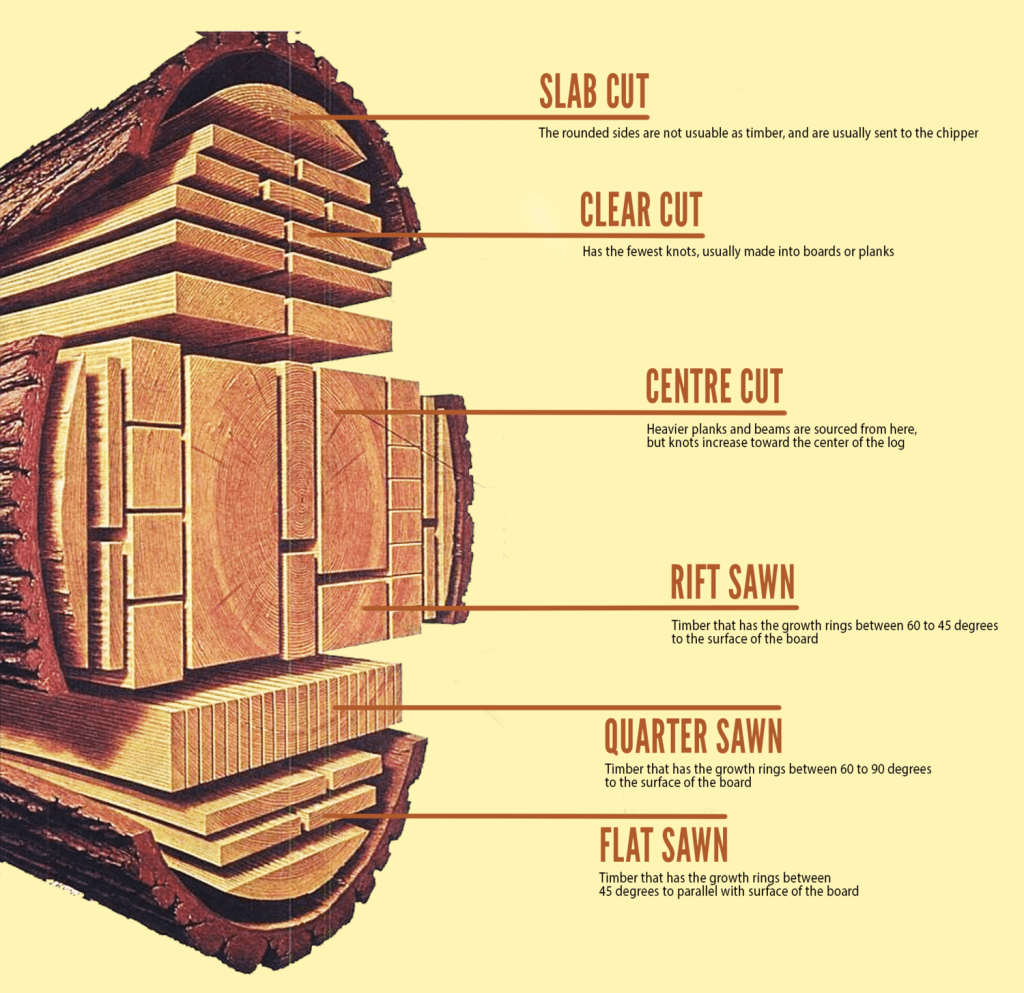
- Clear Cut: these pieces have the fewest knots and are ideal for projects where knots and cracks are unwanted.
- Center Cut: these pieces tend to contain more knots and cracks, making them ideal for projects where a ‘rustic’ look is needed.
When choosing lumber for structural qualities, the general rule is that the growth rings which have a higher degree to the surface of the board, tend to warp more when affected by water:
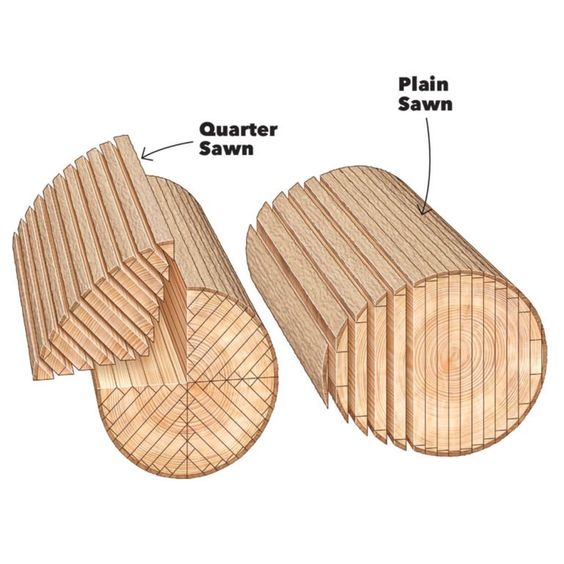
- Rift Sawn: these pieces have the growth rings 45 to 60 degrees to the surface of the board. They are usually toward the center but differ from mill to mill, these pieces are usually cut thicker as thinner boards may bend under watery conditions.
- Quarter Sawn: these pieces have the growth rings 60 to 90 degrees to the surface of the board. These pieces have a tendency to warp under watery conditions, but are ideal for furniture making such as bookcases or shelving.
- Flat Sawn: these pieces have the growth rings 45 degrees or parallel to the surface of the board. These pieces produces an appealing aesthetic ‘flame-like’ effect where the growth rings radiate out from the center.

LUMBER DRYING TECHNIQUES
How lumber has been dried can have a big importance as some lumber later on in life starts to crack or bend. There are three types of drying techniques:
- Greenwood: is lumber that has been recently cut and not had an opportunity to season (dry). The benefit of using greenwood is it is extremely easy to work with and splits less when nailed or turned. The negative is that greenwood has a tendency to crack and warp once fully dried.
- Air-Dried: is lumber that has been stacked and placed on foundations and exposed to the air in a clean, cool, dry and shady place. Air-dried lumber takes months, even years to dry which is why it is usually more expensive. The benefit of using air-dried lumber includes increase moisture stability meaning it tends to bow, twist and crack less.

Kiln-Dried: is lumber that has been artificially dried, using a heat generator. Kiln-dried lumber dries much faster, thus sawmills can turn over lumber at a faster rate. This results in a lower price. Due to the nature of this fast-drying process, all insects and eggs living inside the wood are killed, but the wood tends to bow, twist, and crack more.

Photo Shop

“Photo Shop” is the section of Wood Chip Chatter where carvers can send in photos of their wood carvings for display. It’s your chance to show off your work…sort of a show and tell. The photos will only be displayed and no comments or critiques will be made. For critiques on your carvings send them in to the “Carver’s Corner.” Send your photos to: rwkoz51@gmail.com
My good friend, Jack Proseilo carved three magnificent twisted grandfather clocks. Jack writes:
“Hi Bob,
Just finished reading your blog and enjoying as usual, thought I’ll bet Bob would be interested in my latest carve?
Back in 2021 the Australian Wood Review had featured a Grandfather Knot Clock built by George Andrews. At the time I saved the picture , then a couple of years ago my neighbor saw the same article and forwarded the picture suggesting that I should do it as my next project? I knew I would never try building one that large , however the idea of a table top one sounded interesting. Well I carved the first one on the left of the three and Elaine was so pleased that she suggested that I should carve two more for our Sons.
Each clock is hand carved from a 4 X 4 X11 piece of basswood . The finish is water base Saman Dark Walnut stain with two coats of Minwax Polycrylic Clear Matte. I was able to get the clock works from Amazon.
Hopefully these will hang around the Family for many years to come. Thanks for your time.
Jack Proseilo
West Kelowna, B.C. Canada”
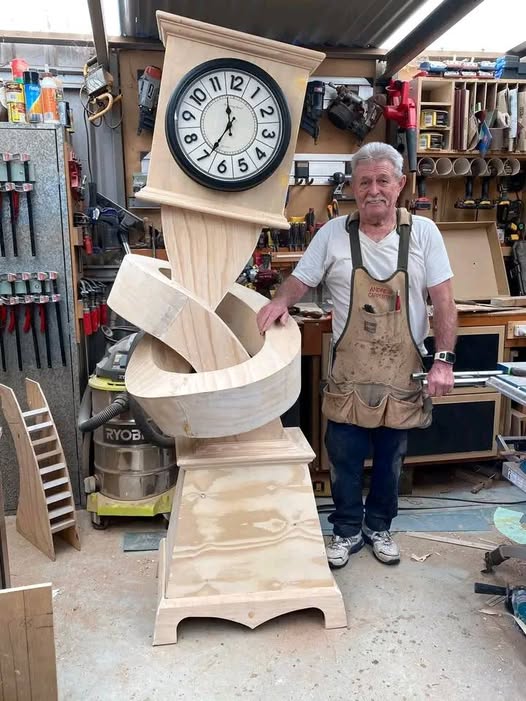
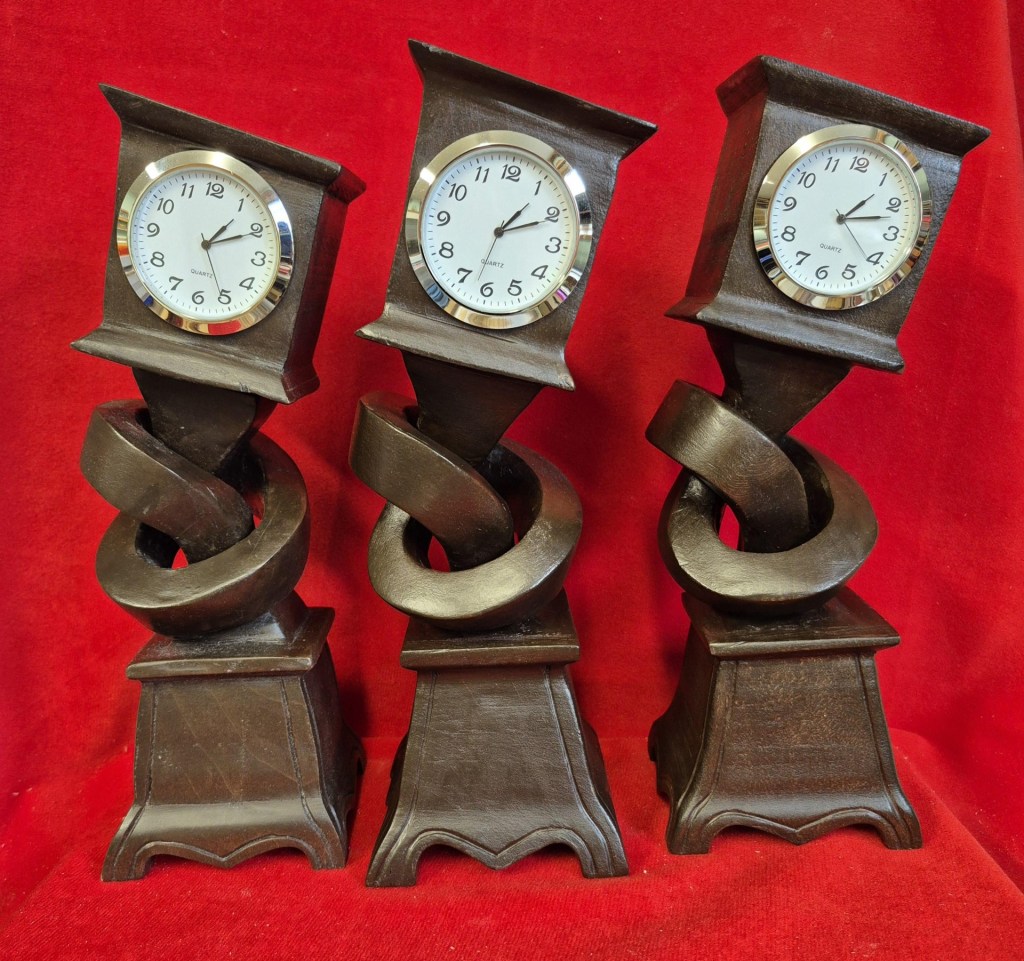
Those are absolutely magnificent, Jack! I’m sure they will be passed down within the family for many years to come.
My good friend, Doug Philp carved a terrific tree spirit in basswood. Doug writes:
“Here is a Tree Spirit I recently carved, hand tools only. Basswood approx 9” tall.
Doug Philp
DCCP Creations
Vancouver Island, BC, Canada”


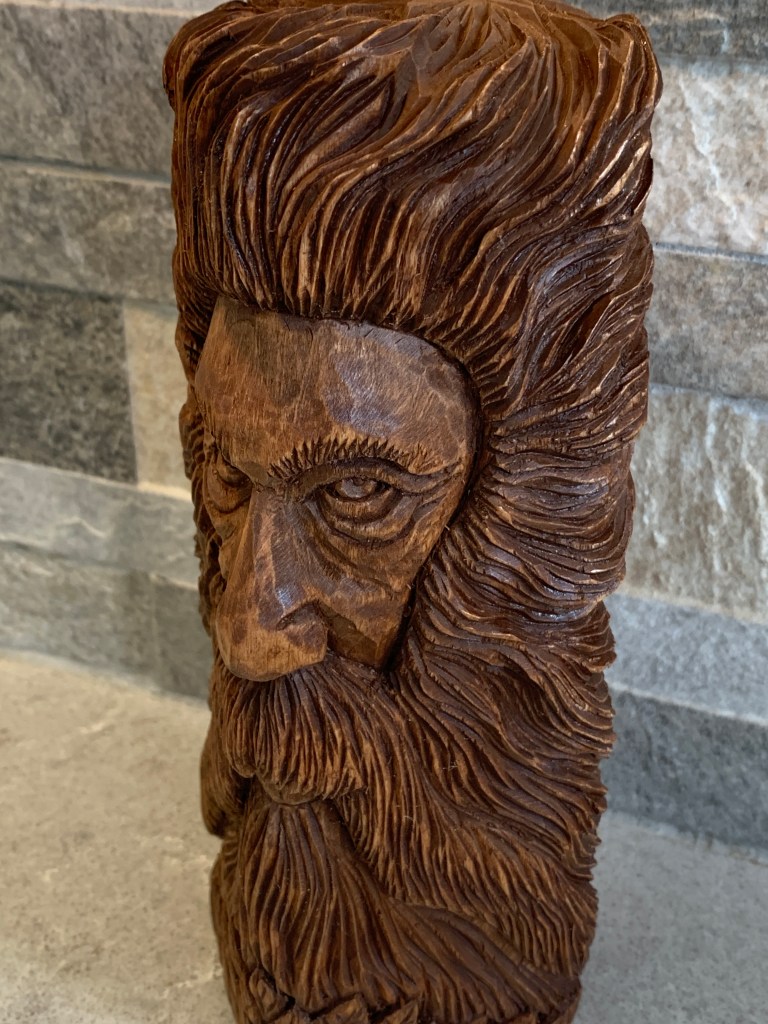
Excellent job, Doug! Thanks for the photos.
My good friend, Jim Babcock of Columbus, Indiana sent a photo of a Dahlia flower he relief carved in basswood. Jim writes:
Bob:
Hope all is well with you as we get into Summer. A recent carving
of a dahlia. Northern basswood, finished with an oil based stain.
Jim Babcock
Columbus, Indiana
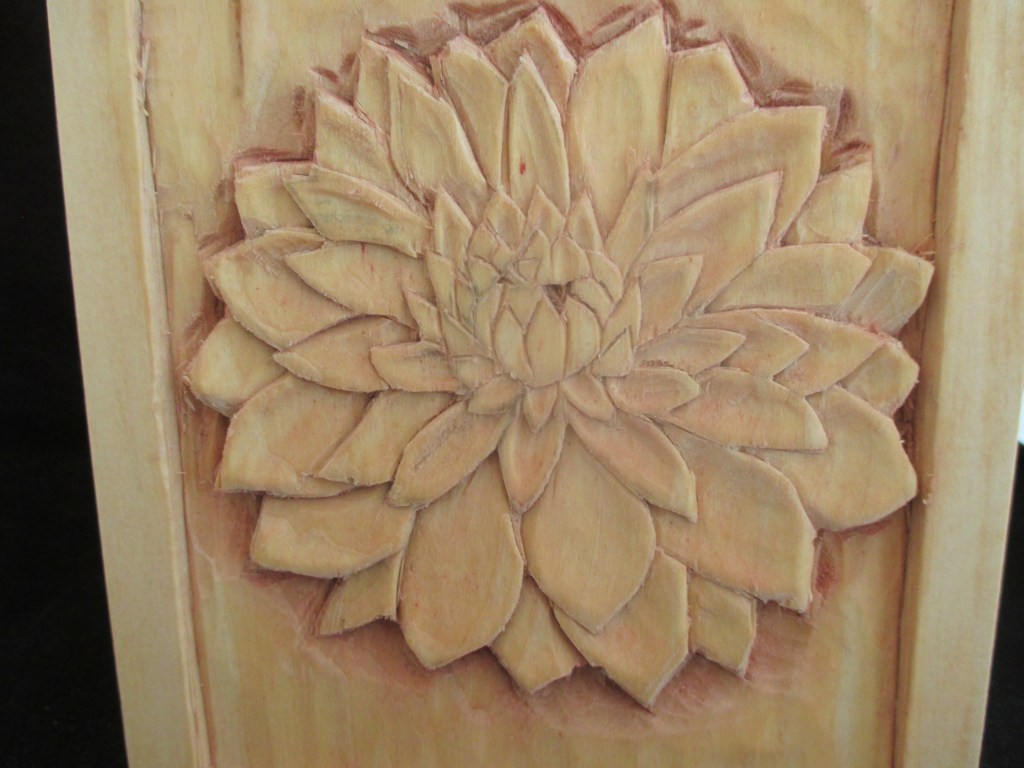
Excellent carving, Jim! I really like the detail. Thanks for the photo, as always!
Woodcarving Tip
Wrinkles Matter
It’s easy to forget to add small details that can enhance the finished look of your caricature carvings—such as wrinkles and folds in clothing.
Use small gouges and V-tools along with your knife to create different kinds of wrinkles.
When carving wrinkles into clothing, focus on areas where fabric naturally bunches or folds. Some great places to add wrinkles are around joints—such as the elbows, knees, and armpits—where normal fabric tends to compress during movement.
You can also carve slight folds at the waistline, especially if your caricature carving is bending or twisting. Adding a few wrinkles around the neck and shoulders can give the appearance of loose or layered clothing.
Shoes or boots can also “pop” with small creases near the ankles.
Google stock photo images of people in various clothes for more inspiration!
Pattern of the Month
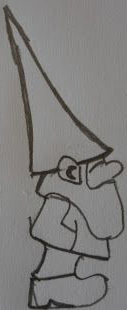
Gnome
Upcoming Workshops

Maximus
Teacher: Dwayne Gosnell
June 10,24 – 6PM Eastern
Twiitling Tuesday – 4 hours ( 2 sessions – 2 hours each day)
Location: Online (Via Zoom)
2.5×2.5×7.25 basswood block needed for pattern
For details and to sign up click on Dwayne’s website https://www.dgosnellwoodcarving.com/

Get Specific
Take the next step in your caricature carving and learn to capture actual likenesses.
Teacher: Ryan Olsen
Dates: August 2,3,9,10 2025
Saturday & Sunday both weekends 11:00 am-1:00 pm Pacific / 12:00 pm – 2:00 pm Mountain /
1:00 pm- 3:00 pm Central / 2:00 pm – 4:00 pm Eastern
8 hours
Location: Online (Via Zoom)
For details and to sign up contact Ryan ryanscaricatures@gmail.com

Sports & Holiday Shorties
Teacher: Dale Green
Dates: October 4,5,11,12 2025
Saturday & Sunday both weekends 9:30 am-11:30 Pacific / 10:30 am – 12:30 pm Mountain /11:30 am- 1:30 pm Central / 12:30 pm – 2:30 pm Eastern
8 hours ( 4 sessions – 2 hours each day)
Location: Online (Via Zoom)
For details and to sign up Contact Dale: dalecarves@gmail.com

Online Classes With Chris Hammack
Teacher: Chris Hammack
Chris Hammack is offering a new series of online classes to help students learn and sharpen their woodcarving skills. Individual and Group Classes are available through his website chrishammackart.com/groupclass

Twhitling Tuesdays
Teacher: Dwayne Gosnell
Dates: Two – 2 hour classes each month on Tuesdays
Location: Online (Via Zoom)
To sign up, contact Dwayne Gosnell via email at dagwood_76@gmail.com

Woodcarving Academy
Established in 2020, the Woodcarving Academy offers dozens of videos and seminars created by some of the country’s top level instructors. More videos are added regularly as they are created by the instructors.
With a paid subscription to the Woodcarving Academy you can view any videos you like for as many times as you like.
Subscription rates: Monthly = $19.95 Quarterly = $49.95 Annual = $139.95
There is even a Free level which allows you to tour the website and watch the sample videos and content, and receive email updates as new content becomes available.
Check out the Woodcarving Academy and learn with the masters right in the comfort of your own home! Go to: www.woodcarvingacademy.com or Email: support@woodcarvingacademy.com
News & Announcements


Some timely show information from my good friend, Jim Carlson from Boone, Iowa:
“Hi Bob,
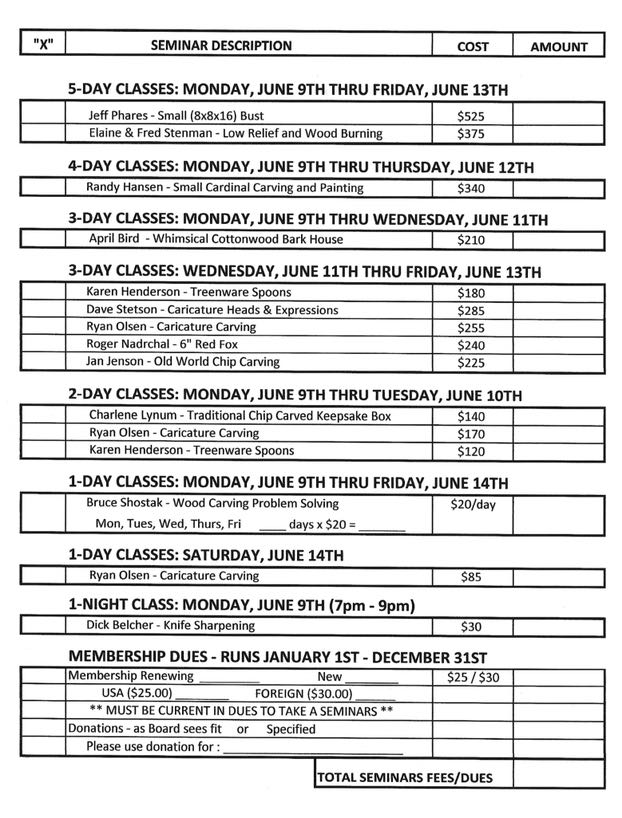
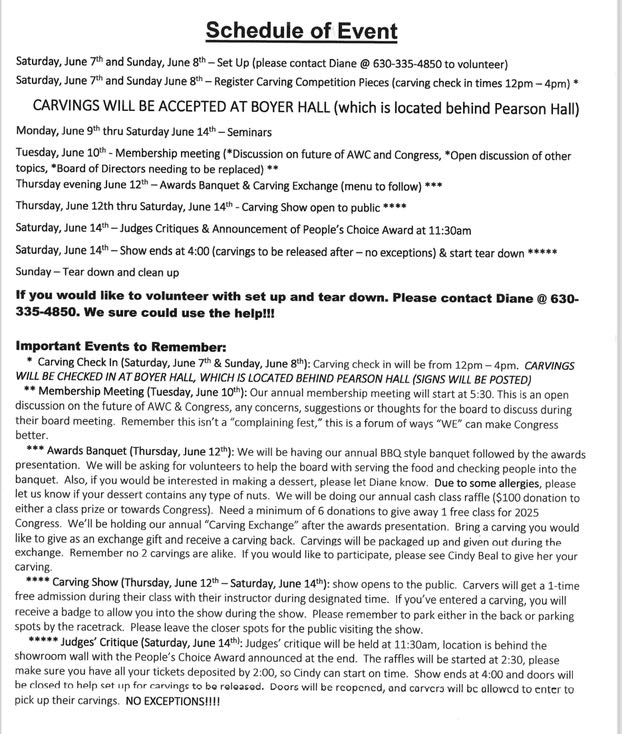
For anyone who is looking for some great in-person classes in combination with a competition and show, plus some great vendors, I would like to recommend the International Woodcarvers Congress. A wide variety of classes are available from one day to five days. Living in Iowa, I am fortunate to be within 3 hours of the quaint small town of Macquoketa, but instructors and students attend in June every year from all around the USA. If you have any room, I will attach some information and registration forms for the Congress.
Jim Carlson
Boone, Iowa”



Tri-State Woodcarvers Club 2025 “Show and Sell”. October 25 and 26th, 9am to 3pm daily. Vanderburgh County 4-H Center 201 E. Booneville New Harmony Rd, Evansville, IN. Exposition Hall in the Activities Center Building. Contact Danny Conley at 270-314-5895.

The International Association of Woodcarvers has upcoming Zoom meetings on the following Saturdays at 3PM EST with special guest presenters. Check them out…
Zoom: 310-460-3575
Presentation Schedule:
6/7 – Dale Kirkpatrick
6/14 – Greg Wymer
INTERNATIONAL ASSOCIATION OF WOODCARVERS
COME JOIN US!!!
AML Wood Carving Knives

AML Wood Carving Knives are handmade by Andy Loughlin in Monroe, New York.
Each blade is meticulously crafted from 1095 high-carbon steel, ensuring easy sharpening and long-lasting edge retention. The diverse exotic woods used for the handle styles are sourced from around the world, adding a touch of elegance to these knives. You can find these exceptional knives for auction on eBay under ‘AML Knives,’ with bidding usually starting at $22 and most knives selling for between $40 and $100.
Unpack your AML Wood Carving Knife and experience its razor-sharpness right out of the package. Each knife comes with a custom-made magnetic wooden sheath, a thoughtful addition at no extra cost.
I now own three AML Knives and can speak personally about their quality. These are not production knives. Each knife is handmade by Andy himself. The knives are sturdy, well made, and will stack up to any other knife on the market. These knives have quickly become quite popular and sell out fast, so check the site (“AML Carving Knives” on EBAY) often for availability.
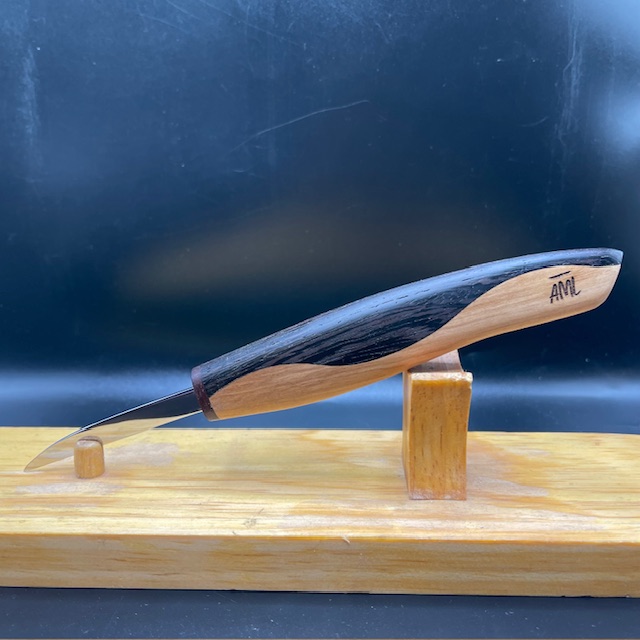
Andy has recently begun making knives with handles crafted from exotic woods and colored epoxy, resulting in some stunning and unique handle designs. Below are examples of some knives currently available or which have recently sold:


IMPORTANT NOTICE!
Email address change
It has recently come to my attention that my Wood Chip Chatter email address (carverbobk@woodchipchatter.com) has become unreliable, and I may not have received all of your emails. If you have sent me emails but have not seen your messages published in my blog, it’s purely because I never received them. As a result, I have decided to stop using that email address and ask you to send all future correspondence (messages, comments, photos, etc.) to my personal email address, which is rwkoz51@gmail.com
I appreciate your patience and understanding.
Due to the holiday, Wood Chip Chatter will not be published on July 4, 2025
The next issue of Wood Chip Chatter will be posted on August 1, 2025.

Keep a sharp eye out for it.
Keep a sharp edge, and keep on carvin’!


Funny Bone


 Wood Chip Chatter
greetings not sure if these photos went thru the 1st time this neuro was a request ( and a commission) by the owner of a doggie daycare care thst our lab goes thu it is over 12 Inches high, carved then fur burnt in thsnks kathySent from Samsung Galaxy smartphone.
LikeLike
Kathy,
It seems your photos are not attaching. Please try resending them to this address: rwkoz51@gmail.com
Thank you,
Bob K.
LikeLike
double checking that you got them kathySent from Samsung Galaxy smartphone.
LikeLike
Yes, I got them through my other email. Thank you, Bob K.
LikeLike