
WALNUT, BLACK Juglans nigra (Juglans – the classical Latin name for walnut, meaning Jupiter’s nut; nigra – black)
Black walnut has long been considered one of the most desirable woods of this country, not only because of the beautiful wood of various figures that the tree produces, but also for the food value in the black walnuts – a delicacy used in candies, bread and ice cream.
The bark of the tree is dark and deeply grooved. This bark, in addition to the husks of the nuts, is used in the manufacture of yellow dye. The leaves of the black walnut are as long as 1 and 2 ft. and have many narrow, sharp, slender-pointed leaflets, as many as 23.
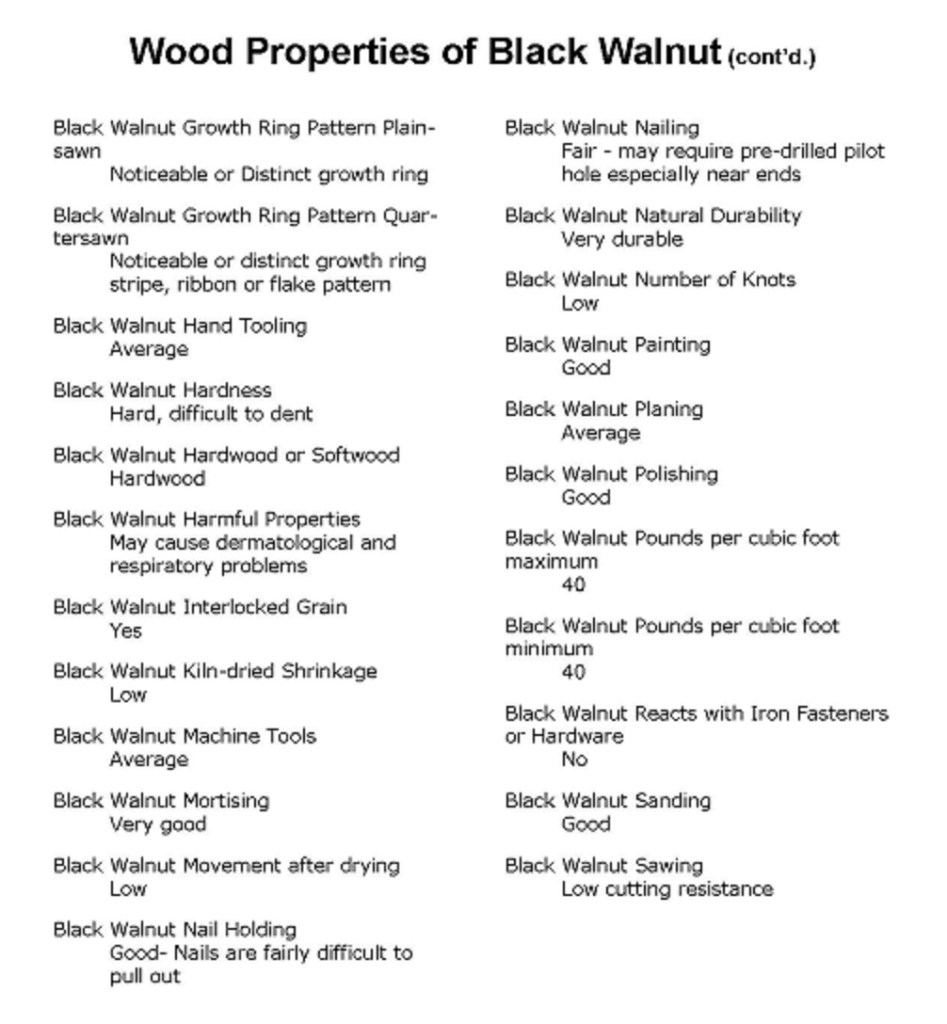
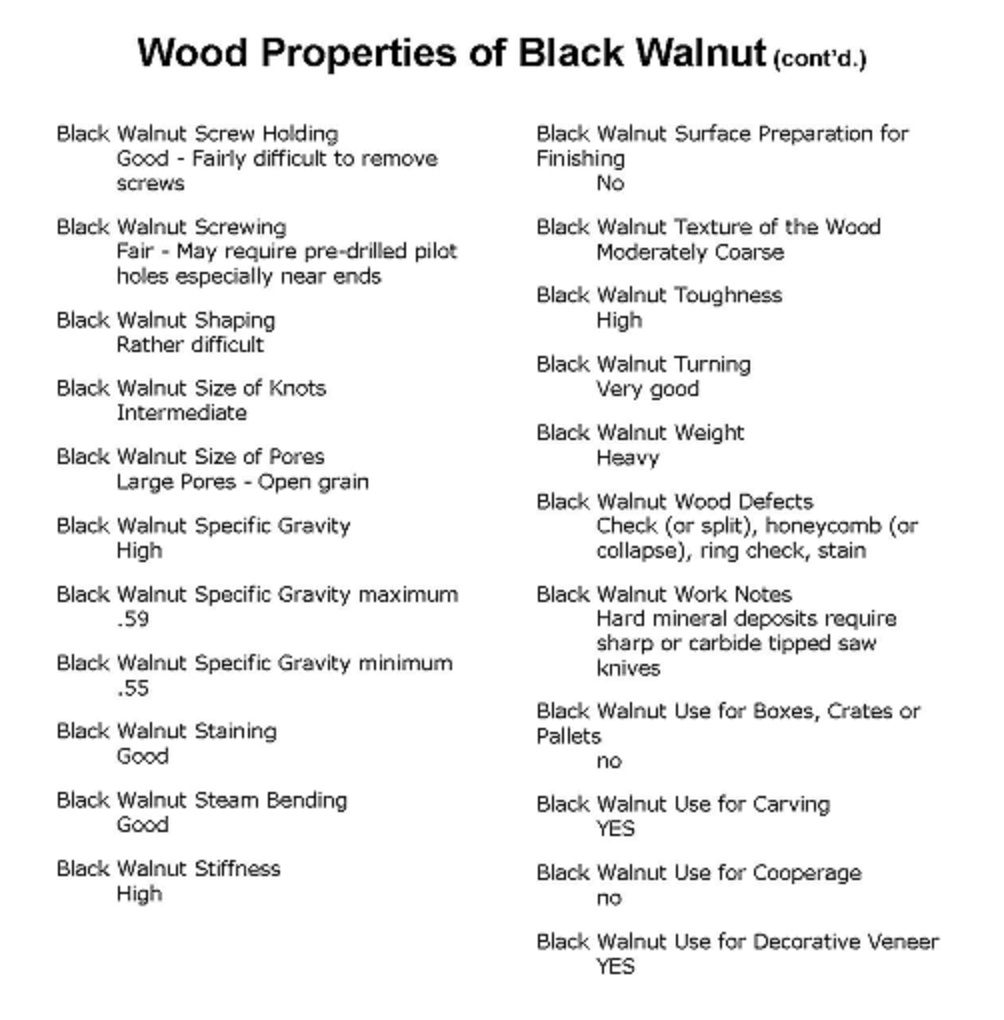
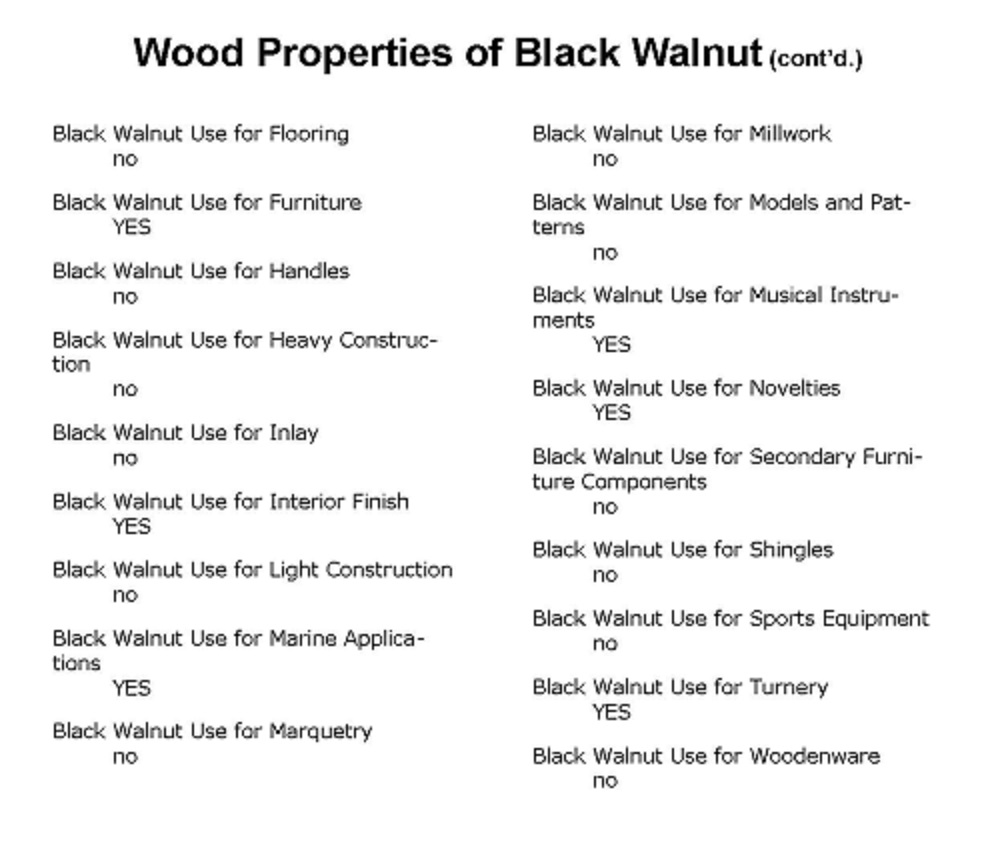
After being seasoned the wood shrinks and expands very little and is a good wood for craftsmen to use. The wood saws, planes and finishes excellently. It has long been used for gunstocks, being superior to all other woods because it keeps its shape, is fairly light in weight and helps take up the recoil better than any other wood. In the veneer form the figures obtained are butts, crotches, burls, fiddleback, leaf and straight stripe.
American black walnut, a beautiful tree typically light-foliaged with exposed branches, has been associated with American history from Colonial times as an abundant source of fine cabinet woods and walnuts.

Reader’s Comments

My first comment this month comes from my good friend, Connie Teeters from Port Orange, Florida. Connie writes:
“lOVE READING YOUR NEWSLETTER. CONNIE TEETERS, FRIENDS CARVING CLUB OF PORT ORANGE FLORIDA .”
Thank you, Connie! I’m glad you’re enjoying Wood Chip Chatter.
My next comment comes from my good friend, Greg Scott from Scottland. Greg writes:
“Hi Bob,
I just wanted to say thank you for your great newsletter. There isn’t much of a wood carving scene here in Scotland, so it’s really nice to feel connected to what’s going on elsewhere, and to read your excellent tips and readers questions. I have recently been really I inspired by the great Don Mertz and attach a picture of my attempt at one of his pirates.
Thank you for continuing to send out your Wood Chip Chatter, I always enjoy it and look forward to the next one.
Your Scottish friend,
Greg”
Thank you for writing and your very kind words, Greg! I’m delighted to hear that you’re enjoying Wood Chip Chatter. However, apparently your photo didn’t get attached to your message. I would love to see your pirate. Can you please send it again?
Photo Shop

“Photo Shop” is the section of Wood Chip Chatter where carvers can send in photos of their wood carvings for display. It’s your chance to show off your work…sort of a show and tell. The photos will only be displayed and no comments or critiques will be made. For critiques on your carvings send them in to the “Carver’s Corner.” Send your photos to: carverbobk@woodchipchatter.com
My very good friend, Laura Aungst followed a Doug Linker video to carve a beautiful fairy door. This is what she said:
“Hi Bob
Here is the little Linker door I carved, the door knob is a floor tack.
Laura Aungst a.k.a Moonwolf Woodworking”
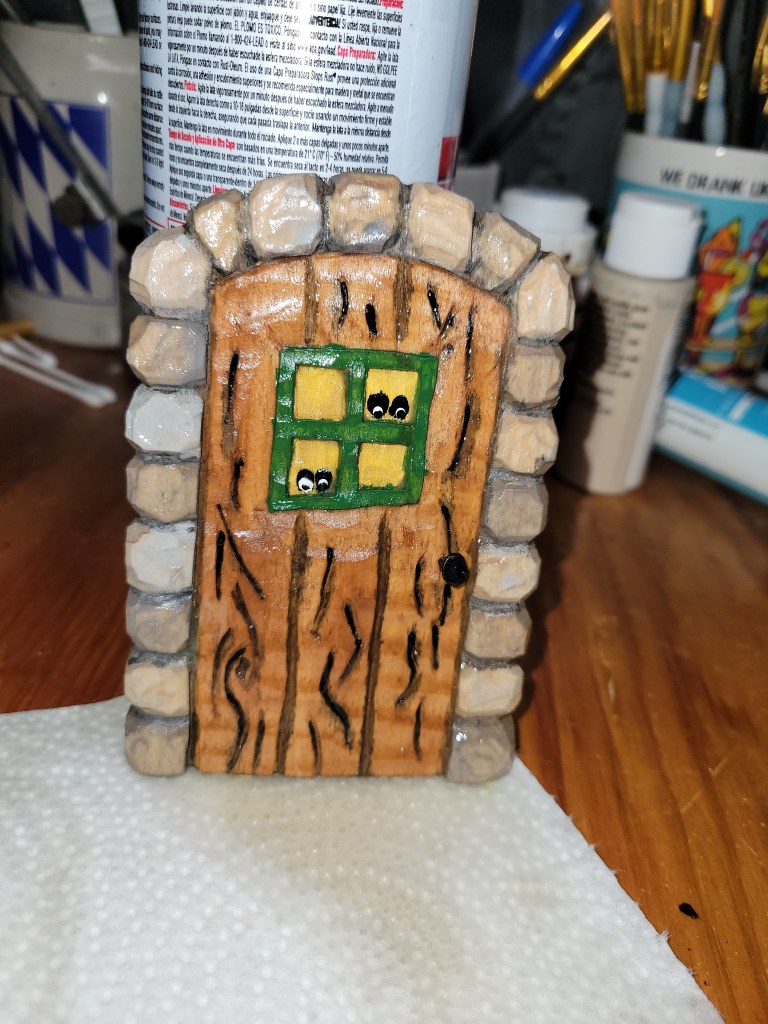
That’s a cute fairy door, Laura! I like paint job and the detail you put into it. Thanks for sending it in.
My very good friend, Wayne Smith from Nova Scotia, Canada sent in some photos of another one of his excellent ‘Redneck’ carvings he recently completed:


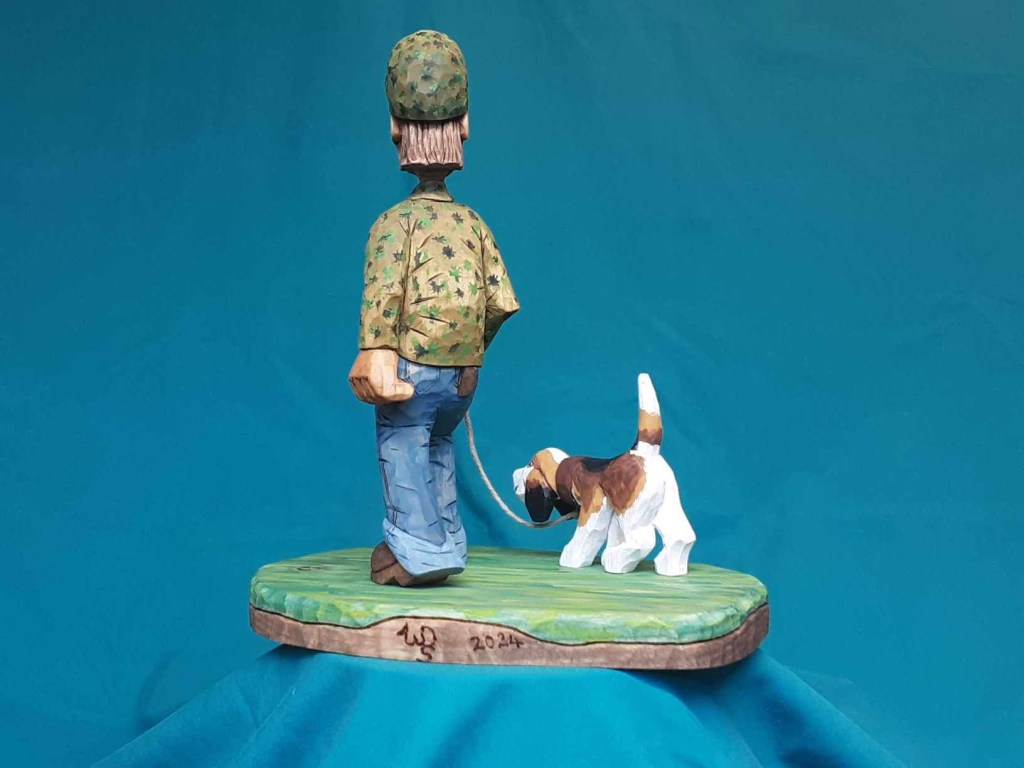
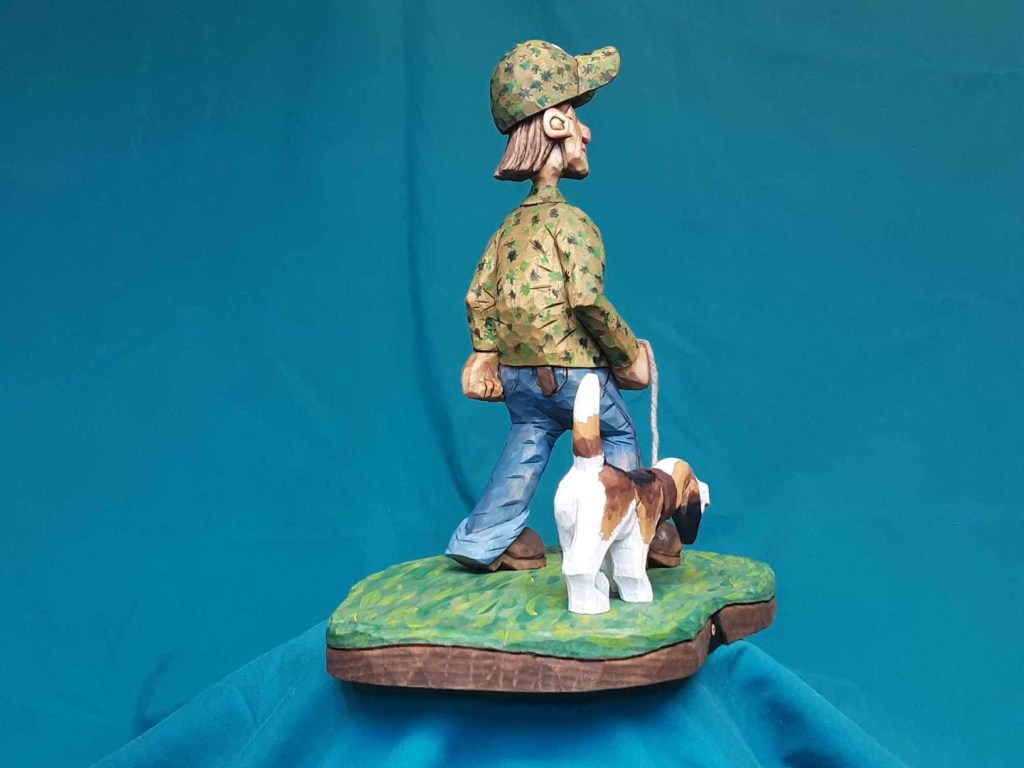
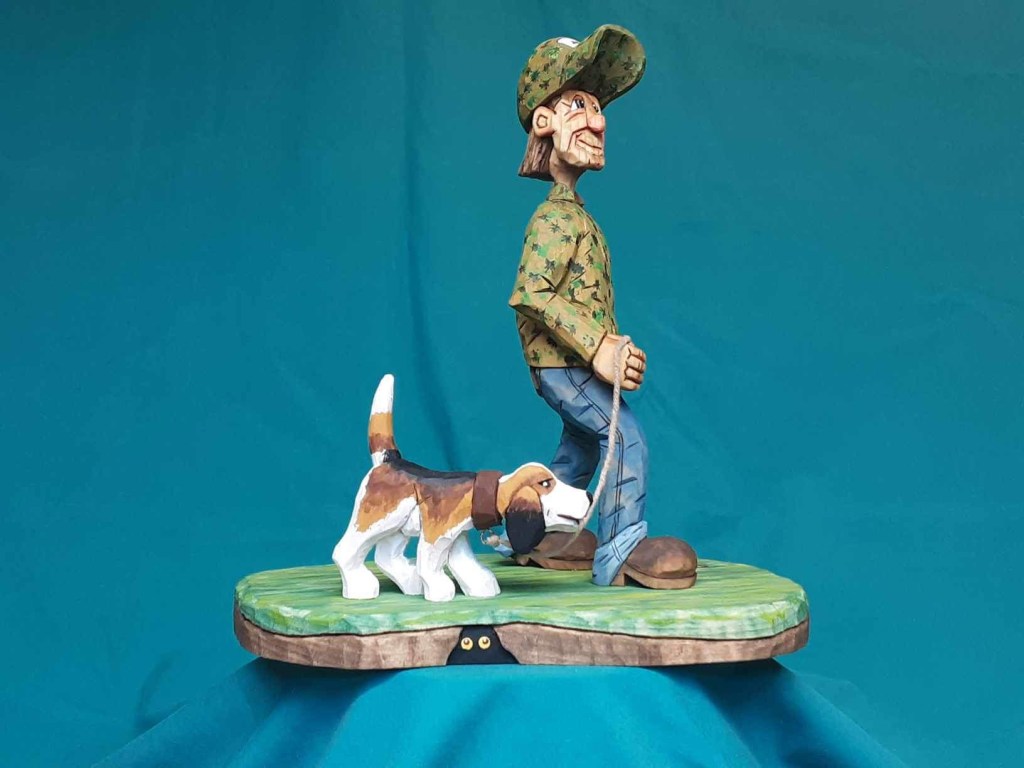
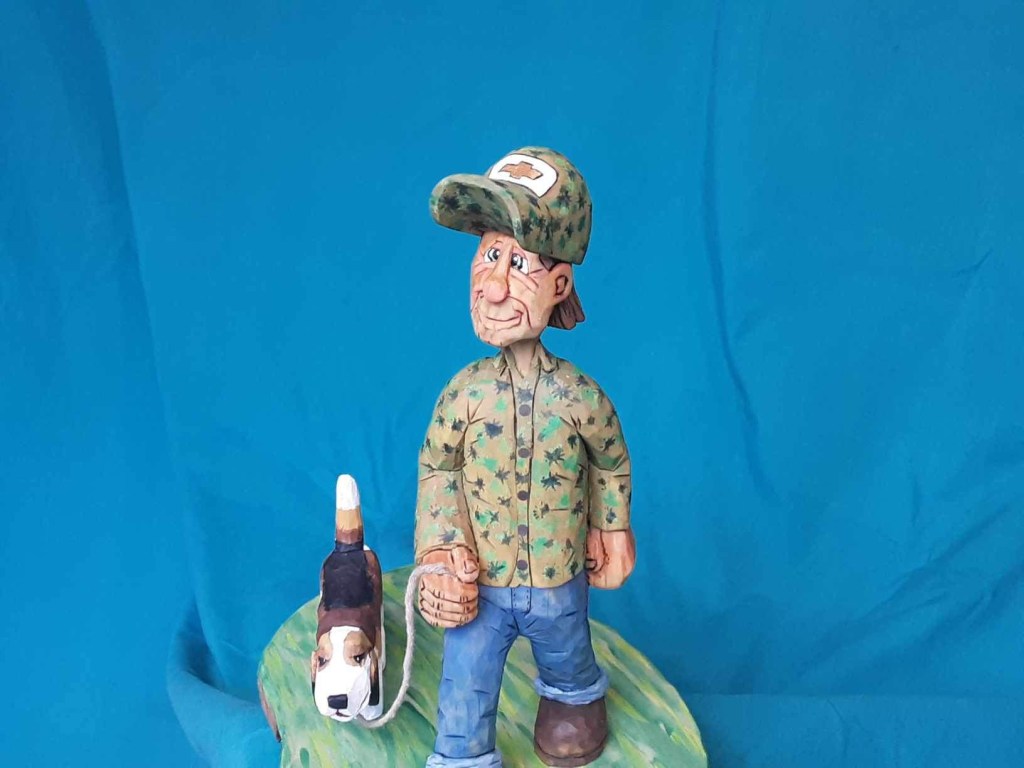
Another great carving, Wayne! I always love seeing your ‘Redneck’ carvings. Thanks so much for the photos.
My very good friend, Jim Babcock from Columbus, Indiana sent in a photo of shallow relief carving he recently completed. Here’s what Jim had to say:
“Bob:
Hope all is well. Attached is a shallow relief carving of an image by Charles Banks.
It reminds me of all the old folks who tended homestead farms in the upper midwest
long ago.
Jim Babcock
Columbus, Indiana”
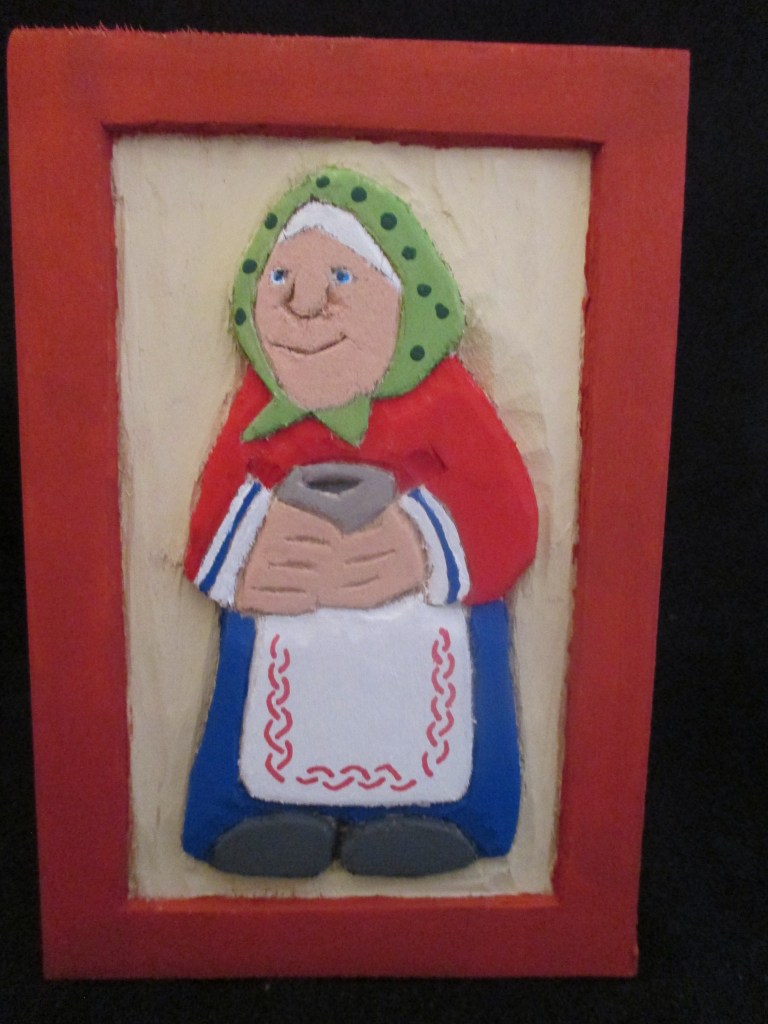
Thanks for the photo, Jim! I can always count on you. Very nicely done!
Here is a little Mushroom House I carved for my granddaughter:

Woodcarving Tip
Stropping Aid
Try using a small folded piece of newspaper to wipe your knife after stropping. It’s a simple and effective way to maintain the sharpness of your blade.
The newspaper’s thin, fibrous texture acts like a fine abrasive which removes any remaining burrs or tiny imperfections that are left on the blade’s edge, and the newspaper ink acts like a lubricant.
Source: carvingjunkies.com
Questions & Answers

My friend, David Wise asked a very interesting question about how to make a carving from a tree branch. David writes:
“Dear wood chip chatter,
I really like your blog but I have a question about making stuff from tree branches and green wood. My family own a small woodland, and I’d like to start using the cut timber from there for various projects, mostly small items like the comfort birds I read about on your page. The trouble is, most of the things I read about woodcarving start with something like ‘First take your bandsaw, and transfer the design to the block of wood’. I don’t have a bandsaw, and I’d like to learn how to take a piece of tree and turn it into something carveable, without the splits that developed during the experiments I’ve made.
Thank you, David”
That’s a very good question, David, and thank you for asking. Many carvers who don’t have band saws will use a hand held coping saw (about $15) to remove bulk wood from a carving piece. Coping saws are inexpensive and are readily available most anywhere tools and hardware are sold. I used a coping saw for many years before I could afford a band saw.
Whether you use a saw or not one of the best things you can do is to use a pencil to mark out areas where you want to remove wood. Start by drawing your pattern directly onto the wood. Shade in the areas you want to remove then cut them away with your carving tools. Redraw key areas such as arms and legs as you carve. I like to use a pencil because its markings don’t soak into the wood like ink does, and they can be easily erased or shaved away with your knife.

Pattern of the Month
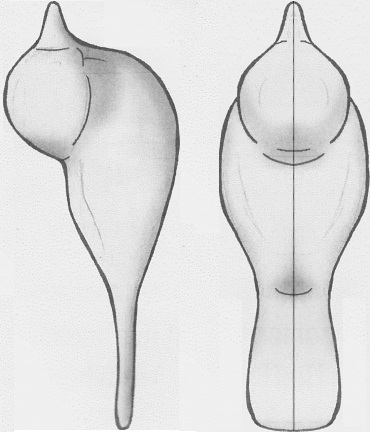
Comfort Bird
Upcoming Workshops & Seminars

Flying Witch
Teacher: Dave Stetson
Dates: October 5,6,12,13,19,20
Times: Sat, Sun – 9:30am-11:30 Pacific /11:30am-01:30pm Central / 12:30pm – 2:30pm Eastern
12 hours (6 sessions – 2 hours each day)
Location: Online (Via Zoom)
For details and to sign up email Dave lcnmichele@aol.com

Jim a trippy hippy from the past
Teacher: Dwayne Gosnell
Dates: October 1,15 – 6PM Eastern (Tuesday)
Twiitling Tuesday – 4 hours ( 2 sessions – 2 hours each day)
Location: Online (Via Zoom)
For details and to sign up click on Dwayn’s website https://www.dgosnellwoodcarving.com/

DOLL CARVING CLASS – HITTY OR A TUCK COMB DOLL
Teacher: Janet Cordell
Dates: November 4, 8, 11,15,18,22
Times: 2-4 p.m. Pacific Time // 3-5 p.m. Mountain Time // 4-6 p.m. Central Time // 5-7 p.m. Eastern Time
12 hours ( 6 sessions – 2 hours each day)
Location: Online (Via Zoom)
Cost $185 (includes one project blank)
Description: This class will again cover the basics of carving, jointing, and painting a relatively simple doll, like Hitty, and also get into what makes the tuck comb doll genre so lovely and sophisticated. You may carve either one, or try both if you want to. The Hitty will of course be a little over six inches tall, and the tuck comb will be about 10 inches tall. The cost of the class will include one blank, and you may purchase others. Hitty blanks are $25 and tuck comb blanks are $35
To sign up contact Janet janet_cordell@yahoo.com
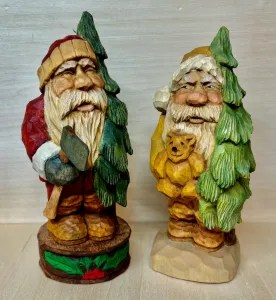
Kringle
Teacher: Dale Green
Dates: November 2,3,9,10
Saturday & Sunday both weekends 9:30 am-11:30 Pacific / 10:30 am – 12:30 pm Mountain /
11:30 am- 1:30 pm Central / 12:30 pm – 2:30 pm Eastern
8 hours ( 4 sessions – 2 hours each day)
Location: Online (Via Zoom)
Cost: $110.00 includes roughout and shipping within the US (International $130)
To pay for registration with Dale visit his website https://dalegreenwoodcarving.com/Woodcarving-Classes.htm
Contact Dale: dalecarves@gmail.com
Visit Dale’s website to sign up

Babushka Santa
Teacher: Dwayne Gosnell
Dates: November 12,26 – 6PM Eastern (Tuesday)
Twiitling Tuesday – 4 hours ( 2 sessions – 2 hours each day)
Location: Online (Via Zoom)
For details and to sign up click on Dwayn’s website https://www.dgosnellwoodcarving.com/

Online Classes With Chris Hammack
Teacher: Chris Hammack
Chris Hammack is offering a new series of online classes to help students learn and sharpen their woodcarving skills. Individual and Group Classes are available through his web site chrishammackart.com/groupclass

Woodcarving Academy
Established in 2020, the Woodcarving Academy offers dozens of videos and seminars created by some of the country’s top level instructors. More videos are added regularly as they are created by the instructors.
With a paid subscription to the Woodcarving Academy you can view any videos you like for as many times as you like.
Subscription rates: Monthly = $19.95 Quarterly = $49.95 Annual = $139.95
There is even a Free level which allows you to tour the website and watch the sample videos and content, and receive email updates as new content becomes available.
Check out the Woodcarving Academy and learn with the masters right in the comfort of your own home! Go to: www.woodcarvingacademy.com or Email: support@woodcarvingacademy.com
News & Announcements


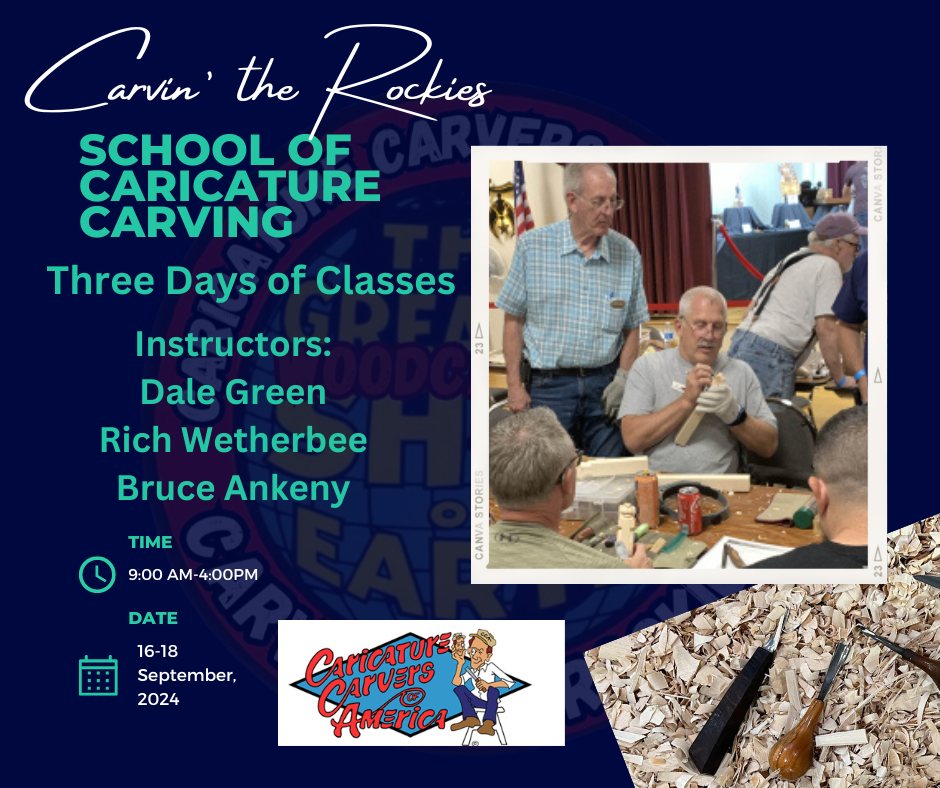
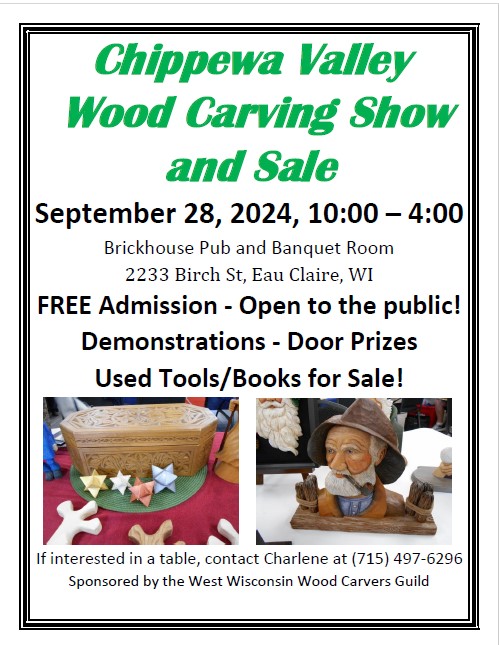
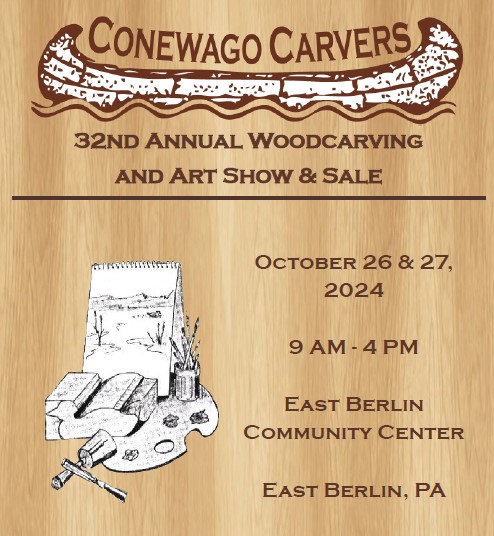
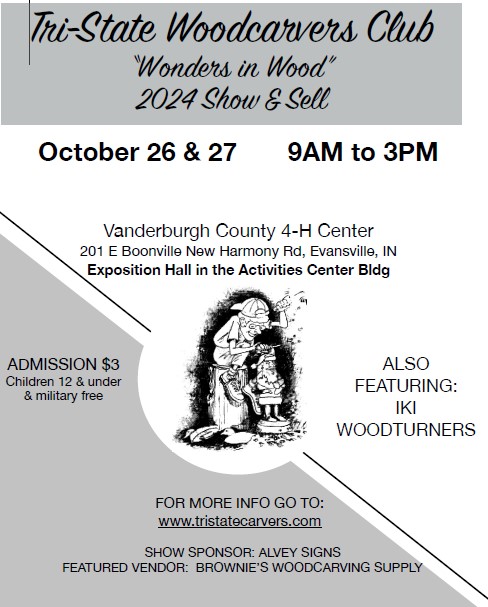
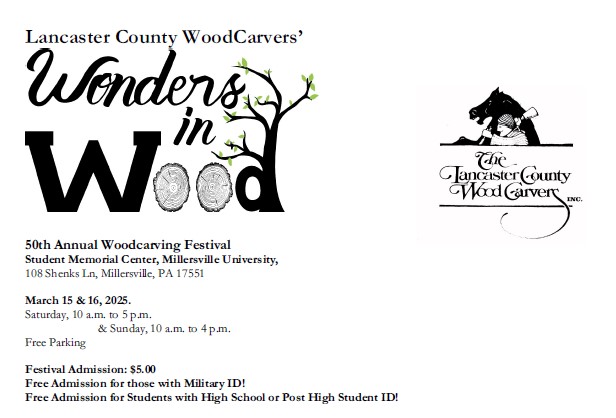

The International Association of Woodcarvers has upcoming Zoom meetings on the following Saturdays at 3PM EST with special guest presenters. Check them out…
Zoom: 310-460-3575
Presentation Schedule:
9/7 – Barry Bowers
9/14 – CCA Show
9/21 – Dave Stetson Demo
10/5 – Ashton Brown BSB
10/12 – David Young
INTERNATIONAL ASSOCIATION OF WOODCARVERS
COME JOIN US!!!

The Jersey Hills Wood Carvers (JHWC) club is a small but growing group of wood carvers sharing their time, knowledge and joy of woodcarving. The JHWC generally meets from 7:00 PM EST to 9:00 PM EST on the 1st, 3rd and 5th Thursday of each month (when school is in session) at the Jefferson Township High School wood shop classroom.
Membership is “FREE” and open to anyone interested in woodcarving regardless of their ability.
JHWC’s Upcoming Meetings and Events
2024
September – 19th
October – 3rd, 17th, 31st
November – 21st
December – 5th, 19th
2025
January – 2nd, 16th, 30th
February – 6th, 20th
March – 6th, 20th
April – 3rd, 24th
May – 1st, 15th, 29th
June – 5th
There will be no meetings during July and August while school is not in session.
For more information contact:
Al Santucci alsantucci4@gmail.com President
Bill Brunner billbrunnerdesign@gmail.com newsletter/website editor
Or visit:
Website: https://www.jerseyhillswoodcarver.com/
Facebook: https://www.facebook.com/groups/736479646821641/
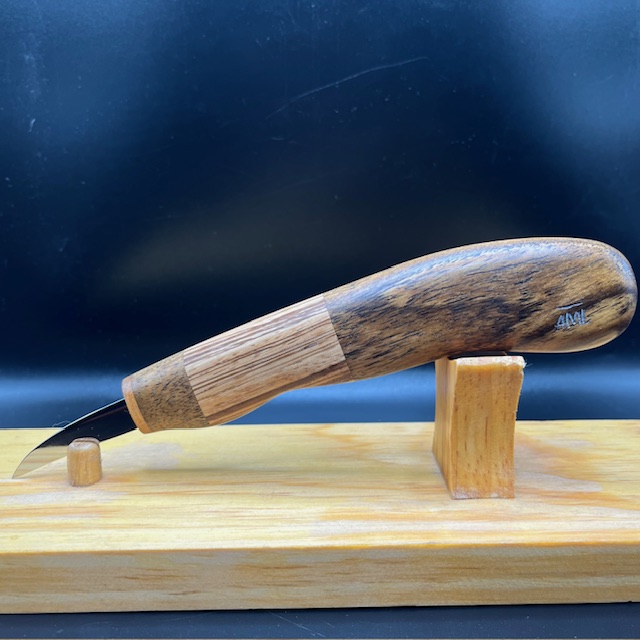
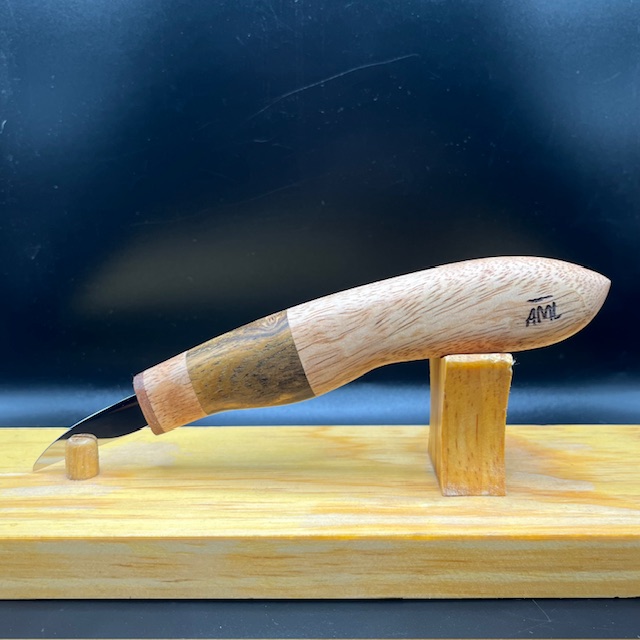
AML Wood Carving Knives

AML Wood Carving Knives are handmade by Andy Loughlin in Monroe, New York.
Each blade is meticulously crafted from 1095 high-carbon steel, ensuring easy sharpening and long-lasting edge retention. The diverse exotic woods used for the handle styles are sourced from around the world, adding a touch of elegance to these knives. You can find these exceptional knives for auction on eBay under ‘AML Knives,’ with bidding usually starting at $22 and most knives selling for between $40 and $100.
Unpack your AML Wood Carving Knife and experience its razor-sharpness right out of the package. Each knife comes with a custom-made magnetic wooden sheath, a thoughtful addition at no extra cost.
I now own three AML Knives and can speak personally about their quality. These are not production knives. Each knife is handmade by Andy himself. The knives are sturdy, well made, and will stack up to any other knife on the market. These knives have quickly become quite popular and sell out fast, so check the site (“AML Carving Knives” on EBAY) often for availability.
Andy has recently begun making knives with handles made from exotic woods and colored epoxy, creating some stunning and unique handle designs. Below are examples of some knives currently available or which have recently sold:


I NEED YOUR HELP!!!
I am in serious need of your contributions to Wood Chip Chatter. Your questions and comments help to keep this blog active and going! Effective discussions are one of the best ways to learn about the topics that interest you. Remember, there’s no such thing as a dumb question. Plus we would all love to know about the unique tips, techniques, and products YOU use in your woodcarving process. Please send your comments to the “Reader’s Comments” section and any questions to the “Questions & Answers” section. Thanks for pitching in!
I also need more photo contributions to the “Carver’s Corner” and “Photo Shop”. My “Carver’s Corner” is a great way to get constructive critiques on your carvings so you can learn where to improve on your next ones, and I’m sure you all have some terrific carvings to share in my “Photo Shop” section. Photos of your carvings liven up the blog’s appearance and make it more interesting.
Send your questions, comments, and photos to carverbobk@woodchipchatter.com. They are always greatly appreciated.
The next issue of Wood Chip Chatter will be posted on October 4, 2024.

Keep a sharp eye out for it.
Keep a sharp edge, and keep on carvin’!


Funny Bone



 Wood Chip Chatter
Here’s a little “Stylized Rooster” that I carved in butternut from James Ray Miller’s course on Woodcarving Academy (I highly recommend both this training website and this insrtructor). The butternut carved easily, but I did have to strop about twice as often as I do with basswood. I recently got an 8″ leather stropping wheel and converted a bench grinder (turned around backwards) to turn the honing wheel and a cloth buffing wheel. It really saved a lot of time with the frequent stropping.
I’ve also attached a little hillbilly from a class at a meeting of our MidIowa Woodcarvers Club. The class was taught by Dave Franklin, a fellow club member.
Jim Carlson
Boone, Iowa
LikeLike
Hi Jim, thanks so much for writing! Your photos, however, were not attached and I would love to post them in my next issue. If you would, please send them directly to me at: carverbobk@woodchipchatter.com. Thank you and have a great weekend!
LikeLike
Hey Bob, I love carving pumpkins, and learn a lot from carving them. I also sto
LikeLike
Thanks for your comment, Ray. It came through fragmented, so I didn’t get the whole message. Would you please send it again?
LikeLike
Hey Bob, I love carving pumpkins, and learn a lot from carving them. I also sto
LikeLike
Hey Bob, I love carving pumpkins, and learn a lot from carving them. I also stole a couple of your ideas. Thanks
Missed you at the Wayne carving show. I hope you’re well.
Ray
LikeLike
Iâm having technical problems sending pictures ð¤¦ââï¸Ray
LikeLike
Try sending your pictures to my personal email: rwkoz51@gmail.com
LikeLike